


As a consumer walking down the supermarket aisles, it is easy to see two very similar looking types of packaging and automatically assume that they are made from the same material. But even two different types of bioplastic products which may look the same can drastically vary in composition.
Lisa Zimmermann (Goethe University) studies toxicity in everyday plastic products. A PhD researcher in the PlastX research group at the ISOE in Frankfurt, she considers bioplastics as alternatives with potential, “bioplastics do have advantages. Biobased plastics can be produced using renewable resources and other bioplastics can be biodegradable – even if there are issues with biodegradability.” But she does warn that even if they could be better from an environmental perspective, this is not always the case. And it also does not necessarily mean they are better from a toxicological one.
Last year, she published research showing that 67% of the 30 petroleum-based plastic consumer items she tested contained chemicals with at least some level of toxicity 1. In addition, she tested four items that were made from the second most common bioplastic, polylactic acid (PLA) – including a yoghurt cup and vegetable tray. All four also had what the authors referred to as ‘high baseline toxicity’, an indicator that the products contain chemicals capable of disrupting the natural functioning of bacteria in a petri-dish (or in vitro).
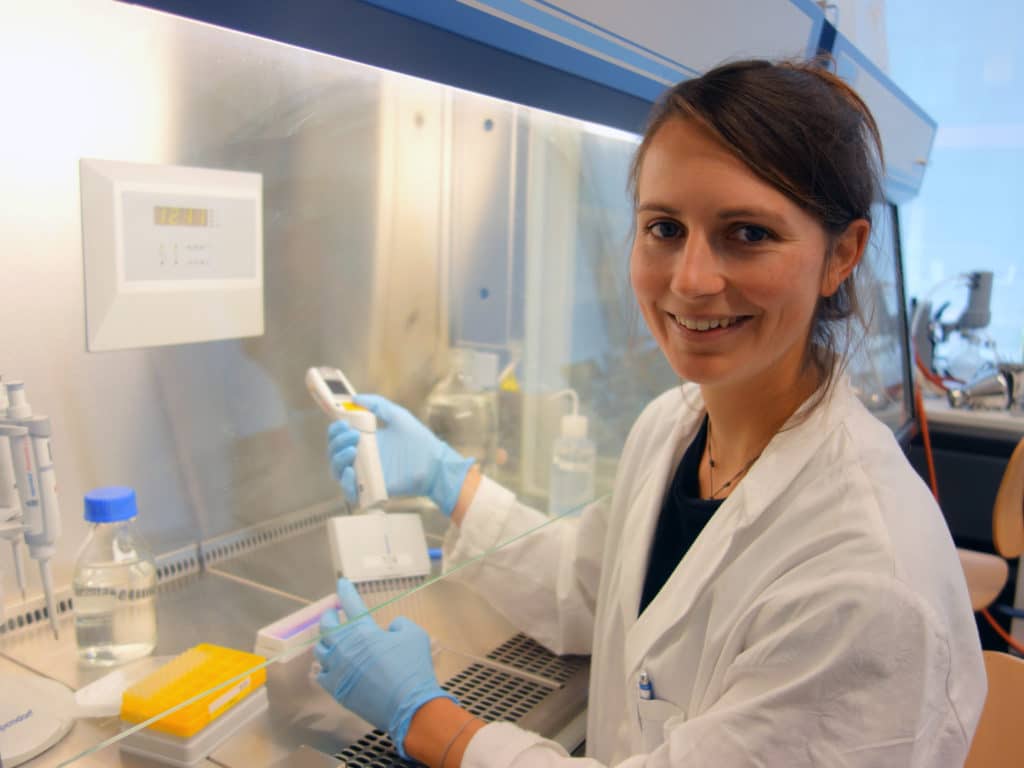
In her latest study published in Environment International, Lisa Zimmermann and her co-authors went further 2. They acquired 43 different consumer products made of several types of bio-based and biodegradable material – PLA, PHA, PBS, Bio-PE, Bio-PET, Starch and Cellulose. Her results showed that the same proportion (67%) as for the petroleum-based plastics analysed in the previous study induced in vitro toxicity, thus indicating that just as many bioplastics can contain chemicals similar to those in traditional plastics.
“This was a screening of a diverse set of products to see if they contain chemicals that are potentially harmful. It is still too early to say how they might affect human health,” she states. But it is known that some chemicals used in plastics can disrupt hormone functioning (known as endocrine disruption) and increase cancer risk, amongst other health issues.
To better understand the toxicity, future studies using food or water are needed to see how the chemicals migrate from the plastic under real-world conditions. “What our study shows, however, is that each plastic product on shelves, has an individual chemical composition and toxicity. We see that some products are safer by design than others.”
However, companies producing plastic have their own formulations, which are protected as intellectual property meaning the exact compositions are not readily available. Lisa Zimmermann calls for more transparency. “If plastic formulations were more transparent, it would be very helpful for designing safer products. Some of the products we tested contained >1,000 chemical features and a lot of the chemicals are unknown. You can’t test the toxicity of something you don’t know is there.”
She also points out that current safety assessment of food contact materials only test toxicity of the individual starting materials. “This means they don’t test for interactions between two or more of these chemicals together. If you don’t test the mixtures contained in the end product, one substance that might not be harmful on its own could be toxic when in a mixture with others.”
Furthermore, toxic end points are usually not included in current life cycle assessments of products used to determine the ecological footprint of a product. This means that, for the moment, environmental benefits are taken into consideration more than safety aspects related to chemical toxicity of products. Lisa Zimmermann calls for more consideration of chemical safety when designing truly “better” plastic alternatives.