


Total uncertainty, the clock ticking, lives at stake, an avalanche of contradictory information: military decision-making brings together everything that makes choices difficult. Far from being a marginal case, it represents the most extreme scenario in human decision-making – a real-life laboratory for researchers studying how we make decisions in urgent situations. American researcher Gary Klein unravelled this mystery in 1993 with his naturalistic decision-making model1. Contrary to conventional wisdom and classical rational theories, experienced decision-makers do not meticulously weigh the pros and cons of each option. They instantly recognise a familiar pattern in the situation, mentally visualise the consequences of their first intuition, and then adjust it in real time.
On military frigates equipped with the AEGIS system, the facts confirm the theory. Kaempf’s 1996 work2 is unequivocal: faced with informational chaos and extreme time pressure, officers rely on their expert intuition rather than exhaustive analysis. This is not out of laziness or approximation, but rather cognitive adaptation: when events unfold faster than the capacity for analysis, intuition forged by experience becomes the most effective tool. Another crucial lesson, too often overlooked, is that physical and psychological state makes all the difference3. Accumulated fatigue, lack of sleep, prolonged stress… Recent studies by Sekel4 and Mantua5 prove this beyond doubt: these factors massively impair the quality of decisions in combat. An exhausted commander misjudges risks, processes information less effectively and makes more dangerous decisions.
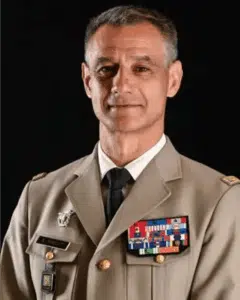
These findings are of interest far beyond the barracks. Cybersecurity, health crisis management, market finance, international diplomacy: all these sectors face unpredictability, urgency and complexity on a daily basis. Training decision-makers capable of acting effectively in these dynamic and morally demanding environments has become a major cross-cutting issue. General Emmanuel Phelut, head of the Centre de l’Enseignement Militaire Supérieur-Terre, (CEMS‑T) explains how the institution trains senior officers to make decisions in today’s complex world, integrating decision-making sciences, technology, operational experience and educational transformation.
In an increasingly unstable international environment, what is the role of CEMS‑T today in preparing senior officers?
General Emmanuel Phelut. CEMS‑T is the benchmark structure for training senior army officers. It commands and oversees four schools: the Staff College, the Land Warfare College, the Higher Military Scientific and Technical College, and the Higher College for Reserve Staff Officers. Its mission is to support officers in a process of profound intellectual transformation. The aim is to train leaders who are capable of acting in volatile environments, understanding the interactions between politics, economics and the military, and integrating technology and human factors into a single command logic. Modern command is not simply a matter of executing a manoeuvre; it involves thinking about the global system, anticipating disruptions and maintaining consistency while integrating the contradictory demands of the current times.
How have your teaching methods evolved in response to new forms of warfare?
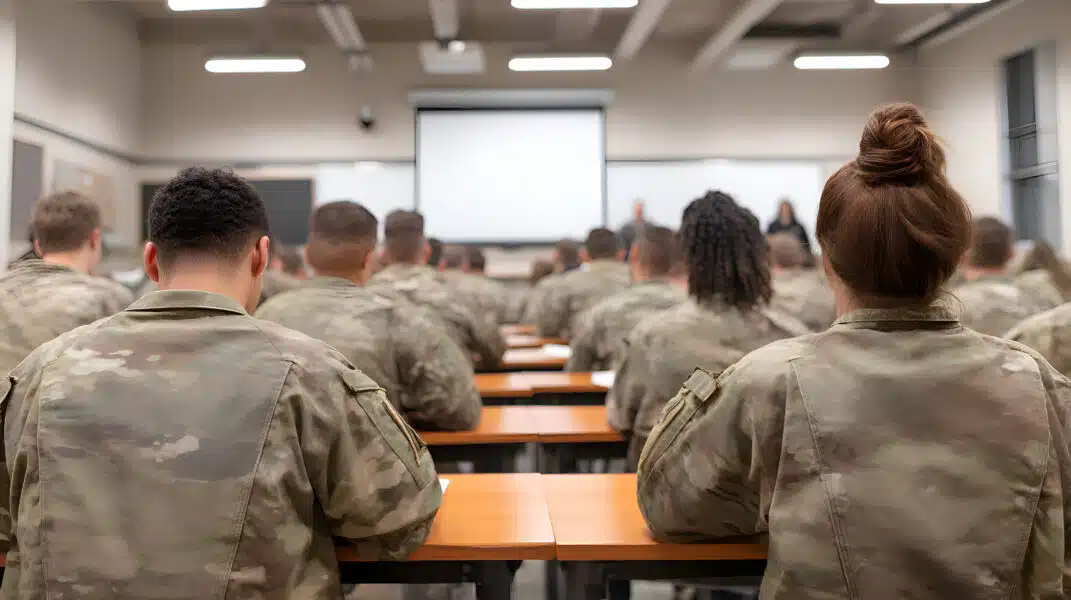
Recent wars have shown that decision-making is not simply a technical process. It results from the ability to reason in complex situations. Teaching methods have therefore been reoriented: before learning how to manage a crisis, one must learn how to think about it. Trainees work on real-life situations: contemporary conflicts, hybrid campaigns, information crises, cyberattacks. The exercises combine high-intensity warfare, influence operations and political constraints, particularly in the context of a major coalition engagement scenario. Cooperation and the exchange of ideas are encouraged: officers from different branches of the armed forces, civilians, reservists and sometimes foreigners learn together. Assessment is no longer based on conformity to a model, but on the quality of reasoning. Complexity cannot be eliminated; it must be navigated. Training a leader means training them to remain clear-headed in the midst of uncertainty.
You often mention innovation and decision sciences. How do these aspects fit into CEMS‑T?
Innovation is not a buzzword or a fad; it is an intellectual stance. It involves questioning our habits, procedures and representations. We incorporate the contributions of decision sciences and strategic thinking without confining them to theory. Theory still exists and is of course taught, but it is not an insurmountable dogma, rather a guide. These approaches shed light on how a leader builds their vision, prioritises information and maintains consistency in their actions under pressure.
Our goal is not to produce cookie-cutter decision-makers. We want leaders who are capable of discernment, aware of the limitations of models, and able to accept the uncertainty inherent in any crisis situation. A leader must be both responsible and free: responsible for what they decide, free in how they conceive and defend it. This perspective and intellectual stance are embodied in command by intention. It is in this spirit that we created the CEMS‑T teaching chair in 2024. It provides a space for dialogue between military and civilian actors. This chair works on the links between science, industry, technology and strategy, and directly feeds into the development of our programmes. It illustrates our desire to place leadership training in an open and dynamic framework, where operational experience and scientific and industrial thinking reinforce each other.
In terms of teaching, we are experimenting with new methods: flipped classrooms, digital simulations and collaborative platforms. Each class becomes a real decision-making laboratory, where we analyse both the way of thinking and the results obtained. The exercises also generate data that feeds into knowledge bases to prepare for the arrival of AI.
CEMS‑T also maintains links with civilian and foreign institutions. What is the purpose of this?
Military command can no longer operate in isolation. A military commander must understand the society in which they are operating: its economy, its technologies, its political constraints. Partnerships with universities, engineering schools, businesses and several foreign institutions help to open up this perspective. Researchers, engineers, economists, sociologists and public decision-makers regularly interact with trainees. This diversity of perspectives is invaluable: it teaches them to listen, to compare and contrast, and to think in terms of networks.
On an international level, these exchanges also strengthen interoperability. They allow for the comparison of doctrines, professional cultures and command practices. Understanding others means understanding oneself better and making cooperation more effective.
If you had to define leadership training today, what would its principles be?
Training a leader means developing a way of thinking that is both open-minded and responsible. Open-minded, because leadership is not simply a matter of following protocol; it requires the ability to be resourceful, take risks and make decisions without certainty. Responsible, because no decision is neutral: it involves lives, resources, and often the reputation of the nation.
This training is structured around three areas: intellectual mastery, moral lucidity, and the capacity for action. Intellectual mastery is the ability to reason, to connect facts, to understand before acting. Moral clarity is accepting difficult choices and maintaining integrity despite the constraints. Finally, the capacity for action is transforming reflection into clear decisions and staying the course in the face of adversity. The CEMS‑T maintains this standard in all its courses. We want every officer in training to leave with a method of thinking, rigorous judgement and a solid ethical foundation.
In a rapidly changing geopolitical landscape what role does the intellectual training of leaders play in the overall preparation of forces?
It is essential. Technologies evolve, organisations change, but decision-making remains human. An army is defined first and foremost by the quality of its officers. Training leaders who are capable of analysing, arbitrating and commanding in complex situations strengthens the country’s sovereignty. The CEMS‑T does not teach recipes; it forges a way of thinking and an inner discipline. The goal is not to produce isolated experts but minds capable of making connections: connecting manoeuvres to strategy, technology to purpose, action to responsibility.
Intellectual training is a strategic investment. It prepares France to have clear-headed, rigorous leaders who are capable of exercising their freedom of judgement. Ultimately, this is the best guarantee of resilience and consistency in an uncertain world.