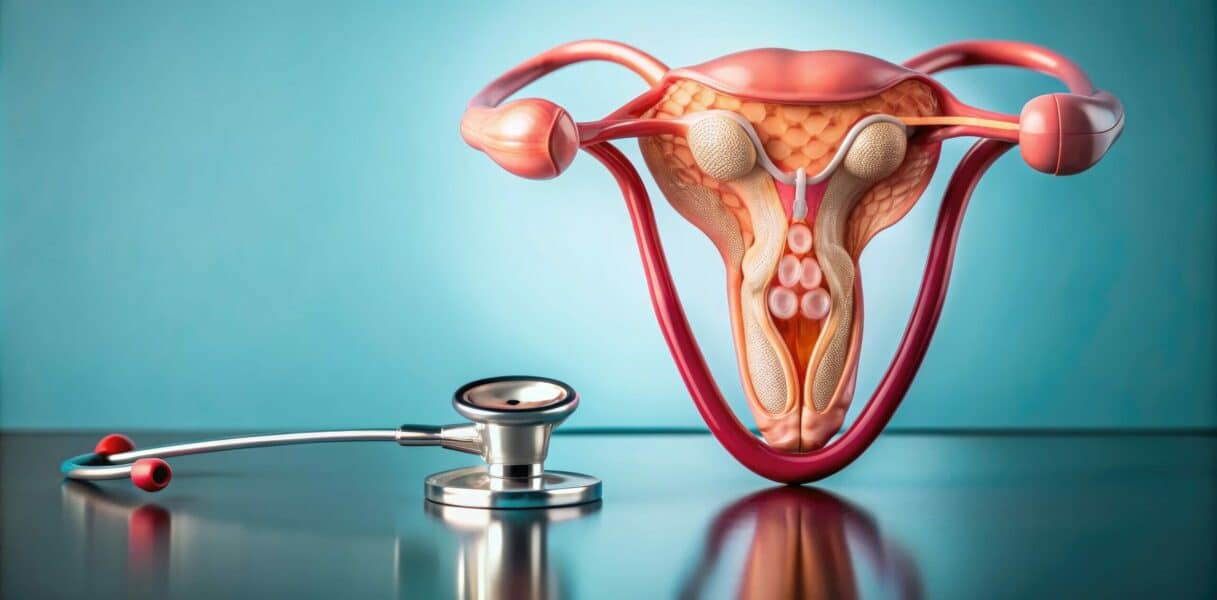



Endometriosis is a burden for a substantial number of women and those assigned female at birth (AFAB). This inflammatory disease, which touches about 1 in 10 women of reproductive age globally1, can cause debilitating chronic pain and poor fertility and was recently found to be linked to a whole host of comorbidities. It has been historically under-researched, but recent advances are giving the field hope. We take a look at what researchers are excited about.
Endometriosis has historically been overlooked but there’s been a recent surge of interest from research labs and groundbreaking advances are starting to emerge. What’s changed?
Krina Zondervan. What we’re seeing now is the result of a gradual increase in awareness over time. When I started working on endometriosis as a student in the mid-1990s, most people wouldn’t really have heard of it, be it men or women. I’ve seen that quickly change over the past decades.
It’s not just endometriosis, it’s women’s health as a whole that has been emerging from the fringes of research. Within the annals of biomedical research in general, females and AFAB people have long been treated as “small men”, with doses of medicines developed using males simply adjusted for weight and stature. That clearly disregards how the complex hormonal systems interact with biology.
There’s now a much wider acknowledgement that this dearth of research is a huge burden on society. The World Economic Forum published a report2 in January with McKinsey estimating that closing the women’s health gap could save the global economy about $1 trillion annually. It’s just staggering — I think this really made people sit up. This has been accompanied by countries putting women’s health as an important agenda item for research.
In the US, for instance, First Lady Jill Biden launched a White House Initiative3 this past February putting 100 million dollars into tackling key aspects of women’s health that haven’t really been addressed appropriately so far. The Women’s Health Strategy for England, published in 2022, as well as the Women’s Health Plan for Scotland in 2021 have generated a fantastic and much needed focus on improving women’s health management. France has also clearly emphasised improving things for women with endometriosis.
There have been interesting moves in our understanding of where endometriosis comes from. Can you tell me about that?
I think it’s reasonably well accepted that superficial peritoneal disease, that can occur around the inside of the abdomen, comes from what we call retrograde menstruation. Almost all women and AFAB people will have some menstrual blood flowing back up the fallopian tubes and into the pelvic cavity. Some of that menstrual debris contains viable endometrial cells and these are most likely what causes the peritoneal lesions.

This idea is supported by many studies. Lab studies found that endometrial cells seeded in mouse models developed these lesions. Epidemiological studies showed a link between endometriosis risk and earlier age when periods start, shorter cycles as well as heavier menstrual bleeding4. Genetic studies building on the work of Luiza Moore published in Nature in 20205 showed that mutations arising naturally in the endometrium could be found in these peritoneal lesions. These all indicate a clear link with the origin of these lesions.
The question now is why these lesions only develop in some women and AFAB people. Are there differences in, say, the immune system or in the hormonal system? Are other factors involved? That’s what research into causes is primarily focused on.
One of the difficulties with this disease is that endometriosis is tricky to study.
Yes, it’s really difficult to follow the progression of disease, especially superficial lesions. Certain subtypes such as ovarian endometriosis (cysts on the ovaries) or deep nodular disease, you can usually visualise through imaging, but with superficial endometriosis, the only way to see how the disease might be evolving is through surgery.
We also don’t have many spontaneous models of the disease — outside of humans, very few animals menstruate and have menopause. There are some non-human primates, such as rhesus macaques, that can develop endometriosis spontaneously like humans. But of course, that’s a very difficult species to study. There are some lab models available, the closest to human physiology being the menstruating mouse model6 developed by Erin Greaves that combines seeding endometrial tissues with an induced hormonal fluctuation pattern to promote these lesions to grow. But none of these truly reflect the human situation.
A potential exciting way forward under development are organoids — different human cell types grown together in the lab that reflect the more complex architecture of human tissues for research. This work is still in its infancy as the endometrium is a very complex tissue, but I believe we will see some massive improvements on that front in the coming years.
Another exciting area of research for endometriosis is genetics and heritability…
We’ve known for a long time that endometriosis can run in families — about 50% of disease risk7 in the general population is attributable to genetic factors, which is a sizable heritability. But endometriosis is what we term a complex disease, which means that genetic factors and environmental factors and other aspects we don’t quite understand yet all contribute to risk. No single gene would explain the majority of familial cases. Still, our work8, a highly collaborative analysis of global genetic databases provides some clues. We found about 40 regions of the genome that harbour variants known to increase the risk of endometriosis. These variants could be linked to particular pathways, which is opening up new lines of research.
Endometriosis is a « complex » disease, which means that genetic factors and environmental factors and other aspects we don’t quite understand yet all contribute to risk.
Through this work, we also discovered a shared genetic basis for a whole host of co-morbidities for the disease. Some of these were perhaps obvious, for instance shared risk with other reproductive conditions such as uterine fibroids. These presumably share hormonal risk factors with endometriosis that are genetically regulated. But some of the other conditions we found to be linked with endometriosis, such as inflammatory conditions like asthma and osteoarthritis, and pain conditions like low back pain, migraine, and multisite pain, came as quite a surprise. It could mean existing treatments for these conditions could be repurposed for endometriosis and vice versa, or new treatments could be developed across these.
What are the treatment options for those suffering from the disease and what are the new developments in that area?
There’s a realisation, which I think is a really healthy one, that surgery will not necessarily benefit everyone. This is particularly true for those who have had multiple surgeries and either their disease has come back or their symptoms have not resolved after the intervention, or those who are very young. The mainstay of treatment still tends to be hormonal treatments of various different guises. First-line treatment is an oral contraceptive, which can work effectively in some women, but can’t be used if the person wants to conceive. In the same line, there are Gonadotropin Releasing Hormone (GnRH) analogues, treatments that effectively shut down the hormonal axis and create a form of medical menopause. These come as both agonists and antagonists — there are pros and cons to both.
Having those options is good, but the real need lies in the development of non-hormonal treatments. That’s ultimately what women want, and both academia and various companies are looking into developing these.There’s interest, for instance, in immunological treatments dampening the inflammation associated with endometriosis. That’s a tricky one, of course, because like anything involving the immune system, such treatments could trigger side effects.
And what of non-cisgendered AFAB people who develop endometriosis?
Pretty much all the clinics in the UK that treat endometriosis see individuals who identify as women and trans men. All the concerns we have about how to manage the disease and how to treat it clearly affect both groups equally, although trans men are an under-studied group in terms of optimal disease management. Inclusivity in both optimising clinical management, addressing all patients’ needs, and in research, is hugely important moving forward, and we probably need to do better at that on a global scale.