


#1 With the massive deployment of renewable energy production facilities, it is essential to store more energy
TRUE – Renewable energies pose new challenges: intermittency and decentralisation.
Didier Dalmazzone. Network operators, and high-voltage transmission in particular, are facing new challenges with the deployment of renewable electricity generation resources. The first is decentralisation: electricity production will move from a few centralised facilities – nuclear power stations – to a multitude of small-capacity production facilities. The second challenge is the intermittency of renewable energies: the greater their deployment, the greater the risk of an imbalance between supply and demand. This risk is significant because it can lead to dangerous frequency variations for the grid, which can even result in power outages.
These two challenges mean that we need to increase our energy reserves, and there are two ways of doing this: on the one hand, by promoting flexibility and, on the other, by energy storage. Stationary storage is therefore essential, providing a virtually instantaneous response in the event of an imbalance between supply and demand. It is destined to be deployed on a massive scale.
FALSE – The proliferation of renewable energies stabilises production.
The proliferation of electricity generation sources stabilises production in the event of weather fluctuations, for example. This applies not only to renewable energies but also to other production methods, particularly nuclear power in France.
This advantage can help to overcome some or all the intermittence problem. But relying solely on abundance to protect against imbalances in supply and demand means oversizing the generating fleet, which is not an economically viable solution.
UNCERTAIN – Flexibility is another solution to the challenges posed by renewable energy.
Flexibility [Editor’s note: the ability of an energy system to adapt to variations in energy production and consumption] is a complementary solution to storage. It is based on controlling the consumption of the largest users to prevent a supply/demand imbalance. But there is still some uncertainty: all the forecasts agree that electricity consumption is set to rise, which is essential if we are to meet our decarbonisation targets. This increase requires an increase in security reserves: stationary storage and flexibility are therefore essential.
#2 There is no solution for increasing energy storage capacity
TRUE – The necessary storage capacity cannot be achieved using pumped storage stations (PTS).
To date, two-thirds of the world’s storage capacity is provided by STEPs1 [Editor’s note: this storage system is based on the principle of gravitational energy: the water contained in two water reservoirs at different altitudes is released when needed to power electricity-generating turbines; it is pumped back to the upper reservoir when there is a surplus of electricity production].
In France, this figure is as high as 95%, and there is little scope for increasing our capacity. RTE, the French electricity transmission system operator, estimates that operational reserve requirements will be between 4 and 9 GW in 2050 (depending on the production scenario2), compared with almost 3 GW today. According to the International Energy Agency (IEA), global storage capacity should be multiplied by 6 between 2023 and 20303.
FALSE – There are other types of storage, such as stationary batteries, that could rapidly increase global capacity.
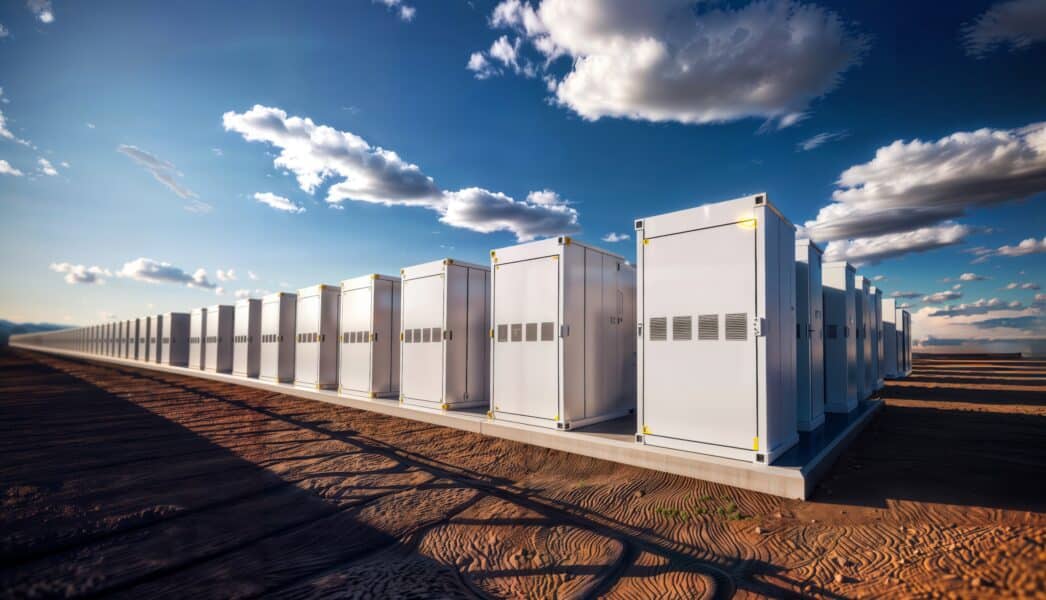
The IEA estimates that 90% of the growth needed – a sixfold increase between now and 2030 – will come from stationary batteries. This is a fully developed solution that is growing rapidly thanks to the fall in its cost over the last ten years or so. Batteries do, however, pose the challenge of the scarcity of certain critical materials (cobalt, copper, nickel, etc.).
UNCERTAIN – Other storage technologies exist or are being developed, and certain sectors could develop.
Other means of storage do exist. Compressed air storage, for example, could be developed: this is based on storing compressed air in underground cavities. However, this technology suffers from efficiency problems – some of the energy is lost through thermal dissipation of the compressed air – and the industrial sector is not yet fully developed. Electricity can also be converted into hydrogen, known as power-to-gas. But this method of storage is controversial, not least because the conversion efficiency is low (30 to 40% at best). Finally, electricity can also be stored in the form of heat. Heat transfer fluids, phase change materials or chemical reactions can be used. The advantage of these technologies is that they can store energy over the long term, over several seasons, unlike batteries, which discharge quickly. A hydrated salt storage project will be launched on the campus of Institut Polytechnique de Paris.
#3 The positive environmental impact of renewable energies is offset by the storage resources required
UNCERTAIN – The production of storage resources has an environmental impact.
Of course, the production of storage technologies has an environmental impact. STEPs require the construction of dams: considerable quantities of concrete are produced, and entire valleys are drowned, impacting biodiversity and local populations. Batteries contain many metals, and we know the environmental impact of extracting and refining them, and there is no battery recycling system yet. But to assess whether this impact offsets the carbon emissions avoided by replacing fossil fuels with renewable energies, full life-cycle analyses would have to be carried out. Wind and photovoltaic energies have much smaller carbon footprints than coal, oil or even gas. It is highly unlikely that storage will reverse this balance.
FALSE – The use of used batteries from electric vehicles for stationary storage has been mentioned as a solution.
When an electric vehicle’s battery falls below 80% of its rated capacity, it must be replaced. It is possible to give them a second life by using them for stationary electricity storage, an operating mode that places less strain on the battery. This would improve the environmental balance of stationary electricity storage. But this solution remains controversial because of potential safety problems. We still lack feedback on these batteries at the end of their life.