


The ecological plan presented by the French government in September 2023 has several axes, one of which concerns securing access to raw materials. Lithium, cobalt and nickel are essential to the ecological transition, but a small number of countries have the monopoly. But what resources are available in France? To answer this question, a new inventory of mineral resource potential will be carried out by BRGM. It follows on from the last inventory carried out between 1975 and 1992.
What are the challenges of this new mining inventory?
Matthieu Chevillard. During the previous inventory, around 30% of prospective areas (with mining potential) were not covered. The new inventory aims to cover the entire metropolitan area of interest. This includes ancient mountain ranges (Massif Armorican, Massif Central, Vosges, Maures, Ardennes, Corsica) and recent mountain ranges (the Alps and Pyrenees). The challenge is to cover areas that have never been studied, but also to re-evaluate those already covered during the previous inventory: in this way, we will be building up an unprecedented uniform data set.
Another important issue concerns the metals we are looking for. The list of substances considered ‘critical’ (on which Europe is largely dependent) is growing every year. At the time, many of these substances – used in renewable energies, electronic devices and so on – had not been analysed. The aim was to assess the region’s potential. Only 22 elements were researched, compared with around fifty today. Most of the critical metals, such as lithium, rare earths, gallium and germanium, will be analysed this time.
Will you be using any new tools compared with the last survey?
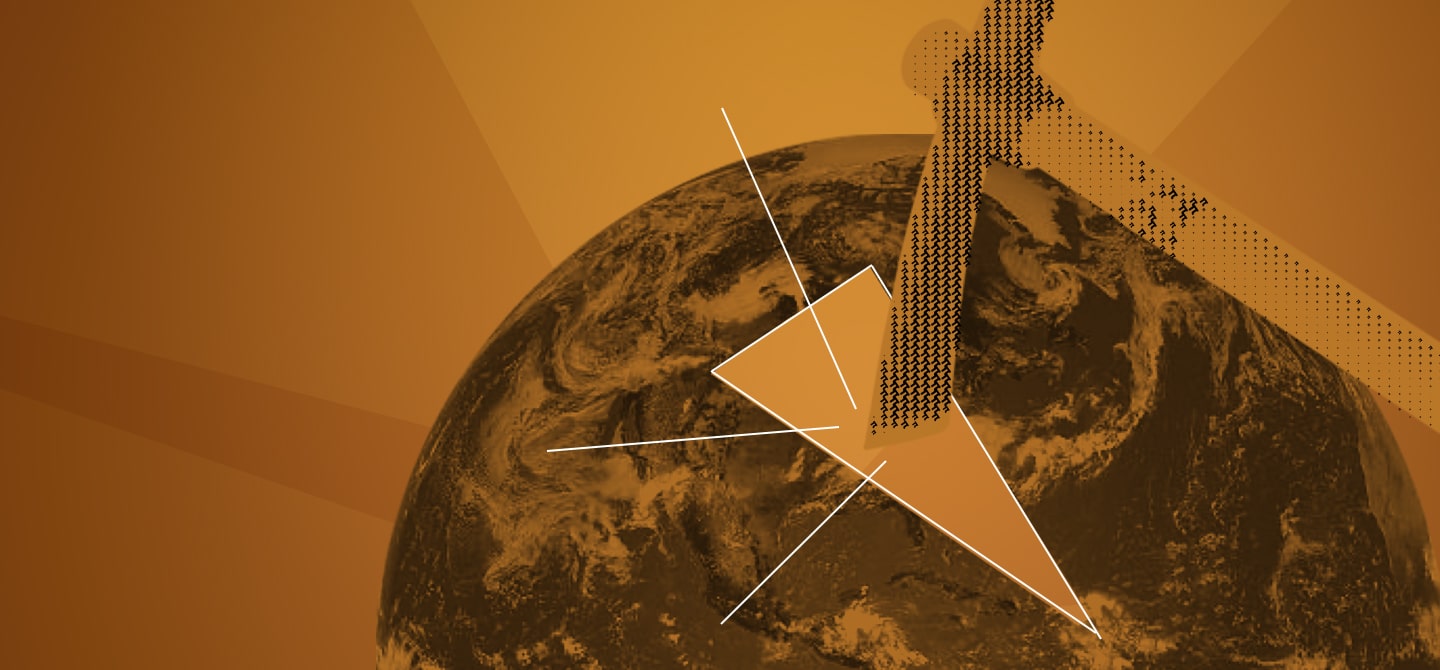
Pierre-Alexandre Reninger. Yes, we will be using airborne geophysics, a technique that has never before been used for this purpose and on this scale in France. It provides information on the nature of the rocks present – possibly at a depth of several kilometres – without any impact on the environment, unlike drilling, for example. It’s a bit like an MRI scan.
We will be using three different geophysical methods: magnetism, gamma spectrometry and electromagnetism. Each measures different properties of the subsoil, providing geologists with information about its geological structure. The instruments are taken on board a plane for flat or hilly areas, or a helicopter above mountainous terrain. We are using a unique high-resolution electromagnetic system developed by the University of Aarhus in Denmark and operated by SkyTEM. It takes the form of a large 300 m2 loop that we fly 50 metres above the ground. We have already successfully tested its use in a number of projects in France and around the world.
Geophysics provides clues about geological structures at depth, but it needs to be supplemented by surface measurements.
What tools will be used for surface analysis?
M. C. Initially, a regional geochemistry programme will be carried out on stream sediments. The method involves taking samples of sediment – particles derived from the weathering of rocks – from small streams. Their chemical analysis in the laboratory is designed to measure their metal content: 49 chemical elements will be measured simultaneously. This data will give us an indication of the presence of possible mineral deposits, which will have to be studied in greater detail later on. We will be taking new samples from areas that have never been surveyed, as well as re-analysing samples from the first mining inventory, some of which are carefully preserved at BRGM.
This method is not new; it was used for the first inventory. But thanks to improvements in analytical techniques, we are now able to detect chemical elements in much lower concentrations than at the time of the first inventory.
What are the advantages of the exploration methods that will be used?
M.C. In geochemistry, detection limits are 100 to 1,000 times lower since the last mining inventory. For example, we are now able to detect concentrations of 0.2 ppm of copper or nickel, compared with 10 ppm at the time. This technological improvement also enables us to analyse new metallic elements of major interest today.
P‑A R. The three geophysical methods used provide information at increasingly greater depths: we will be able to obtain precise data ranging from very close to the surface right down to the first kilometre or so. The electromagnetic method offers the enormous advantage of providing 3D data on the structure of the subsoil. Above all, the acquisition times are unparalleled by conventional geophysical techniques, which involve deploying instruments on the ground. We can cover thousands of kilometres in a week!
M.C. These methods also offer a particularly advantageous cost/survey area/value ratio. This first scan of the whole of Metropolitan France requires a substantial investment, but one that is relatively reasonable given the usefulness of the data acquired. This data will contribute to a better understanding of the subsoil and will be useful in other sectors: environmental and hydrogeological studies, natural risk assessment, and infrastructure studies for regional planning.
Why weren’t these tools used for the first mining survey?
P‑A R. Airborne geophysics is a method that has been around since the middle of the 20th Century. In France, the oil industry used it for several surveys in the 60s and 80s over the Paris and Aquitaine Basins. Then France slowed down its oil and mining activities considerably, and the use of this method came to a halt, unlike in major mining countries such as Australia, Canada and Finland. Airborne geophysics was then redeployed as part of a programme to acquire subsoil infrastructure data. French Guiana was covered in 1996 and the Armorican Massif in 1998. Several more surveys have been carried out since 2010.
Since the first airborne geophysical surveys, computerised methods have made huge strides forward. Are these developments useful for the mining industry?
M.C. At the time of the first mining inventory, geologists sometimes analysed geophysical and chemical data separately. Now they are interpreted jointly, thanks for example to the innovative predictive mapping tools developed by BRGM. An artificial intelligence algorithm combines all the information – geochemistry, geophysics, but also geology and known deposits – to produce mineral potential maps for the various substances of interest. We are looking at the possibility of going beyond 2D cartographic analysis and making 3D predictions, using electromagnetic geophysical data.
Ultimately, more than 30 years after the last inventory, the new mining inventory does not seem to be based on any breakthrough innovations…
M.C. Airborne geophysics and geochemistry are the only methods that can cover large areas quickly, which is an essential first step in the new inventory. They provide an enormous amount of information! In a second phase, targeted areas of interest will be analysed in greater detail using other techniques. In addition to the traditional geochemical methods, innovative tools – some of which are still experimental – will be used. I’m thinking, for example, of biogeochemistry using plants, or hydrogeochemistry.
P‑A R. This more local scale is traditionally covered by tools on the ground, deployed on foot. Many teams are currently working on developing reliable geophysical tools on board drones. This is a fast-growing field, with some tools already fully developed (such as magnetism) and others still in the prototype stage. Progress is so rapid that some will probably be operational by the time the 2nd stage of the inventory is implemented.