IPCC: the cost of stopping climate change



- Over the last decade, the costs of climate change mitigation options have fallen drastically. For example, installing a new solar panel costs about 10 times less than it did ten years ago
- Models that take into account the economic damage of climate change find that limiting warming to 2°C over the 21st Century promises lower global economic benefits than reducing warming.
- Climate change impacts lead to increased inequality and therefore pose a threat to poverty eradication.
- The chances of achieving equitable and effective policies are higher if different actors, such as citizens and businesses, are broadly engaged from the beginning of policy design.
How much will it cost to mitigate climate change to meet the goals of the Paris Agreement?
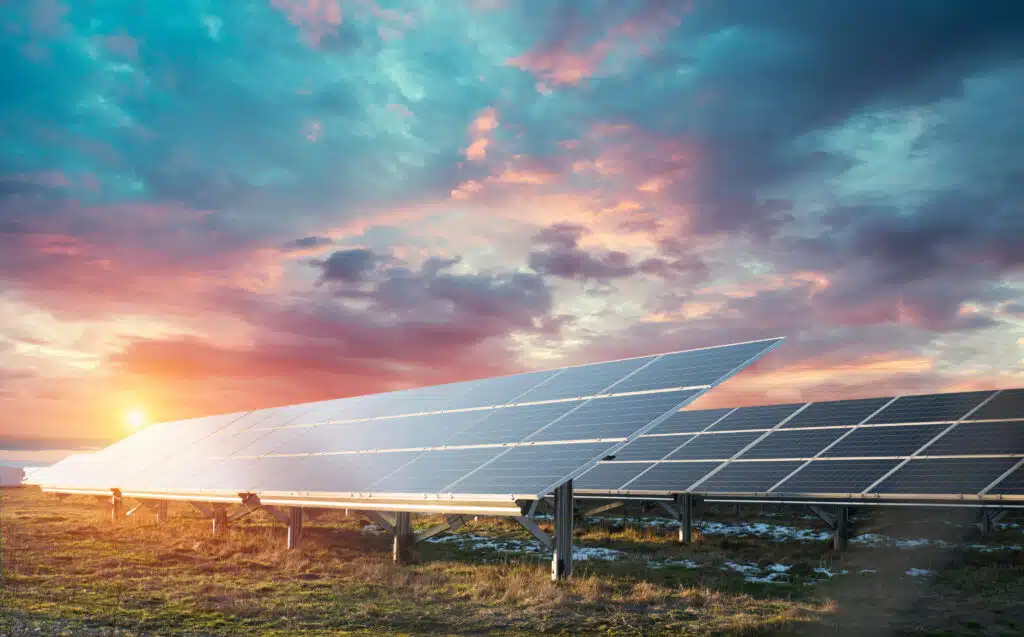
Celine Guivarch. Less than before. Policies and measures put in place over recent years have pushed the deployment of possible solutions, which in turn has forced costs down. As a result, the evidence shows that the cost of some mitigation options has fallen dramatically in the past decade. For example, the cost of installing new solar has been divided by almost 10 times over the past 10 years. In many regions of the world solar power is economically competitive with fossil fuels now 1. Then there are mitigation options, which include transformations in infrastructure to shift from cars to public transportation, bikes, walking and so on. What the report shows is that the economic benefit is seen over the lifetime of a different option, so it makes economic sense to shift 2.
The literature on macroeconomics shows that the cost of mitigation is lower than the cost of inaction, in part because the cost of inaction means bearing the impacts. The report states, “models that incorporate the economic damages from climate change find that the global cost of limiting warming to 2°C over the 21st Century is lower than the global economic benefits of reducing warming, unless: i) climate damages are towards the low end of the range; or, ii) future damages are discounted at high rates (medium confidence)”.
Other benefits that aren’t included in either the option or the macroeconomic level are health improvements. For example, if you reduce fossil fuel use, you reduce CO2 emissions and you also reduce local pollutants and some particulate matter that cause indoor pollution and air pollution in cities. Such action therefore improves the quality of the air we breathe and reduces impacts on asthma and other health issues. The monetary value of these benefits is extremely high, improving the health and well-being of people.
But while we know that ambitious action to reduce emissions makes sense from an economic point of view, the literature is clear that it will not be easy. There are many barriers to mitigation action; financial, institutional, or even infrastructural, such as current systems that locks in the use of fossil fuel. Even when the aggregate cost-benefit is favorable, there is still the question of who will bear the cost, who stands to benefit, distribution of the cost, the “just transition” at all scales, between countries, but also within countries and communities.
The assessment shows that if we keep using existing fossil fuel infrastructure and maintain current construction and estimate their emissions to the end of their technical life, then we would have exhausted the carbon budget compatible with limiting global warming to 1.5°C 3.
We know what to do, and we understand the economic case for rapid and ambitious action, yet a finance and investment gap for the transition persists. Why?
The report looks at actual investments at the global level, and available capital. It shows that finding more capital to invest is not the problem, but rather of channeling investment towards mitigation solutions is. That gap between investment flows and needs ranges from a factor of 2 to 6, 4 depending on which region and which sector, and that gap is bigger in developing countries, and in the land-use and agriculture sector. To close that gap, we need policies that signal that we will make a fast and deep transition away from fossil fuels. The literature shows that what is needed is a package of policy instruments, coordinated at different scales, from the territorial, to the regional, the national, the European and the global scale. And it is really a question of coordination so that all signals are aligned.
That includes fiscal elements, but also regulatory policy instruments on technical regulations for vehicles, buildings, industrial goods, as well as urban planning to ensure that affordable housing is available not too far from job centres. The idea is not to focus exclusively on climate-centric policies, but rather to change the conditions in which mitigation can happen.
What about the ecological transition and inequalities?
One of the main themes of the report relates to implications of mitigation options on other dimensions of sustainable development: poverty eradication and reduction in inequalities are systematically assessed for instance. A very strong message from Working Group 2 (on impacts, vulnerability and adaptation) is that impacts from climate change disproportionately affect the most vulnerable countries and populations. And that impacts of climate change drive increases in inequalities and are a threat to poverty eradication. So really through avoiding impacts, mitigation is reducing economic inequalities and that is a high confidence finding.
The literature also shows that mitigation can either reduce or increase income inequalities and poverty, depending on the policy instruments, design, and implementation. For example, there is not one single way to design a carbon tax. Depending on how the revenue is used, the distributive impact of the fiscal action can go in both directions. Therefore, explicit attention to equity and justice at all scales, from design to implementation, is important for both social acceptance of policies and their distributive impact. Furthermore, we know that chances of fair and effective policies are higher if there is broad engagement of different actors such as citizens, unions, and business at the start of policy design.
Is capitalism the problem? Can we engineer a transition out of fossil fuels in our current system?
The report goes quite deeply into the question of the role of demand and sufficiency. Sufficiency means policies, measures and daily practices that avoid demand for energy, materials, land, water while delivering human wellbeing for all within planetary boundaries. For example, if you avoid transport because of remote working, or you don’t heat your offices during weekends, or if you decide to heat at 19°C instead of 20°C, that would be sufficiency.
The concept of sufficiency in the literature is strongly linked to human wellbeing within planetary boundaries, as well as to poverty eradication and reduction of inequalities. What we know is that mitigation, including demand-side mitigation, is consistent with improving well-being for all and, and providing access to basic needs.
Interview by Denise Young
Contributors
Céline Guivarch
Céline Guivarch leads the “Climate-economy modelling at the global scale” team at CIRED. Her research focuses on both the economic impacts from climate change and the assessment of mitigation pathways. She has worked on the evaluation of climate change mitigation costs, the social cost of carbon, energy efficiency, energy security, energy poverty, and uncertainties in models and decisions. She is also a Lead Author of the Chapter “Mitigation pathways compatible with long-term goals” of the 6th assessment report of the IPCC Working Group III on mitigation. She is a member of the French High council for climate, an independant body assessing government climate policy.