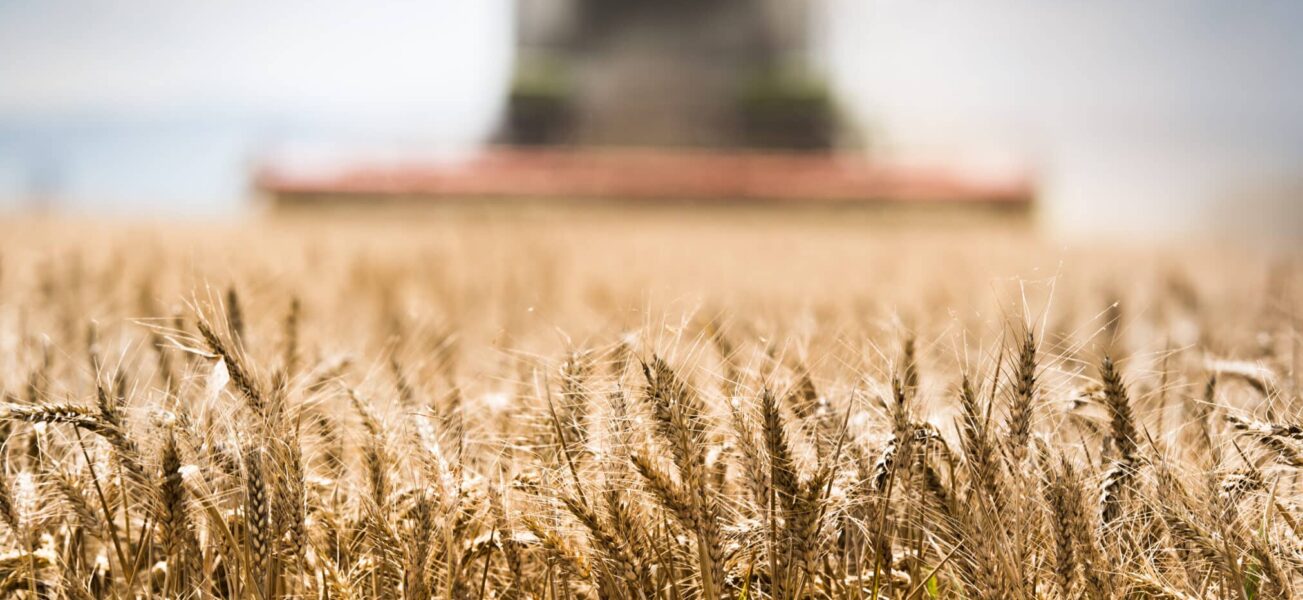



A central staple of diets since Antiquity, wheat has emerged once again as a strategic issue at the turn of the 2020s. “At that date, while less consumed globally than rice, wheat is the most exported cereal in the world: 242 million tonnes (Mt) traded globally, compared to 68 Mt for rice,” specifies Jérémy Denieulle, director of studies for the think tank Agriculture Stratégies. The effects of the COVID-19 pandemic, coupled with Russia’s invasion of Ukraine—two major wheat exporters—disrupted the balance of supply and demand. Prices exploded: the price of wheat approached 450 euros per tonne. The shock wave spread globally, affecting food security in sub-Saharan Africa and North Africa along its path.
Limited resources
Alongside the Middle East, North Africa currently concentrates the highest rates of wheat consumption per capita. A central component of dietary habits, wheat represents 69% of cereals intended for human consumption in Morocco and 96% in Tunisia. Since the mid-twentieth century, countries in the region have gradually fallen into hyper-dependence on imports to satisfy domestic demand. Self-sufficiency dropped to less than 40% after World War II. Jérémy Denieulle adds: “North Africa and the Middle East form by far the region most dependent on imported wheat in the world today. It concentrates one-third of global wheat purchases, while representing only 6% of the world’s population: of the 110 million tonnes of wheat consumed there annually, 65 million come from imports.”
According to the geographer, several factors explain this phenomenon. These countries experienced strong demographic growth with, for example, a population that tripled in Egypt between 1950 and 2010. While food needs increased proportionally, cultivable areas remain extremely limited, as 95% of the territory is desert. To increase its agricultural area, Egypt relies on horizontal expansion, that is, the conquest of new lands in the desert. However, to cultivate in these arid zones, it was necessary to create irrigation pivots from the Nile in the south of the country. With very little freshwater resource, Algeria followed this expansion model by drawing from groundwater aquifers. Yet, for both countries, greening the desert, in a context of climate disruption and water stress, is a partial and, above all, unsustainable solution.
In Egypt or Algeria, double-edged subsidy policies
In Algeria as in Egypt, bread has been a heavily subsidised commodity since the mid-twentieth century. It is at the heart of the social contract: social peace is obtained if the state is able to guarantee access to bread for everyone. Jérémy Denieulle recalls that “in May 2023, under the effect of inflation caused by Russia’s invasion of Ukraine, the Egyptian government decided to quadruple the price of subsidised bread (baladi bread) which had remained the same since 1989. A historic decision that had a cataclysmic effect on Egyptians.” Similarly, in Algeria and Egypt, wheat is an eminently political subject. The states are both directly involved in the cereal sector, at all levels, and particularly in terms of imports. In December 2024, the Egyptian government decided to withdraw the mandate from the public company that managed wheat imports to transfer it to the Air Force.
It is planned to export 3.5 million tons of wheat during the 2025–2026 season to Morocco, where average annual consumption is 288 kg per person
When Russia began exporting its wheat production in the mid-2000s, then accelerated the pace after 2014, Cairo gradually turned away from American or French wheat to turn toward Moscow. Egypt, located opposite the Black Sea, was an ideal client for Russia. “The world’s leading wheat importer, dependent before 2022 on nearly 80% of Russian (60%) and Ukrainian (19%) wheat, in an extremely tense economic and budgetary situation, Egypt saw its room for manoeuvre drastically and dangerously reduced after the Russian invasion,” adds Jérémy Denieulle. This first partnership with Cairo opened the doors of the region to Moscow. A rapprochement strategy was specifically deployed toward Algeria; a market long considered the preserve of French grain producers. “Taking advantage of diplomatic tensions between Paris and Algiers since 2022, Russian wheat has supplanted French wheat, now capturing nearly 80% of the country’s imports.” Let us also recall that Russia remains the world’s leading exporter (55.5 Mt for 2023–2024) ahead of the EU (38.9 Mt) and the declining United States (19.4 Mt).
French players are seeking to redirect these lost market shares toward the neighbouring Moroccan kingdom. It is planned to export 3.5 million tonnes of wheat during the 2025–2026 campaign to Morocco, where average annual consumption is 288 kg per person, according to data from the U.S. Department of Agriculture [Editor’s note: For comparison, average annual consumption in France is 92 kg/year].
Sub-Saharan Africa and wheat, a recent history
It wasn’t until the mid-twentieth century that we saw an explosion in wheat demand in sub-Saharan Africa. On a global scale, this market (along with Southeast Asia) has recorded the strongest growth. Jérémy Denieulle explains this through various factors: “Wheat-based products, such as bread, are consumed more in cities than in the countryside because they keep easily and often require less preparation than local foods.” It is partly due to these advantages, and in a context of galloping urbanisation combined with strong demographic pressure, that demand exploded. “Nevertheless, since it is a cereal adapted to temperate climates, lands suitable for wheat cultivation and capable of meeting such needs are rare. They have thus been filled by import flows.” Sub-Saharan Africa crossed a new record with 30 million tonnes imported in 2024–2025.
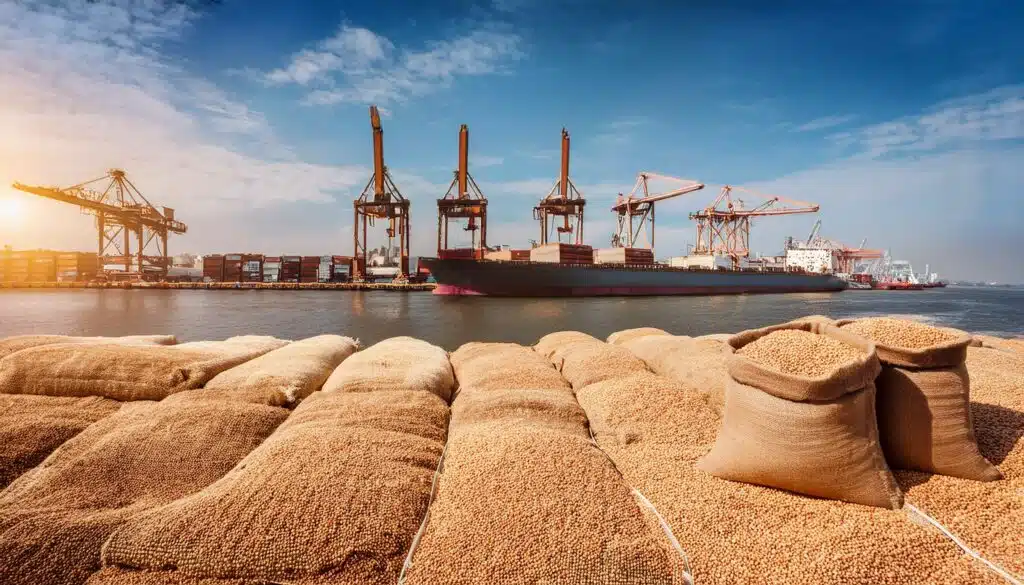
Nigerians’ diet rapidly transformed during the 1960s-1970s, stimulated by the country’s urbanisation and the change in lifestyles from countryside to city. “Virtually non-existent before the 1950s, wheat consumption increased from 6 kg per capita in 1974 to 22 kg in 1985. The country recorded a 400% increase in just ten years, going from 300,000 tonnes of wheat per year in 1974 to more than 1,700,000 tonnes in 1985.” The lack of productivity in rural areas and defective road infrastructure between production zones and consumption zones created a new paradox: imported wheat is much more competitive than locally produced commodities. Today, Nigeria is the 7th largest wheat buyer in the world: “In 2021, the country produced 90,000 tonnes of wheat and imported 6.3 million tonnes.” The lack of maintenance of irrigation systems in the north of the country, failing governance, chronic insecurity, or the lack of inputs and adapted seeds continue to hinder production.
Food security dependent on global uncertainties
These flourishing and lucrative markets have attracted exporting powers. “In the 1970s-1980s, the United States reigned supreme over global agricultural flows. It wasn’t until the early 2000s that new actors appeared.” In 2025, only ten countries account for 80% of global exports: Russia (13.8%), Australia, the United States, Canada, Ukraine, France, Argentina, Germany, Romania, and Kazakhstan. The Kremlin integrates wheat export as a vector to establish itself durably in countries in the region to defend its interests there. “Moscow has officially declared that wheat, in Russia’s eyes, is a strategic product on par with oil, especially in a context where Russian oil is targeted by numerous sanctions.”
Where populations are already fragile in terms of food, price increases can have tragic consequences. The war in Ukraine, largely responsible for global inflation, has further complicated access to wheat or fertilisers. To return to the case of Nigeria, he specifies that “the increase in production costs has been reflected in food prices: food inflation exceeded 38% in 2024 and bread, although less central in Nigerian diets than rice or corn, saw its price increase by nearly 30% in 2022.”
In the FAO report The State of Food Security and Nutrition in the World published in 2025, it is confirmed that while global food insecurity declined between 2023 and 2024, Africa and Western Asia are the only two regions in which the number of people who experienced hunger continued to increase. “The region must navigate troubled waters in international wheat markets, subject to extreme variations that can sometimes undermine social and political stability, moreover, where states’ capacities to absorb crises are weak,” concludes Jérémy Denieulle.