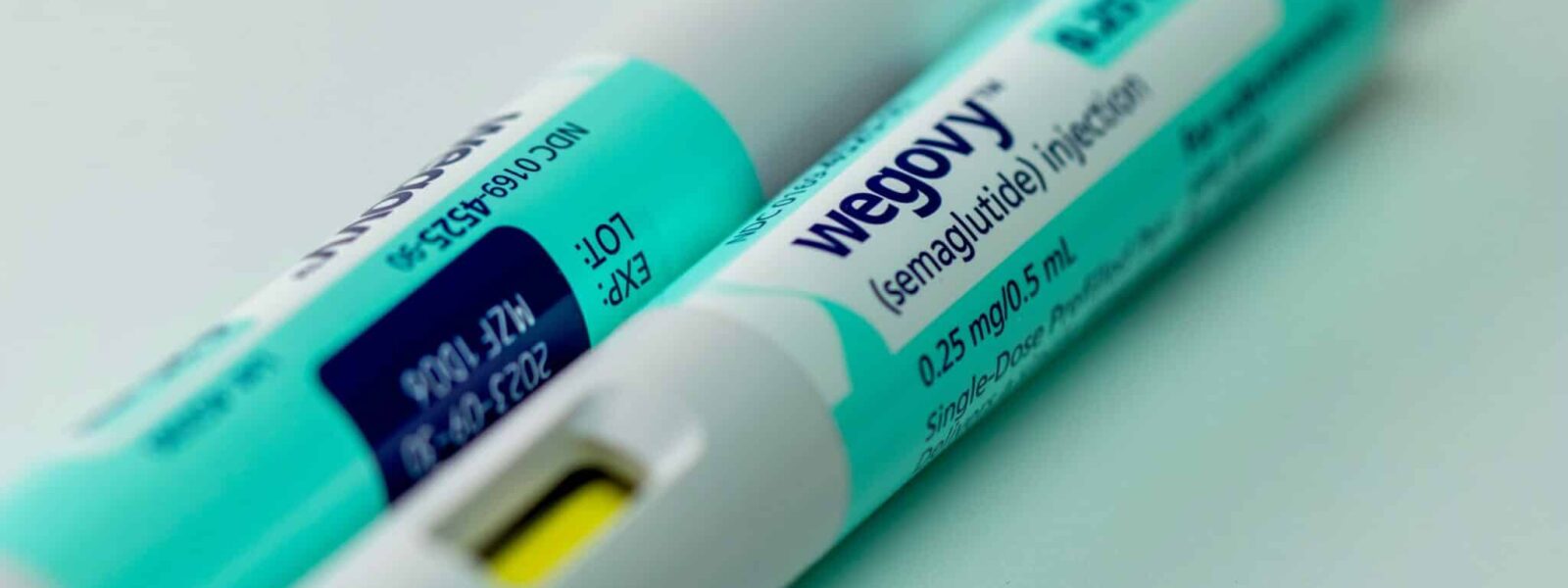
Drugs alone won’t be enough to solve the obesity crisis



- Today, around one in eight people suffer from obesity, and anti-obesity drugs are improving their health prospects.
- These medical treatments mimic the intestinal hormone glucagon-like peptide 1 (GLP-1), which is involved in sending a satiety signal.
- These drugs (Semaglutide, Ozempic or Wegovy) appear to be safe and effective, but longer-term data are needed.
- Their exact mechanism of action is not yet understood by scientists.
- Drugs alone will not solve the obesity crisis, as this is a multifactorial disease.
Semaglutide, Ozempic, Wegovy… The names of these drugs have been seen across many headlines recently as they have shown promising results for people with obesity, in and out of the lab. These drugs—designed to mimic gut hormone glucagon-like peptide 1 (GLP‑1)—have been touted as near-miracles at a time when the obesity epidemic is raging, with about 1 in 8 now living with the disease. But can they really solve a medical problem as complex obesity?
#1 Anti-obesity drugs are making people with obesity healthier
TRUE—When it comes to glucagon-like peptide 1 (GLP‑1) receptor agonist drugs, the health benefits are clear.
The landmark STEP trials(2) showed that semaglutide, the anti-obesity drug that has been hitting the news, causes about 15% weight loss in just over a year (68 weeks) with a once-weekly dose of 2.4 mg.
GLP‑1 drugs clearly also improve patients’ health beyond weight loss. GLP‑1 drugs can lower blood pressure and triglyceride levels and average blood sugar, as marked by glycated haemoglobin, of about 1.4%. They also alleviate cardiovascular risks. In Type 2 diabetes, GLP‑1 drugs are associated with a 12–14% reduction(3) in three-point composite major adverse cardiovascular events outcomes compared to placebo. Interestingly, they only have a modest effect on cholesterol — much less than you might expect from the weight loss data.
FALSE—GLP‑1 drugs come with substantial side effects that can threaten a patient’s ability to continue taking them.
Gastrointestinal side effects are the most immediate. About 10 to 20% will experience uncomfortable nausea, only half of which will see those symptoms subside after a year. The drugs also increase the heart rate — though the clinical consequence of that is unclear.
GLP‑1 drug treatment also increases in the risk of gallstones(4), a side effect seen with rapid weight loss of any cause (e.g., very low-calorie diets). Another concern is that muscle could make up about 20 to 40% of that total weight. How best to preserve that muscle has been the subject of a huge amount of research.
UNCERTAIN—To date, the clinical benefits clearly outweigh the potential risks.
Still, while these drugs have been around for some time, they have only been in widespread use in recent years. We’ll get greater clarity about long-term safety in the coming years.
Some preclinical studies in animals have suggested a slightly heightened risk(5) of thyroid cancer, but there is no conclusive evidence of this. Clinicians may want to proceed with caution in somebody with a history or family history of thyroid cancer.
We also need to understand our exit strategy. About two-thirds of people will put the weight back on after discontinuing treatment. Weaning patients off the drugs may help them maintain their health gains, or they may need to continue taking the drugs long-term.
#2 We know how these anti-obesity drugs work
TRUE—Our understanding of how body weight is maintained has come along enormously in the past 20 years.
What’s clear is that the old days of saying that obesity is just laziness and poor attitude are over.
Weight maintenance mechanisms fall outside of our conscious selves. This works similarly to how the body subconsciously regulates breathing — you can hold your breath in the short term, but eventually, the brain will take over. Similarly, people can easily lose weight with crash diets, but the body will drag itself back up in the long term. Time after time, dietary studies have shown that most people regain their weight after about a year, no matter what diet they’re on. It’s staggering how people’s weight barely shifts year in and year out.
Weight maintenance is based on a complex neural circuitry centred in the midbrain and hindbrain regions. These areas integrate signals related to energy balance and modulate feeding and energy expenditure. We now know that the other piece of the puzzle is gut signalling. This knowledge comes in part from bariatric surgery. Research found it wasn’t food “malabsorption” that caused the weight loss after the surgical intervention. Instead, the surgery triggered the release of gut hormones, like GLP‑1, which work together to signalling satiety earlier.
Semaglutide harnesses that knowledge about gut signals. It was developed to mimic GLP‑1. It is more effective than its predecessors, most of which led to a weight loss of about 5 to 8%, because it was engineered to better bind albumin and resist enzymatic degradation so it can stay in the blood for longer.
Down the line, we may be able to achieve a cocktail of drugs that perfectly manipulates these signals and acts almost like a medical gastric bypass.
FALSE — While we know that semaglutide works, we’re not sure exactly how.
There’s a huge amount of redundancy in the weight maintenance system — if one bit is blocked, signals get through a different pathway. Because of that, it’s difficult to know the relative contribution of each mechanism and, in the case of obesity, exactly where and how signals may be at fault.
GLP‑1 is no exception. It acts on the brain, pancreas, and stomach. None of these are “main”’ or “subsidiary” roles of the peptide. In obesity, we know that GLP‑1 delays gastric emptying. We don’t quite know how much is contributed by that effect versus the hypothalamic signalling effect. GLP‑1 receptors have also been found in other tissues like the heart, lungs, and kidneys.
Another anti-obesity drug called tirzepatide, which combines GLP‑1 and gastric inhibitory polypeptide (GIP) receptor agonists, also shows the complexity of the system. GIP on its own has an anti-fat-losing effect on the body. But when combined with GLP‑1, it has an additive weight loss effect. About half of patients given 10 or 15 mg of the drug weekly lost about 20% of the body weight over 72 weeks in the SURMOUNT trial(6). It’s not clear why, though GIP seems to enable GLP‑1 to have greater receptor occupancy.
UNCERTAIN— We haven’t yet discovered all the effects of GLP‑1
While weight loss definitely plays a huge role in the health gains linked to GLP‑1, this doesn’t seem to be the full story. One possibility is that GLP‑1 could have anti-inflammatory effects that act alongside the weight loss.
#3 Anti-obesity drugs will solve the obesity public health crisis
TRUE—There are definitely a number of genes that predispose to fat.
Epigenetics may also be playing a role, so it’s not just the genes you carry, but how the genes are being read, that influences the outcome. Anti-obesity drugs can help combat endogenous signals bringing body weight back up.
FALSE—Obesity is not only genetics; many factors are at play.
The environment—including societal pressures, socio-economic factors, access to healthy food, and maybe even pollution—plays a huge role. A big thing across societies has been a shift from manual labour to computer work and a much more sedentary life.
UNCERTAIN—GLP‑1 drugs can’t do all the work.
There needs to be a societal tackling of the obesogenic environment that we’ve managed to create in the last 30–40 years. If you’re getting to that point where literally anyone and everyone with obesity and perhaps at the more upper overweight spectrum is on the drug, you would lose that focus.