Can viruses interfere with our genome?


- Horizontal genetic transfer is the phenomenon by which genetic material is transmitted from one external organism to another, without the latter being a descendant.
- These transfers lead to strong sequence similarities between two species that are too far apart in the tree of life for the similarity to be explained by a common ancestor.
- By studying the genomes of 200 insect species and 300 vertebrate genomes, the researchers revealed more than 2,000 horizontal transfers of transposable elements between insects and more than 900 between vertebrates.
- Viruses are small organisms known to carry genetic material. They could therefore be potential vectors for horizontal transfers.
- If their hypothesis is confirmed, they will have uncovered an important mechanism in the evolution of species.
Some very surprising work suggests that viruses may have played a major role in evolution. Not only by forcing their host to transform itself to protect it, but by acting directly on the sequence of genomes. A story of horizontal genetics.
In the natural world, the sharing of genetic material does not always take place from parent to child… Geneticists refer to any mechanism of DNA transmission other than reproduction as ‘horizontal transfers’1. This is a well-known phenomenon in bacteria or archaea (prokaryotic microorganisms2). It explains, among other things, the acquisition of resistance to antibiotics that causes so many problems in public health. Bacteria exchange genes, via small circular pieces of DNA called plasmids, which allow them to adapt quickly to new environmental conditions, such as the presence of an antibiotic molecule. But can multi-cellular organisms, even very complex ones like vertebrates, also exchange genes by horizontal transfer? This is the question I am exploring…
In eukaryotes3, studies comparing the genomes of different species have shown that the phenomenon is rare, but not impossible. Horizontal transfers are easy to find, because they result in a high degree of sequence similarity between two species that are very far apart on the tree of life. They are too far apart, in evolutionary terms, for the sequence similarity to be explained by a common ancestor through the generations.
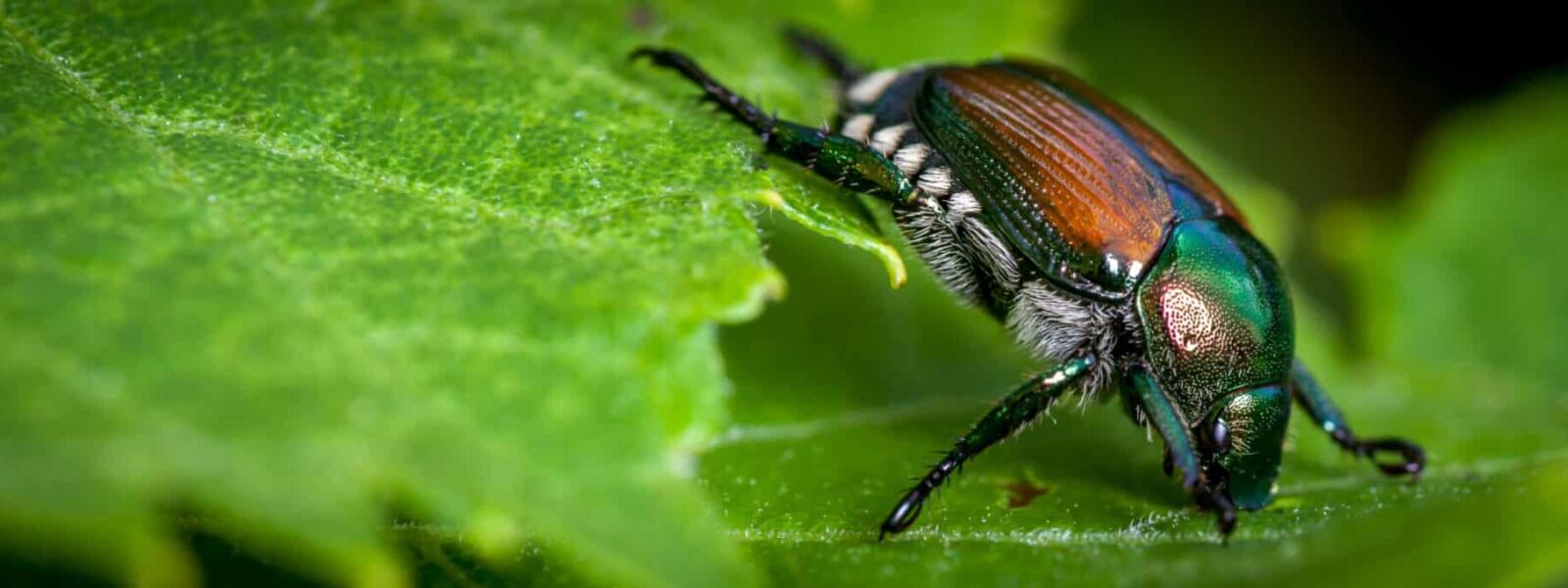
Many of the cases described involve insects, often with genetic material from bacteria. For example, beetles have a gene from bacteria that helps them digest the peptide wall of plants. Other sequences facilitate the breakdown of toxic compounds released by plants to protect themselves. The tobacco whitefly, a small whitefly capable of devastating crops, has acquired an enzyme through horizontal transfer that allows it to protect itself from toxic phenols emitted by plants, as recently demonstrated by Chinese and Swiss colleagues4. This time, it is not a bacterium that has delivered the genetic solution, but a plant… It appears to be a transfer between two eukaryotic organisms, which raises the question of the underlying mechanism.
A remarkable rarity
Intriguingly, the phenomenon has also been documented between two vertebrates. Atlantic herring and two species of smelt share an antifreeze protein acquired by horizontal transfer5. This is a unique example between vertebrates. But if we consider not only genes, but all genome sequences, the phenomenon does not seem quite so rare.
In theory, to carry out a horizontal transfer of genetic material between two vertebrate species several conditions must be met. It requires a mobile sequence from the donor species, a vector to transport it and the possibility of inserting itself permanently into the genome of the recipient species, i.e., into its germ line, so that it can be transmitted to the descendants of the recipient individual.
Let us consider the first two points: the problems of donor sequences and the vector. In addition to genes, there are “mobile” or “formerly mobile” sequences in genomes. They make up a very large part of the sequences of vertebrate genomes – more than 50% of the human genome is derived from such sequences – these are the transposable elements. These are non-coding DNA, capable of moving and multiplying in the genome. Most of them are now inactive, i.e. unable to move, but their properties make them prime candidates for participating in horizontal transfers.
By studying the genomes of 200 insect species and 300 vertebrate genomes, we have revealed more than 2,000 horizontal transfers of transposable elements between insects and more than 900 between vertebrates67. For the latter, most of the horizontal transfers concern fish, which suggests that certain aspects of their lifestyle, such as the aquatic environment or the external fertilisation of eggs, could be more favourable to the phenomenon.
On the viral trail
In addition, small organisms are known to carry genetic material. These are viruses. We therefore imagined that they could be potential vectors for horizontal transfers. Analysis of 11 different viruses infecting cells in culture or laboratory animals shows that some can pick up transposable elements from their host8. Not all were capable of doing so. Viruses specialising in human and rodent infections showed no transposable element sequences from the human or rat genomes. In contrast, viruses from flies and butterflies do have such sequences: between 0.1% and 26% of the virus particles analysed (on average 5%) had transposable elements from their host.
But the demonstration is not finished. To complete the horizontal transfer, these viruses must be able to give the transposable element acquired in the host to another recipient host. We are currently evaluating this question in a butterfly species. We hope to be able to observe how transposable elements evolve by jumping from one species to another.
If our hypothesis is correct, we will have uncovered an important mechanism in the evolution of species. By allowing the transmission of genetic material outside of reproduction, viruses would be harmful. They would have contributed to the diversity of genomes. We are therefore exploring a whole aspect of genetic evolution.
Interview by Agnès Vernet
Contributors
Clément Gilbert
Clément Gilbert is a CNRS Research Fellow at the Evolution, Genomes, Behaviour, Ecology (EGCE) laboratory (UMR 9191 CNRS/Université Paris-Saclay). His research focuses on horizontal transfers of genetic material between species. He seeks to quantify these transfers using comparative genomics approaches, and to characterise the biotic and abiotic factors that influence their distribution in the phylogeny of eukaryotes. His work also aims to elucidate the molecular mechanisms involved in horizontal transfers, in particular by studying the role of certain viruses as vectors in these transfers.