Depression and gut microbiota: “A medical revolution awaits!”


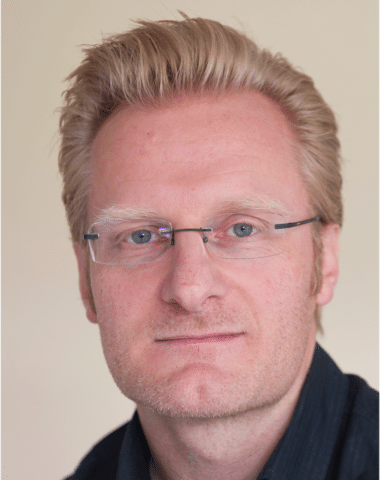
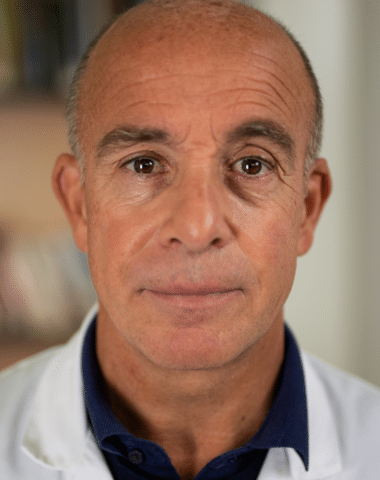
According to your research 1 2, depression is not only a brain disease, but also an intestinal disorder. Can you explain this?
Pierre-Marie Lledo. These studies are based on what we call the “holobionte” – a concept increasingly defended in biology based on the notion of mutualistic symbiosis. The term considers a living being as a “supra-organism” whose parts are in permanent communication, and which shares its body with numerous micro-organisms such as those found in the intestine. According to this concept, “the whole is more than the sum of its parts,” to paraphrase Aristotle. Gérard has written some wonderful articles, such as the one in the journal, PNAS, on this notion of symbiosis in the living world 3.
Gérard Eberl. Even though us immunologists have been working for more than a century on the immune system, it is only recently that we have been able to effectively collaborate with colleagues in other disciplines – particularly neuroscience. We now know that you can’t look at the immune system without looking at the brain or look at the brain without looking at the gut flora (microbiota) or the immune system.
P‑ML. Disruption of communication between these three systems causes diseases such as depression, or other mental pathologies related to problems in brain development. This observation will lead us to a great medical revolution and a redefinition of clinical definitions in neurology and psychiatry!
Do we know if stress causes a disturbance of the microbiota or if it is rather the disturbance of the microbiota that favours the appearance of depressive symptoms?
GE. This is really close to the concept of the chicken and the egg! It’s often like that in immunology. The microbiota changes its structure because of pressure from the host organism, either through the nervous or the immune system. As a consequence, the imbalance in microbiota induces changes in the immune and nervous systems that perpetuate this phenomenon. It is a circular causality.
In fact, it’s easier to understand how the microbiota affects the host than it is to understand the opposite. That’s because there are many ways to change the structure of the microbiota. It can be disrupted because of a change in diet, stress affecting peristaltic movement or the immune system. It must be also said that we mainly study these effects in mice, and there are many ways to explain a change in microbiota of a chronically depressed mouse. So, the origin of how this happens in our models has not yet been investigated for the simple reason that it would take years of investigation.
As such, you have not yet specifically studied the microbiota of mice and its composition in detail. You have, however, transplanted the microbiota of one mouse into that of another. What did you observe?
GE. We transferred the microbiota of a stressed mouse to a healthy mouse, which also became stressed and depressed as a result. In the samples, we observed a low presence of lactobacilli – a family of intestinal bacteria. By correcting this decrease in lactobacilli by treating the mice with a particular strain of lactobacilli (reuteri), we were able to restore a non-depressed phenotype.
P‑ML. The chronic stress that causes the animal to become depressed is thus accompanied by an imbalance, albeit minor, in the composition of the microbiota. While we have not established the factors that cause this dysbiosis [imbalance of the microbiota], we have at least demonstrated that supplementing the diet with lactobacilli is sufficient to restore the initial balance of the intestinal microbiota – resulting in an anti-depressant effect.
GE. The interaction between the microbiota and the brain is mediated in this case by the so-called “endocannabinoid” system. The lack of lactobacilli in “depressed” mice leads to a decrease in arachidonic acid, the precursor of endocannabinoids, circulating in their bodies. This decrease in turn has effects on the hippocampus, an area of the brain involved in depression.
We have demonstrated that supplementing the diet with lactobacilli is sufficient to restore the initial balance of the intestinal microbiota – resulting in an anti-depressant effect.
Can we adapt your observations to humans?
P‑ML. For us, it’s not a big leap. We hope to have put our finger on a fundamental nodule between the microbiota and its action on the hippocampus through endocannabinoids. These three elements are also present in humans. Although, we must wait for clinical studies to study the antidepressant role of lactobacilli and other bacterial species found in the intestines.
Will we treat depression with faecal transplants?
P‑ML. Faecal transplants are complex because the humans, as a species, carry a great diversity of microbiota. Bringing in large numbers of other species of bacteria means taking the risk of upsetting the balance. On the other hand, we can assume that a new generation of probiotics using synthetic bacteria might not affect the balance.
GE. Rather than faecal transplants, it is preferable to add bacteria to the existing microbiota – either with classical probiotics, some of which were discovered 100 years ago at the Pasteur Institute in particular, or with new generation solutions. By identifying bacteria and the genes that contribute to these biological processes, it is possible to generate genetically modified synthetic bacteria.
To do so we could combine the genes of different bacteria to produce exactly what is needed. This would be a solution to go beyond classical probiotics, which have a significant but limited effect. Even if there is public or official resistance to synthetic or recombinant bacteria, this approach would be much safer than faecal transfers.
How can these discoveries be applied in practice to treat patients?
P‑ML. Our work should encourage the clinical world to take a more holistic view of depression. Under the generic term “depression”, there are probably several pathological forms of mood disorders, which have little to do with each other on a biological level. For some, standard antidepressants will suffice, but not for others. Remember that 30% of patients are resistant to all drug treatments!
Our approach may help target a subcategory of depressed individuals whose “hippocannabinoid” receptors are not sufficiently activated because of the lack of antagonists naturally produced by gut bacteria. Psychiatrists and biologists should start looking for indicators of these deficient metabolic pathways. Currently, expert centres are performing these tests, at least for research purposes, by building up cohorts of patients with blood tests, but this should be done more systematically.
GE. There is a lot of talk about psychosomatic diseases, characterised by physical symptoms of mental states. But the reverse component, the “somatopsychic”, has not yet entered the vocabulary. Is it the mind that makes the body sick, or is it the body that harms the mind? This is part of the holobionte concept. The brain is immersed in the environment and the environment of the body is controlled, regulated by the brain. It is a feedback loop! It is therefore necessary to also consider the soma in order to heal the mind.
Interview by Agnès Vernet
Contributors
Gérard Eberl
Gérard Eberl obtained his Ph.D. at the University of Lausanne before completing a first postdoc at the Ludwig Institute on Cancer Research. A second position in New York led him to characterise the role of the nuclear hormone receptor RORt in innate lymphoid cells (ILC). In 2005, Gérard was recruited by the Institut Pasteur in Paris to lead the Lymphoid Tissue Development Unit, which became the Microenvironment & Immunity Unit in 2015. From 2015 to 2019, Gérard served as Chairman of the Department of Immunology at the Institut Pasteur.
Pierre-Marie Lledo
Pierre-Marie Lledo’s research focuses on the adaptation and regeneration of neurons in the brain, and their interactions with the immune system. He is Research director at the CNRS, head of the Genes and Cognition laboratory, and director of the Perception and Memory unit and of Plasticity and Development of the Nervous System at the Pasteur Institute.
Other contributions
Voir toutes ses contributions