
“No normality without mass vaccination”


How is the pandemic expected to evolve in the upcoming months?
Until the end of December 2020, we expected the first trimester of 2021 to be difficult due to weak immunity in the population as well as the winter period, which increases the spread of respiratory viruses and gatherings for the holiday season. In France, 12% of the population has been infected so far. But we will need more than 50% to be immunised through vaccination or natural infection if we are to stop the virus from circulating in an epidemic way.
The general idea was that with the arrival of spring and warmer weather, and vaccination of people at risk, we could gradually return to a more normal life. However, the tables have turned since the emergence of VOC 202012/01 in the UK. Transmissibility of this SARS-CoV‑2 variant is 50% higher than the regular virus. Despite existing measures in the UK, the number of cases has rapidly increased since December 2020 and the hospital services have reached saturation, forcing the government to impose a strict lockdown at the beginning of January 2021. The same scenario was observed in Ireland.
It is more transmissible, but does not seem more pathogenic. The first studies suggest that people infected last year, or those who are already vaccinated, would be protected in the same way against this variant. Its emergence could be due to an accumulation of mutations during a chronic infection in patients with severe immune deficiency, or to immune evasion when the virus is submitted to strong selective pressure in areas of high transmission. This is what might have occurred in South Africa and in Brazil where two other variants emerged. These two variants are more alarming; not only are they more transmissible, but they evade the immune response induced by a previous infection or by currently used vaccines.
The proportion of VOC cases in France was estimated to be 3,3% on January 8th 2021. Given a 50% increase per week, we can expect VOC 202012/01 to become the main variant by the end of February – beginning of March. We will need to take drastic measures before then to slow its progression and work against the clock to vaccinate the most vulnerable people. Vaccination will start with people aged over 75 years old and frontline healthcare workers. In the second trimester, vaccination will be extended to include all people who are at risk of developing a severe form of the disease: over 50s and people with comorbidities. Afterwards, the entire population can be vaccinated in the second half of the year.
When will we reach a level of herd immunity capable of stopping circulation of the virus?
There are some uncertainties related to vaccines: an uncertain production capacity, high demand and moderate acceptability of the vaccine in France. Last December, more than half of French people did not want to be vaccinated. This number will need to be reassessed once we have demonstrated that vaccination is well tolerated. Without mass vaccination, there can be no return to a normal social and economic life.
Last December, more than half of French people did not want to be vaccinated.
Is circulation of other diseases reduced by restrictions imposed on the population? Or, on the contrary, is a resurgence of pathogenetic agents due to the increasing proximity between humans and animals to be expected?
Thanks to the health measures, a decrease in the circulation of the influenza virus, the respiratory syncytial virus and viruses responsible for gastroenteritis has been observed. The absence of influenza this year could result in a more severe epidemic next year, because immunity in the population will not have been “boosted” this winter season, as is usually the case. Generally speaking, these new health habits will be beneficial in the long-term for populations.
Regarding the emergence and spread of new viruses, these are linked to two phenomena. First, cross-species transmission includes mutation of infectious agents from animal to human hosts. Second, the subsequent spread in the form of an epidemic. As such, all factors that lead to increased contact between humans and animals, as well as higher population density and mobility, are likely lead to a rise in the number of epidemics. In that respect, poultry or pig factory farms serve to incubate new influenza viruses, which are a threat to human populations. Add to that, an increase in density of viral vectors like insects, such as mosquitoes; a rise that is partly due to global warming.
Among these mosquitoes, Aedes egyptii, is a very competent vector capable of transmitting arboviruses such as yellow fever, dengue, chikungunya or zika. In temperate areas, a related species, Aedes albopictus, is now well established in the South of France and has been responsible for the transmission of imported cases of dengue, chikungunya and zika in France.
The SARS-CoV‑2 pandemic took the whole world by surprise. How can we prepare for the emergence of new viruses?
Viral outbreaks have always taken us by surprise. They often happen in unexpected places. For example, the H1N1 influenza virus outbreak began in Mexico (2009) while influenza viruses often came from China. I am also thinking of the MERS coronavirus which appeared in the Gulf states and for which camels were the reservoir. The West African Ebola outbreak in 2013 and 2014 also came as a surprise because Ebola outbreaks are usually found in Central Africa.
Finally, the Zika virus started in South-East Asia then spread through the Pacific and to Latin America from 2013 to 2015. All this means that our inability to predict the emergence of new viruses compels us to implement a highly responsive surveillance system to investigate an emerging outbreak as soon as possible. It is most unfortunate that the drastic measures taken in China against SARS-CoV‑2 in Wuhan were delayed by a month when it is clear that China was eventually able to eliminate the virus from its territory.
In the future, we will need to act preventively by closely monitoring the circulation of infectious agents in animals and also limiting animal-human contact in contexts where the emergence of new pathogenic agents is to be feared. This involves, for example, hunting wild animals or industrial farming of poultry and pigs.
Interview by Clément Boulle
Contributors
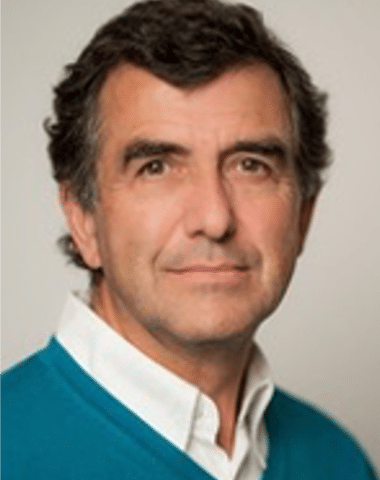
Arnaud Fontanet
Professor at the Institut Pasteur and the Conservatoire national des arts et métiers, Arnaud Fontanet is a doctor of medicine (Paris V) and a doctor of public health (Harvard), specialising in the epidemiology of infectious and tropical diseases. Since January 2002, he has been head of the emerging diseases epidemiology unit at Institut Pasteur in Paris. He is also director of the Pasteur-CNAM school of public health and director of the global health department at Institut Pasteur. In 2018-9, he was the first holder of the newly created Chair of public health at the Collège de France. Since March 2020, he has been a member of the Covid-19 scientific council to the French government.