Towards digitally-enhanced psychiatry


- 95% of practitioners already manage their patients' records using digital tools, in particular to monitor interactions between the different drugs prescribed.
- It is important to adapt viable medical methods to digital tools, by asking ourselves, for example, whether monitoring patients online is as effective as in person.
- The purpose of digital technology is not to replace doctors, but to offer patients additional monitoring, for example to assess the effectiveness of prescribed treatments.
- 9% of the students questioned prefer to be treated using a digital solution rather than by a real person, which is why we need to prove the effectiveness of digital methods to convince people of their reliability.
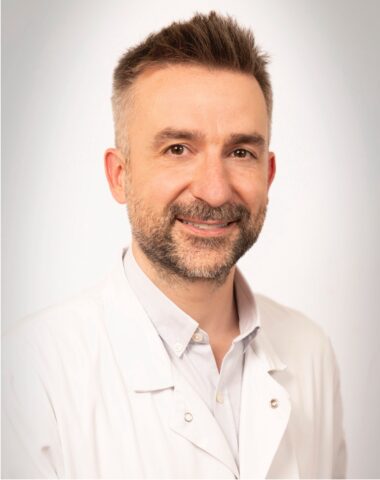
Digital technology is already transforming the world of healthcare, opening up unprecedented prospects. From personalising care to reducing hospital overcrowding, the expectations are astonishing. But for this revolution to live up to its promise, healthcare professionals need to both adopt these tools, while rethinking how they are used. The i3-CRG laboratory, headed by Étienne Minvielle at École Polytechnique (IP Paris), has launched a series of seminars on the integration of digital technology in healthcare. One of the most eagerly awaited topics has been mental health, an area where technological advances could really change the game. Professors Pierre-Alexis Geoffroy and Jean-Baptiste Masson take a look back at the seminar session devoted to psychiatry, which was also attended by Guillaume Couillard, Director General of the Paris Psychiatry & Neurosciences GHU, and Raphaël Gaillard, Professor of Psychiatry at Université Paris-Cité.
“Given the economic constraints on the system, it is impossible to imagine that everyone will be going to hospital in the future,” explains Professor Pierre-Alexis Geoffroy, a psychiatrist at GHU Paris. “One person told me that her son had developed sleep disorders quite early on, and that she had tried to have him monitored by a child psychiatrist, to no avail. In the end, six years later, he was diagnosed with schizophrenia. But child psychiatry will never be able to treat all children with sleep disorders or anxiety disorders. And so these digital solutions, which are also less expensive, will be there to adapt to the level of intensity of care that needs to be put in place, but also to the level of intervention that we can offer.”
Adapting, not transposing
“We talk about digital healthcare as if it were science fiction,” admits Pierre-Alexis Geoffroy. “But the truth is that digital technology is already here, and we all use it on a daily basis.” Today, 95% of practitioners complete their patients’ files using digital tools. “When we write prescriptions, for example, AI can already tell us about possible drug interactions,” adds the professor. “All of this is based on scientific literature, which is updated in real time.” The point, then, is not so much to take stock of the tools already available and in use in the world of psychiatry. Rather, it’s about looking ahead to the possible changes that this world will undergo as a result of the technological advances that could be made.
“For a long time, we were trying to transpose various scales and assessments that we used in real life into the digital world. But that didn’t work because adapting to new digital tools requires us to rethink everything,” explains the psychiatrist. Existing health applications are an example. Although fewer in number than wellness apps, only 15% of them follow a scientific approach, meaning they are based on a study with proof of effectiveness. “When we look at using this type of solution, we also realise that there is a problem with compliance,” he continues. “Only 30% of people complete their programmes. So, the question is: how do we develop this type of solution properly?”
“In mental health, we are fortunate to have very robust models,” points out Pierre-Alexis Geoffroy. “To develop this type of solution in addictology, for example, we need to adapt models with a known scientific approach to digital technology.” For example, an application to encourage people to give up an addiction, such as smoking, needs to be developed on the basis of an existing model, such as Prochaska and Di Clemente’s model of preparation for change.
“If my solution follows the logic of ‘one size fits all’ we will establish a balance of the pros and cons of what stopping smoking will bring to the patient. However, if the patient is already in a relapse phase, this will not speak to him. They will need much more tangible proposals. Prochaska and Di Clemente’s model is therefore important for determining what phase the patient is in, and therefore what type of follow-up they will need. If they are at the contemplation stage, they will need motivational interviews to try and clarify with them what they want and what they are prepared to do. If they are already in the action stage, we need to organise withdrawal with them. And if they are at the relapse stage, we need to ask them about what they have already done, to determine what has worked well and what has not. This is essential to ensure that patients are committed to the solution and that they don’t stop everything after 5 minutes because the application doesn’t meet their needs.”
Support for the practitioner
According to the professor, the primary interest of digital technology lies in providing an additional service to the doctor’s practice. Offering patients more regular monitoring does not mean making them independent in their approach, or even asking them to be too involved in this monitoring. “Just under 10 years ago, the Monarca I1 study had an interesting idea. However, today, this solution already seems ‘has-been’,” he argues. “The idea was to self-monitor patients with bipolar disorder, in order to predict when they might relapse. To do this, the 61 patients were asked to record their symptoms on depression scales.” The authors of this study showed that the more depressed patients were, the less they interacted with the medical team. Conversely, the more manic the patient, the greater the number and duration of calls.
“The results were sufficiently clear for the patient’s condition to be easily classified,” confirms Pierre-Alexis Geoffroy. “This led the authors to conclude that smartphone applications were valid for real-time patient monitoring.” However, a second study followed this one, with far less favourable conclusions. “In this second study, the authors decided to keep all the patients, even those who had stopped using the proposed solution,” explains the professor. “The result was that there was no significant effect of self-monitoring, and the authors even observed that noting down depressive symptoms every day worsened the patient’s mental state.”
“This type of monitoring is not intended to replace the doctor, but rather to offer an additional service that he or she can prescribe.” So, it’s a new tool available to doctors to ensure that their treatment is effective. Because, in addition to the possibility of remote patient monitoring, digital technology also offers therapeutic solutions. “I often use the example of therapy using augmented virtual reality. I’m a psychotherapist and I have a patient with a phobia of cockroaches. I can work with him on exposure to insects by projecting insects around his hand using virtual reality.”
Towards proof of effectiveness
“Acceptance of this type of tool is a major issue. When we ask students whether they would prefer to be treated using a digital solution or by a real person, only 9% of them choose the digital option,” notes Pierre-Alexis Geoffroy. “We therefore need to provide evidence of the effectiveness of these methods to unlock these barriers. Digital technology is not yet present in my practice, because digital solutions for providing real-time patient data are not yet available. I dream of one day, in my practice as a psychiatrist, in addition to my traditional practice, having digital arguments to help me make decisions. So, I think that support will be de facto greater when such solutions, proven to be effective, are available.”
This type of monitoring is not intended to replace the doctor, but rather to offer an additional service that he or she can prescribe
Professor Jean-Baptiste Masson, a researcher at Institut Pasteur, questions the methodologies used to assess the effectiveness of digital technology in medical contexts. “At some point, if we want to prove that something is effective, we’ll have to carry out statistical tests,” he says. “We’ll have to compare one group with another, whereas the human mind is not easily put into categories. It is true that digital technology provides an enormous quantity of data and enlarges the control group. In psychiatry, the larger the group, the more heterogeneous it will be. Sub-groups will emerge, and comparisons will become less specific. So, one difficulty will be in transposing convincing results from a small sample of people to a larger sample for which the results will be less reliable,” he adds. This limitation is also reflected in the number of parameters that can be measured digitally: the more parameters and data that are studied, the greater the chance of correlations, due to randomness, without them being significant.” These methodological limitations are still holding back the validation and adoption of these digital solutions by practitioners.
The marriage between digital technology and mental health therefore opens up fascinating prospects. But for these solutions to win the confidence of practitioners and patients, they must be accompanied by solid proof of their effectiveness. And that’s not easy to do. As Professor Geoffroy sums up, “digital technology is not intended to replace the doctor, but it can become a valuable ally in our practice.” With rigorous clinical research and gradual adoption, digital technology could well redefine the approach to psychiatric care, making treatments more accessible, personalised and effective. However, the final hurdles to the successful development of these solutions will have to be overcome.