

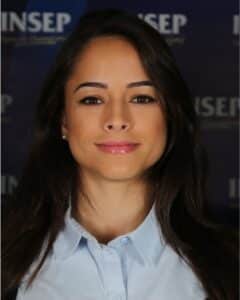
Women are still under-represented in sports performance studies. Former sportswoman Juliana Antero has long been affected by the stress of irregular menstrual cycles. In order to help spread awareness and combat this inequality, she has launched the EMPOW’HER research programme to support all sportswomen1.
Why are women under-represented in scientific studies on sports performance?
Women account for only 35% of participants in sports science studies. Most of the medical, nutritional and training protocols that sportswomen follow are developed for male athletes. Some scientists justify this absence by the influence that the menstrual cycle can have on women’s scientific results and performance. But that’s precisely why these studies are necessary! If we want to optimise women’s sporting results, we need to know more about the impact of female physiology on their performance.
What is the aim of your EMPOW’HER project?
The main aim of EMPOW’HER (Exploring Menstrual Periods Of Women athletes to Escalate Ranking) is to maximise the performance of female athletes by optimising their training responses through adapted training loads, in synergy with their physiology and menstrual cycle. Since 2020, we have monitored around a hundred top-level sportswomen who took part in the Tokyo Summer Olympics, the Beijing Winter Olympics and/or are preparing to take part in the Paris Olympics. Almost a dozen disciplines are covered: rowing, cycling, swimming, skiing, wrestling, gymnastics, and triathlon.
Every day for a period of six months, these women record their data on an application: the quality of their sleep, muscular pains if they feel any, pains linked to their menstruation, their state of stress, etc. In this way, we can observe the influence of hormonal fluctuations on the well-being and training of these sportswomen. In this way, we can observe the influence of hormonal fluctuations on the well-being and training of these sportswomen. The initial results show that even mild symptoms reduce the quality of their training, and that they are more or less fit at different times of the cycle. In particular, there are significant inter-individual differences
A US decree to adapt sports training to the menstrual cycle
In 2019, the American women’s football team won the World Cup for the fourth time. How can we explain the dominance of the United States in a sport traditionally dominated by European nations in the men’s game? In 1972, a decree was passed banning all discrimination based on gender in schools and universities in the United States. This was the catalyst that gave women access to better opportunities in sport. The team is now advised by American researcher Georgie Bruinvels, who holds a doctorate on the impact of iron deficiency and menstrual cycles on sporting performance. The researcher has adapted the team’s training accordingly. An approach that has clearly proved effective with female footballers.
Is it possible to choose the date of competitions according to your menstrual cycle?
No, but you can adapt your training schedule to the different phases of your cycle and anticipate certain constraints. For example, increasing the overall volume of exercise over the month by reducing the intensity on certain days. If you take these issues into account beforehand, you can even take advantage of certain hormones. For example, the quantity of oestrogen is higher during ovulation. Often perceived as an obstacle to performance, this hormone has interesting anabolic properties for muscle building and recovery. Our hypothesis is that it may be possible to take advantage of hormonal fluctuations.
How do sportswomen approach the subject of menstruation and possible pain?
It’s still a bit of a taboo subject. The majority of coaches are male. Sportswomen feel allowed to talk about their injuries and muscle pain, but not always about their hormonal cycle.
When it comes to period pains, there is usually an explanation. To begin with, it’s important to seek a doctor’s advice to find the cause. Is it linked to a cycle disorder such as endometriosis? Could medication be effective in relieving the pain? Finally, are there any non-medicinal methods – although not scientifically proven – that can relieve menstrual pain? Sportswomen need to be persuaded to consult a doctor, a gynaecologist or an endocrinologist if they are to overcome these pains and be able to train normally.
How were you able to objectively assess performance in your study?
For non-timed sports such as rowing and fencing, it was difficult to measure an objective performance, so we had to rely on the athletes’ own comments. But with cycling or football, we have power or movement sensors and we can calculate the effort produced by the athlete. So, we’ve been able to link this data with women’s hormonal profiles.
We are now trying to measure the effect of training adapted to women’s individual profiles and cycles. That’s the aim of our next research projects. There’s still a lot to be done, for example, supporting sportswomen on issues related to the pelvic floor to prevent urinary incontinence during exercise.