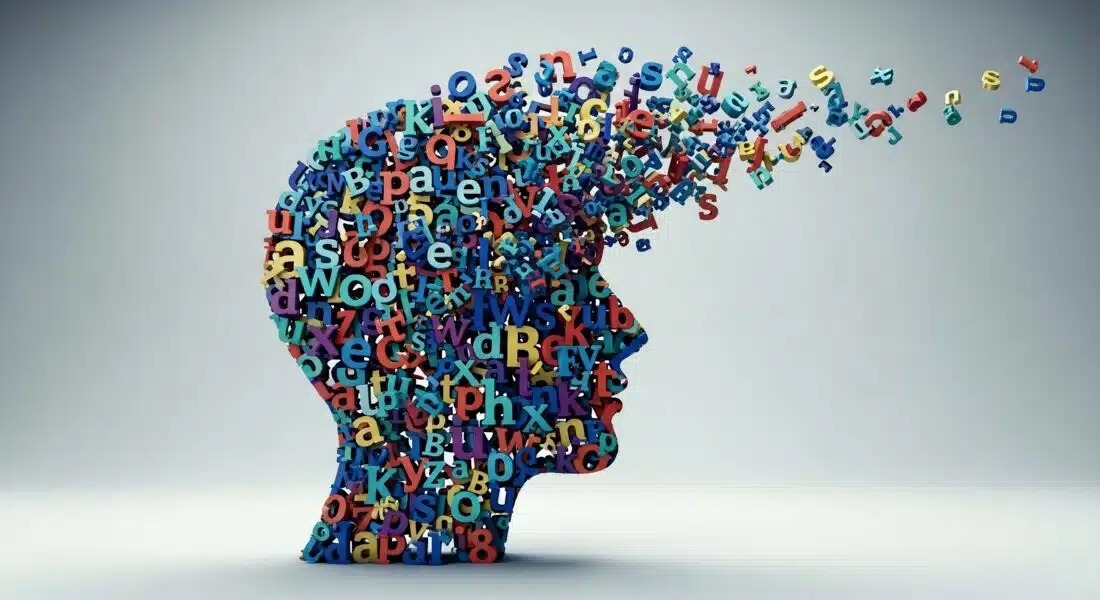



Hi, hallo, hola: three languages, one greeting and a slowdown of ageing of the brain. On 10th November 2025, the results of a large-scale epidemiological study conducted in 27 European countries were published in Nature Aging 1. Its conclusions: multilingualism halves the risk of brain decline, a benefit on a par with that of regular physical activity or restorative daily sleep.
Being able to juggle languages is not just about crossing linguistic boundaries with ease or broadening one’s social and cultural horizons: it is also about loosening the grip of time on our brains. The hypothesis that the mental gymnastics of multilingualism protects the brain is gaining credibility. This is the conclusion of a large-scale study conducted by Lucie Amoruso, a neuroscience specialist working at the Basque Centre on Cognition, Brain and Language (BCBL) in Spain, and her colleagues.
Biological age and chronological age
To test the supposed link between multilingualism and brain health, the authors analysed data from more than 86,000 elderly people living in 27 European countries. They designed a precise indicator of ageing by measuring the gap between biological age, estimated from a set of lifestyle and health markers, and chronological age, i.e. legal age. To objectively measure this gap, they created the ABC index: bio-behavioural age. The verdict was clear, speaking several languages slows down the bio-behavioural clock, while monolingualism speeds it up. In other words, speaking several languages reduces a person’s risk of having a mental health profile that is “older” than their legal age, both now and in the future.
The risk of dementia is estimated at around 5% for monolinguals, 0.4% for bilinguals, and remains very low for those who are fluent in three or more languages
For years, evidence has been mounting that multilingualism seems to nourish cognitive reserve, the brain’s ability to bend without breaking under the effects of time or disease. However, it is also true that meta-analyses have so far offered an unclear picture, hampered by overly small samples, overly indirect markers of ageing, imprecise or subjective measures of multilingualism, and poor control of socio-environmental contexts, sometimes distorted by stubborn ideological assumptions.
Despite this uncertainty, the link between language learning and protection against neurodegeneration has become increasingly clear. A community study conducted in 2024 with 1,234 participants in the Bangalore region of India, all over the age of 60 and speaking Tamil, English or Hindi2 tested the subjects’ general cognitive abilities, including memory, and used diagnostic tools to assess dementia, Alzheimer’s disease and mild cognitive impairment. The degree of proficiency in one or more languages was measured in parallel. The analyses revealed a significant effect of bilingualism on the risk of dementia: estimated at around 5% among monolinguals, it falls to 0.4% among bilinguals and remains very low among those who are proficient in three or more languages.
The counterbalance of “cognitive reserve”
Speaking several languages therefore helps to strengthen our brain’s ability to function smoothly, even when structural changes are taking place. This adaptive faculty is known as cognitive reserve: a cerebral resource that allows information to forge new pathways within neural networks to counterbalance age-related dysfunctions. This protective workaround is due not only to the development of circuits used in multilingual communication, but above all to the mental flexibility that this practice requires. Switching from one language to another mobilises a complex network of brain areas and requires temporarily muting those that are not being used through a process of “cognitive inhibition” (see the article “Why pausing intuitive thinking favours complex reasoning”, Polytechnique Insights) 3. This bypass mechanism primarily involves the regions associated with executive functions, which tend to decline with age.

Thus, practising several languages may help to keep the mind sharp for longer. By combining cross-sectional and longitudinal approaches within large representative cohorts, and by integrating the complexity of the human exposome – languages, physical activity, social fabric, varying degrees of inequality, air quality, diet, the role of institutions – Amoruso and his colleagues were able to estimate a bio-behavioural age based on a range of risk and protective factors. The gap between predicted age and legal age thus becomes a sensitive indicator, more refined than a simple diagnosis of cognitive decline, for mapping ageing trajectories at the population level.
Public health benefits
The question of variations between countries remains. Even when national contexts are taken into account, the protective effect of multilingualism persists. Better still, modelling the ABC index allows us to directly compare linguistic status with education, physical activity and chronic diseases, and to identify the specific contribution of each. In various environments, albeit limited to Europe, and under rigorous controls, multilingualism has been shown to be a powerful bulwark against cerebral ageing. Learning an additional language therefore appears to be a modifiable behaviour, like other public health levers, and the ABC as an operational tool for observing, on a large scale, how daily experience modulates the passage of time in our brains.
This large-scale epidemiological study marks a major step forward in the development of global public health strategies that integrate cognitive, social and cultural factors. It should help to shift the tone of a debate that has long been overly polarised. The hypothesis was certainly plausible, fuelled by behavioural observations inherited from our ancestors, but it was far from unanimous. The most recent literature now invites us to think of multilingualism not as a binary label, but as a continuum of engagement: skills, frequency of use, active alternation. Detailed measurements already show how this engagement modulates cognition and neural dynamics throughout life, extending theories that link multilingualism, cognitive reserve and adaptive control in subjects living in a world of constant change.
Dementia prevention frameworks are placing increasing emphasis on the search for adjustment variables, and it is time to include the use of multiple languages
However, the very scale of the study by Amoruso and his colleagues is both its strength and its limitation. By relying on pan-European demographic data, it smooths out the singularities of experience: learning a language at school is not the same as navigating between several languages on a daily basis. This is also what makes the result more striking; despite this approximation, the protective effect remains evident. The findings argue for a truly complementary approach – detailed studies should focus on understanding the mechanisms, while large-scale epidemiology should demonstrate that protection is widespread, even when the linguistic variable is only captured in broad terms.
How can we take advantage of this?
In the age of instant translation tools, this ability to learn a new language remains valuable, even as technologies designed to facilitate global exchanges gain ground. Unlike many costly interventions, speaking multiple languages is neither a luxury nor a privilege; arising from necessity, is rooted in the community, and seizes opportunity. It is part of everyday life, transcending social, cultural and economic divides, and offers an inexpensive and scalable lever for everyone. If it increases resilience to ageing, then promoting language learning in schools, protecting minority languages and increasing opportunities for lifelong practice should be as important as campaigns to get us to exercise more or stop smoking. Dementia prevention frameworks are increasingly focusing on the search for adjustment variables; it is time to include the use of multiple languages.
One crucial question remains, with significant scientific and, above all, practical implications. The generic term “multilingualism” actually covers two very different experiences – learning new languages requires a one-off, intensive effort, whereas remaining multilingual requires practising different languages simultaneously, maintaining them and keeping them alive. Both dimensions (learning versus maintenance) can shape cognitive reserve, but not necessarily through the same mechanisms or at the same times. The former is episodic and demanding; the latter is continuous, involving maintenance, adjustments and social interaction, and requires tenacity and perseverance on the part of the subject. We can expect different neurocognitive adaptations from each, both in terms of brain space and time. Research should therefore be conducted on two fronts. On the one hand, intervention trials to test whether teaching new languages in later life improves cognitive functions, and with what efficiency, scope and durability; on the other hand, longitudinal studies, particularly in older people, to show how variations in existing multilingualism modulate the trajectories of ageing. It is not certain that they all follow the same curve: retirement, the shrinking of social networks and changes in context can influence linguistic engagement.
Confirming these results with robust protocols will require more precise tools and long-term longitudinal follow-ups. The potential gain is considerable: understanding not only whether multilingualism protects, but also better defining the notion of cognitive reserve is becoming increasingly necessary to counteract the cognitive debt produced due to use of generative artificial intelligence. While the idea is not new, the evidence is now gaining momentum and interdisciplinary support. The centre of gravity of the debate is shifting, no longer so much a question of confirming the now well-established benefits of multilingualism in slowing down brain ageing, but rather of mapping its mechanisms, defining its boundaries and converting its potential into informed public policies capable of countering the deployment of digital translators. As Henry Ford reminded us: “Anyone who stops learning a language is old, whether they are twenty or eighty. Anyone who continues to learn remains forever young.”