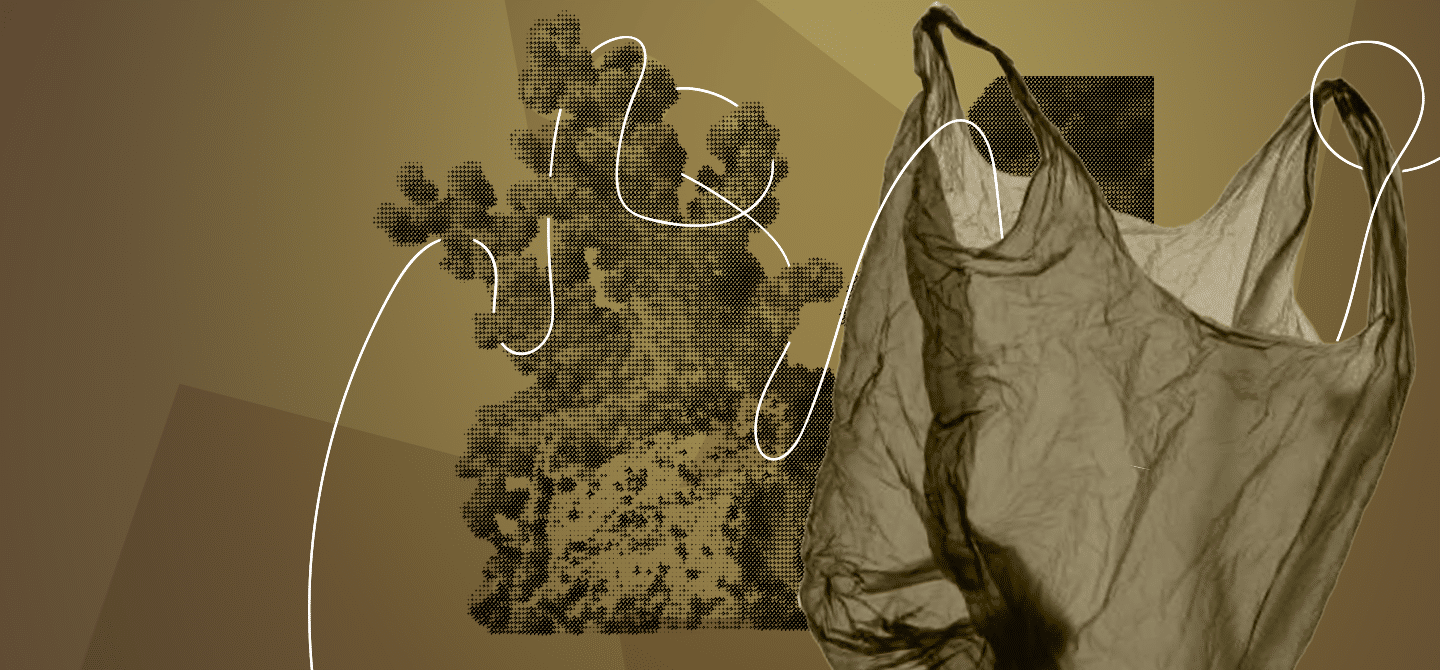





The recycling of the materials that we produce and consume has been identified as a major challenge by the French government. It is the subject of a Priority Research Programme and Equipment (PEPR) funded by France 20301. Plastics, in particular, are the focus of a dedicated research programme. The stated objective is to improve the knowledge and techniques that enable them to be reused, in order to preserve resources. Plastics are found everywhere: in packaging, textiles, cosmetics, etc. They are extremely versatile and have become “integrated into our production and consumption practices by presenting themselves as a substitute for natural materials,” observes Baptiste Monsaingeon, sociologist and lecturer at the University of Reims Champagne-Ardenne. With the limitations that we are aware of today.
A concentration of problematic substances
To begin with, the bricks that make up plastics are mainly obtained from fossil fuels (oil and gas) and assembled into a long chain: the polymer. Numerous substances are used during the synthesis process. Some are used to optimise the chemical reaction and are therefore not intended to end up in the finished product, yet some are absorbed by the plastic. Others are used to give the material specific properties: flexibility, colour, UV or fire resistance, etc.
According to the PlastChem report2, up to 16,000 different chemicals can be used in plastic. A number of them are potentially harmful. “There are about 10,000 for which we lack data. And more than 4,000 that we know are dangerous,” warns Bethanie Carney Almroth, professor of ecotoxicology at the University of Gothenburg in Sweden. “They can be carcinogenic, disrupt the endocrine system, or be toxic to specific organs such as the kidneys or the skin.”
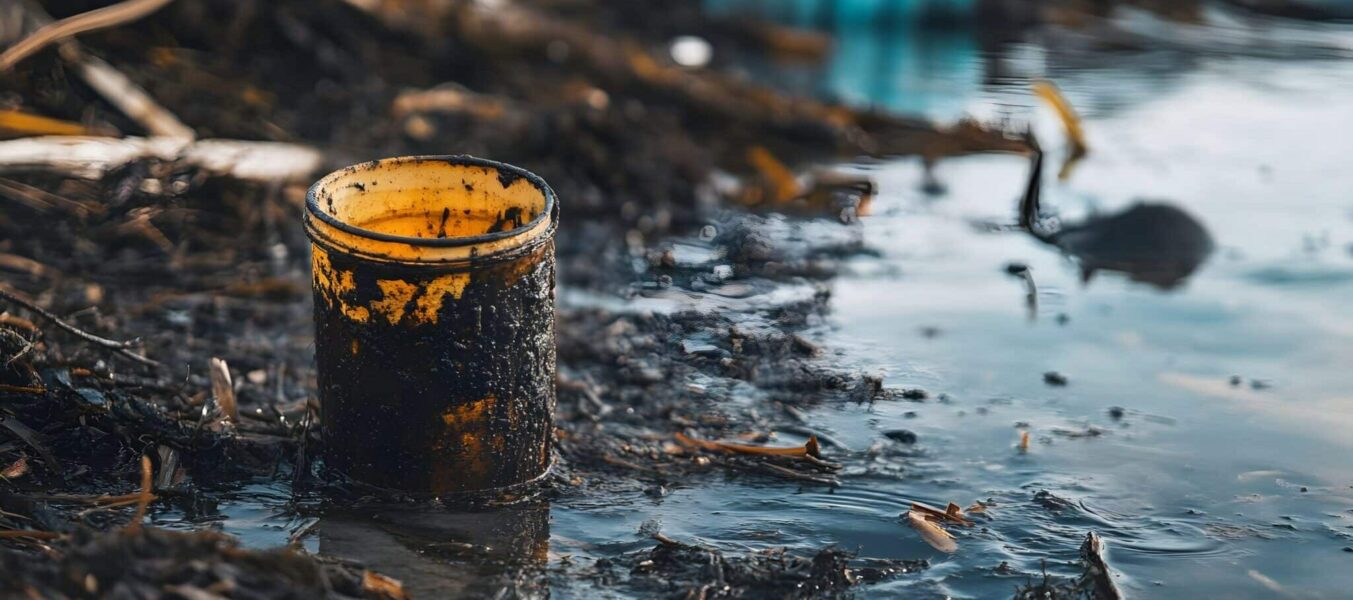
The management of plastic waste is all the more of an issue as it has permeated our environment. This is what Florian Pohl, a geoscience researcher at the University of Bayreuth in Germany, has observed when studying plastics in river and marine systems. “At a depth of 4,000 metres, if I take sediment from the ocean floor, I can detect microplastics. It’s frightening because it shows that they are literally everywhere,” he warns.
Recycling for better consumption
“Over the past 30 years, a huge amount of energy and economic resources have been devoted to the development of recycling channels, with the aim of reconciling sustainability and economic growth,” summarises Baptiste Monsaingeon. In France, local authorities are responsible for managing our waste. In most cases, this is delegated to private operators who collect the contents of our bins and waste centres and send them to sorting centres. There, the components are separated according to their possible use: energy production by incineration (“energy recovery”) or recycling (“material recovery”). Otherwise, they are sent to landfill.
There are around twenty waste management channels in France. They are organised on the principle of “extended producer responsibility3”: professionals who place products on the market (packaging, textiles, equipment, etc.) are responsible for financing or managing their post-consumer reprocessing by users. “For paper, cardboard and metals, it works rather well,” says Baptiste Monsaingeon, “as for plastics, it is mainly the PET in our water bottles that is recycled.”
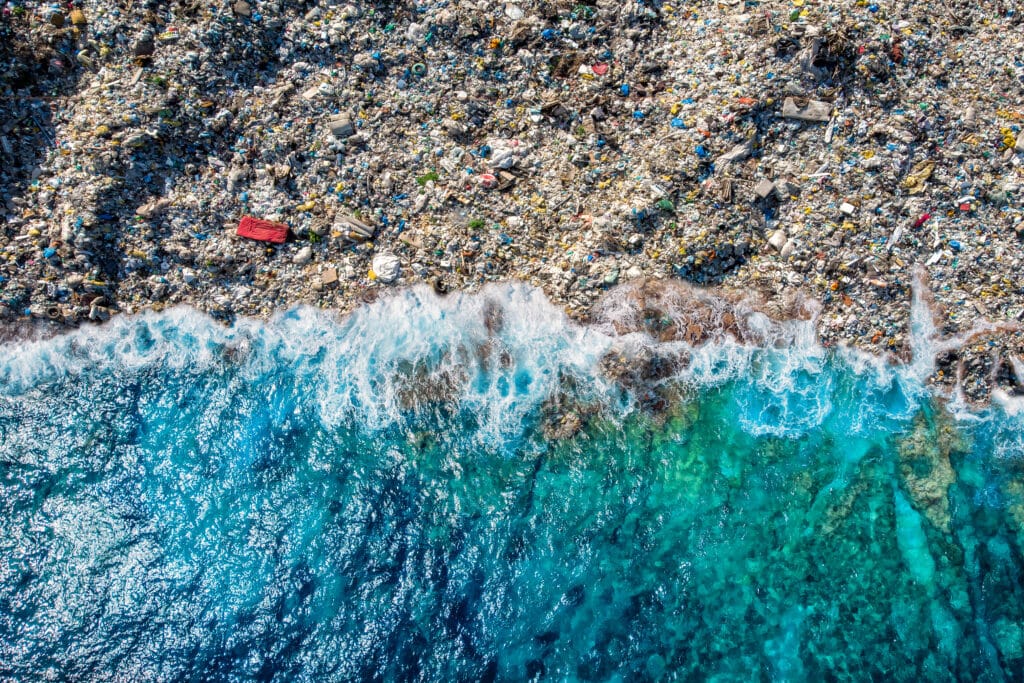
In France, according to figures from ADEME4, less than a third of post-consumer plastic waste is collected, and only 14% of it is actually recycled. Baptiste Monsaingeon points out that in 2018 “the government set a target of ‘100% recycling of plastic packaging by 2025’. We are a long way from achieving this.”
A cycle full of pitfalls
Reuse is subject to a number of technical limitations. The finished products are complex assemblies of different materials that cannot always be sorted. “Mechanical” recycling requires plastics to be separated into similar polymers. They must then be washed and crushed into flakes, which are melted down into granules to make new plastic. Over time, this causes degradation of the polymers. “This long chain of molecules can break and start to shorten as it is heated and melted. The quality of the material deteriorates, so new plastic must be added to maintain it,” explains Bethanie Carney Almroth. “Ultimately, there can be an increase in the amount of toxic substances in plastics as they are recycled56” she adds.
“Chemical” recycling, meanwhile, offers methods for chemically separating polymers or breaking them down into basic molecules, which can be used to recreate plastic. “Some of them have been shown to be effective, but only on a small scale, on pre-industrial waste that is much purer than that from consumer waste,” she adds. They are therefore not viable from an economic and environmental point of view for mixed plastics.
Finally, there are plastics that we don’t know how to recycle properly. “The channels do not cover the entire waste deposit in France,” explains Baptiste Monsaingeon. “Some players are therefore looking to export, primarily to Europe.” This can be a first step in the transit of plastic material flows: “Turkey, for example, is a place where plastic waste is exported, more or less legally,” he says.
A not-so-virtuous circle
However, while it may be virtuous, the reprocessing of plastics remains a source of pollution. “We know that recycling plants release microplastics and chemicals when fragmenting or shredding this waste7,” emphasises Bethanie Carney Almroth. Not to mention that a lot of plastic ends up in landfill. “This can obviously lead to contamination of the environment, but also of humans,” she concludes, adding that “80% of global recycling passes through the hands of waste pickers, the vast majority of whom work without protection against this exposure8.”
Poor waste management also contributes to the spread of plastic in the environment. Due to open-air storage, at the mercy of the wind, or even during transport, as Florian Pohl describes: “Some plastic granules used as raw material can end up in river water9.” Carried along by the currents, they are abraded by the sediments and broken down into ever smaller fragments. This increases the diffusion surface: the additives escape from it more and more rapidly. “More and more plastic is ending up in the environment, and we don’t really know the consequences: how quickly do the substances they contain release themselves and what are the effects?” A question at the centre of his research.
Rethinking plastic production
For Baptiste Monsaingeon: “Believing in recycling is a bit like believing in a promise: that of continuing to consume with a clear conscience.” However, “it is possible to restore it to its rightful place without making it a magic solution,” he says. Starting with reducing the types of plastic used to those that we know how to recycle, and limiting the number of chemicals used. “Additives provide functionality, but we can reduce them to a much smaller number, avoid dangerous substances, and strengthen legislation,” suggests Bethanie Carney Almroth.
This is a field that calls for innovation, to develop more sustainable and safer materials. However, it is not a question of simply replacing one material with another, but of reducing the production of virgin plastic. “This is the consensus of the international scientific community, regardless of the discipline,” emphasises Baptiste Monsaingeon.
This involves, in particular, the implementation of new infrastructures to make reuse more accessible with reusable and refillable containers. “In France, a number of companies are working in this field1011,” comments Bethanie Carney Almroth. “This shows that there is scope for the implementation of new economic models,” beyond recycling and the unbridled production of plastic.