Super-powered lasers to transform nuclear waste


It is no secret that some products of nuclear fission are extremely radioactive. Treating this waste is therefore one of the biggest challenges in creating a sustainable nuclear industry. Radioactive products of fission include plutonium (the most common) and other minor actinides such as neptunium, americium and curium, which we find in quantities of around 800 grams per ton of spent fuel. Currently, waste products from nuclear fission must be securely stored for extremely long periods of time because of their protracted half-lives (the time for their radioactivity to drop by half). Plutonium-239, for example, has a half-life of around 24,000 years.
Alongside secure storage we are now looking at how to transform, or rather “transmute”, this waste with the help of powerful lasers so that it can be better managed. Theoretically, these lasers are powerful enough to stimulate nuclear fission in plutonium and other minor actinides (currently the most hazardous waste). In short, transmutation treats waste from nuclear fission in two ways. Either by converting it into sub-products with weaker atomic masses and much shorter half-lives. Or by adding particles to create less radioactive isotopes, which also shortens very long half-lives – sometimes down to just one year.
We are looking at how to transform, or rather “transmute”, nuclear waste with the help of powerful lasers.
Amplified laser power
We hope to be able to achieve transmutation of nuclear waste using chirped pulse amplification (CPA). With this technique, the extreme light from lasers can be boosted to levels long thought impossible, measured in petawatts (PW) – the equivalent of 1015 watts. To give an idea of scale, one PW is around fifty times the power of the world’s entire electric grid, and the total energy the earth receives from the sun is measured at 174 PW.
CPA uses an ultra-short laser pulse, spreading out its spectral components before amplification. The pulse is then compressed again for a very short time, generating enough power to create particles (electrons and protons) by detaching them from matter, before accelerating these particles using conventional techniques. These kinds of lasers are already operational – no small feat since one of the challenges was to create a mechanism that would not be destroyed by the power of the beam itself! And we also know how to detach particles. However, the challenge is now around efficiency: how do we make these lasers small enough and at sufficient scales without consuming too much energy in the process? It is therefore a problem around industrial production – a problem that the XCAN project is specifically designed to meet.
An alternative to uranium
On top of that, a CPA-boosted laser could be used to generate fission, providing an alternative to the neutron bombardment method used in current reactors. This is an option we are exploring, and which could be pivotal for developing thorium-based power. Thorium is a heavy metal found in far greater quantities around the world than uranium; in theory, it could provide a replacement for uranium in nuclear power. Moreover, the by-products of thorium fission are also less hazardous than uranium and have shorter half-lives of just a few hundred years. Given that this kind of fission does not produce plutonium, it is also a good option for purely civil nuclear applications, without the risks surrounding production of nuclear weapons.
But thorium fission is difficult, involving an extra step as compared to uranium fission. The thorium must first be brought to a subcritical level; neutrons from an external source are then used to provoke fission. Lasers could play a key role in this process prior to fission, in particular because they allow for a high level of control. The system can be fed with a constant light source, similar to operating a tap.
Many physicists, including myself, are convinced of the potential of thorium-based power. But while it is scientifically sound, there are still many technical problems to be solved. In particular, concerning the energy required to generate fission. But lasers could be part of the solution.
Contributors
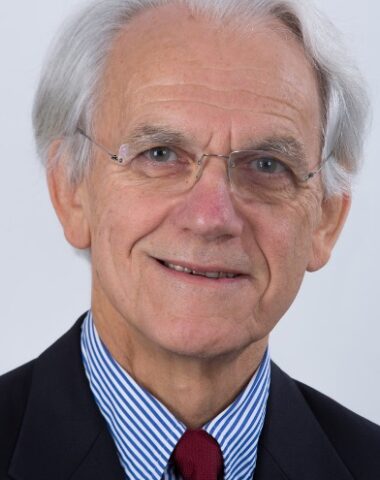
Gérard Mourou
Gérard Mourou has spent a large part of his career in the United States, in particular at the University of Michigan, where he is now Professor Emeritus. Upon his return to France in 2005, he was head of the Applied optics laboratory (a UMR ENSTA ParisTech/CNRS/École polytechnique) until 2008. Gérard Mourou is a Knight of the legion of honour. His awards include the Frederic Ives medal (2016) from the Optical society of America and the Arthur L. Schawlow prize in laser science from the American Physical Society in 2018. Gérard Mourou received the Nobel Prize in Physics in 2018, which crowns a career dedicated entirely to lasers and physics.