“Literature is standing its ground against screens”


What can we say about the role of literature during the confinement?
Before coming to literature, let’s talk about reading, which did not do too badly during the pandemic. The drop in sales was moderate, even though bookstores were closed for many months and there were fears of a disaster for publishing.
Did this resilience of the “book economy” benefit literature? The answer is not so simple. We observed a very strong concentration of bestsellers in 2020. Hence, it is bestsellers that have benefited from the upswing. This can be explained by the fact that it has been more difficult to browse through bookstores, and therefore experience the full diversity of titles.
That is what I refer to when I say ‘reading’. Whereas literature is more about rare books, difficult books. However, there is a nuance to be noted here because the sales of the 2020 Goncourt prize, L’Anomalie, are very good even though the author does belong to the most accessible category of popular literature; that of Oulipo, Queneau, Calvino or Perec. Thus, literature too seems to have benefited from the confinement.
This seems all the more true since the classics also sold well. There was a movement back to the literary collection: The Horseman on the Roof, The Plague… We went to books that could speak to us about the situation we were experiencing.
So, overall, books have not suffered too much from the situation. On the contrary, some publishers recorded exceptional profits in 2020, which was a surprise for them: the confinement did not only benefit Netflix as they had feared. We are saturated with digital content, and the sales figures for books show a nice resistance to the screen (even e‑books remain marginal in France). All in all, this is not a bad year for literature.
What is the role of literature? What are the benefits it provides that screens cannot?
Literature serves to widen our field of experience, to open ourselves up to what we cannot know by ourselves about the world around us. It serves to free us from our prejudices. In fact, that is the same function literature has always served. Aristotle already of spoke already the catharsis in Poetics; a complicated notion since we still do not know what exactly it implies, other it consists of living things through the experiences of others.
Literature educates by multiplying sensations and experiences; through which we discover something else. It is well known that humans learn much better by example than by rule, which we know but do not apply. Christ speaks in parables, because allegory or fable are more instructive than commandments.
There are, of course, other ways to learn, especially through the screen. But the written word has certain privileges, which are linked to the freedom that language gives in relation to images. When faced with the screen adaptation of a novel that we love, we often feel a sense of disappointment, because this was not how we imagined the characters and their world. The freedom of imagination that reading gives is without equivalent: it is the great privilege of the written word, which remains compared to other modes of narration.
This privilege is also linked to time: we are less dependent on its linearity when we read than when we watch a film. The “pause” button on VCRs was one of the great inventions of the 20th century, but it has nothing in common with the freedom to read a book at one’s own pace, to be able to slow down, speed up, suspend… So, the advantages of literature remain.
Young adults stop reading at the age of transition from children’s books to ‘mainstream’ literature
However, younger children have been reading a little less in 2020. How can we help them understand the importance of books?
The difficulty with books is in adolescence rather than childhood. That’s when many give up reading. Young adults stop reading at the age of transition from children’s books to “mainstream” literature. This is actually more true for boys than for girls.
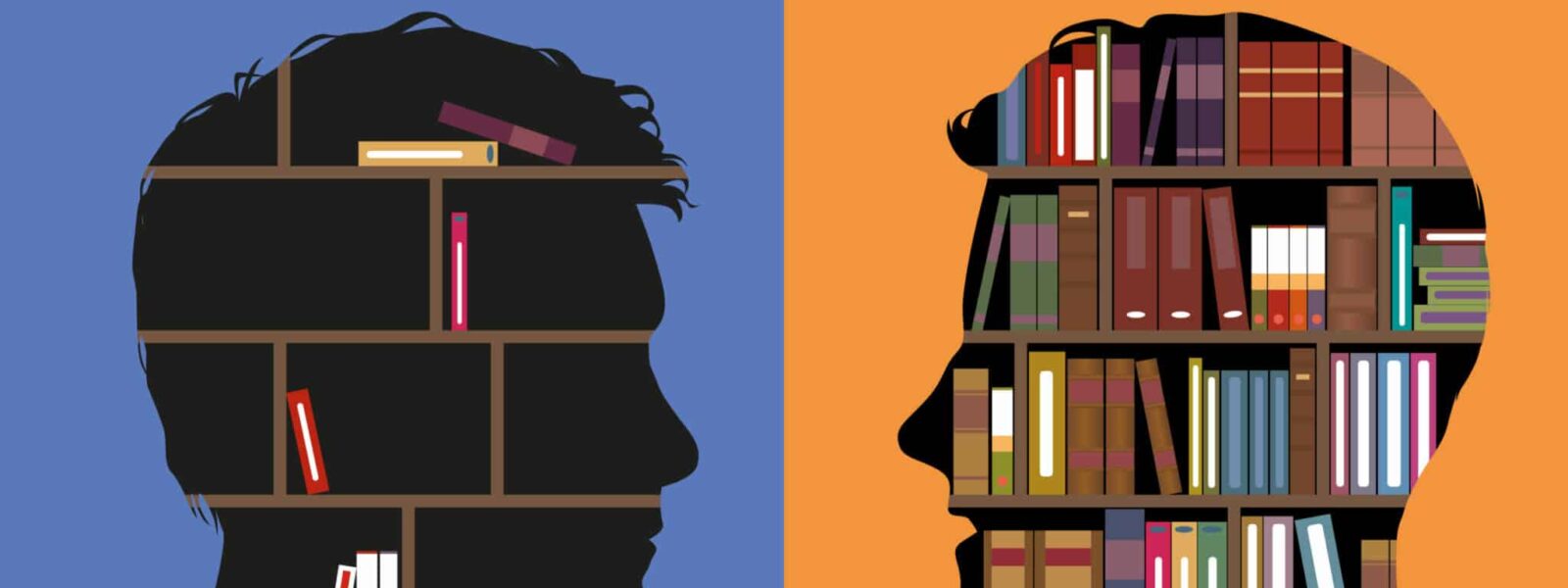
What can we tell them? Probably explain to them that literature will help them in their professional careers. I have often argued that literary culture is an asset in all sorts of activities. Proust points this out in The Search: a better lawyer (or engineer, or doctor) is a lawyer (or engineer, or doctor) who has a literary culture.
Literary culture is always an asset for success – whatever the activity – because it gives an experience of the other, and because, in all professional sectors, communication, dialogue, interactions with others are at stake.
Various courses have introduced literature to humanise their curricula, which had become excessively technical. This is the case, for example, in medicine: in many faculties, literary teaching has been introduced to humanise the relationship between doctors, medical staff, and patients. The idea is quite simply that a strictly technical medicine has more difficulty in curing; the disease must be part of a story, told between the doctor and the patient. A medicine that has a narrative dimension is in this way a better medicine.
I have spoken about literature in medical schools. There is a whole body of texts about illness, death and healing. We read Thomas Mann’s Magic Mountain or Solzhenitsyn’s The Cancer Ward. And it is important that physicians have some familiarity with the ways in which illness is narrated. This reasoning applies to all disciplines, including engineering.
Does literature allow us to better understand the sciences?
How can we doubt it? The best mathematicians and physicists are also poets. They give their inventions the most metaphorical names because they think like poets. Think of catastrophe theory, Schrödinger’s cat, or string theory. I mentioned earlier the contribution of the novel to the intelligence of the world, to the understanding of others. But it is the imagination to which poetry has introduced them that makes scientists better.
Interview by Clément Boulle and Juliette Parmentier
Contributors
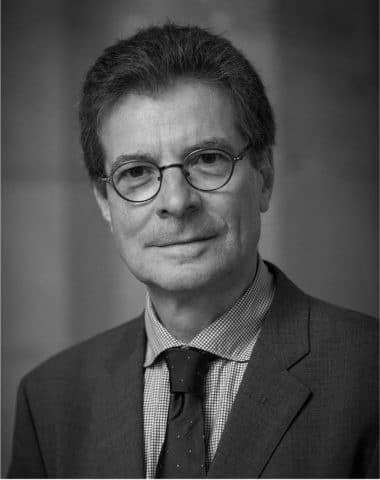
Antoine Compagnon
Antoine Compagnon has been a professor at the Collège de France, chair of Modern and Contemporary French Literature, and a professor at Columbia University in New York. He has published some fifteen books on Montaigne, Baudelaire, Proust, literary theory and the history of criticism, as well as several more personal accounts. Among his latest books, Les Chiffonniers de Paris (Gallimard, 2017).