



How do French people aged 18 to 25 perceive war and the army? Would they be ready to enlist in the event of a major conflict involving France? Anne Muxel answers these questions, drawing in particular on the study “Les jeunes et la guerre, représentations et dispositions à l’engagement [Young people and war: representations and willingness to enlist]” published in April 20241, which she conducted between February and December 2023 at IRSEM at the request of the Centre d’études stratégiques aérospatiales (CESA/Armée de l’air et de l’espace).
How do young people relate to the military today?
Anne Muxel. For them it is something that is both abstract and yet narrowly defined. This generation has not experienced any periods of war on French soil, but their closeness to the military world is palpable: 52% say they are interested in military matters, and 15% say they are very interested. Various intermediaries enable them to develop a good knowledge of the army and of war – family transmission of war memories, the wider environment when it includes military personnel, school knowledge, current events, but also films, TV series and video games that depict war in a sometimes very realistic way. Conspiracy theories, to which a third of young people subscribe, also exert a real, if less explicit, influence. These theories maintain a conflictual view of the world, and this view, even if based on distorted reasoning, seems to encourage a large minority of young people to become more curious about armed conflict. Paradoxically, it gives them a certain lucidity about the military world.
Does this proximity go hand in hand with a positive image of the armed forces?
In their eyes, the military institution clearly embodies several positive values: commitment, courage, and protection. The IRSEM study “Observatoire de la génération Z” published in 20212 shows that 82% of young people – though this is also true of the general population – have confidence in the army, at a time when there is a general crisis of confidence in institutions: 80%, for example, express distrust of political parties, 60% of the government and 42% of the police. The anti-militarism that prevailed among the younger generations from the 1970s to the 1990s, particularly among young leftists, has clearly disappeared. From this point of view, the end of compulsory military service in 1997 marked a real turning point. But other factors have strengthened the credibility of the armed forces, such as their involvement in the face of terrorism, or their interventions in the humanitarian field and during the COVID-19 health crisis. Today, 98% of young people consider the army to be useful (versus 78% in 1998). 62% of them also think that the introduction of a new compulsory military service would be a good thing.
Do they worry about war?
It’s not absent from their minds, even if it only ranked 6th out of their concerns, far behind global warming – which a large majority associate with an increased risk of war in the world. Most young people believe that war is likely in the coming years, and almost half of them believe it is possible on French soil. Worryingly, 6 out of 10 young people believe that a civil war could break out in France. This figure shows that they are acutely aware of fractures within our society. They have also taken on board the nuclear threat: 69% of them fear it, including 27% who say they are very worried. When asked what forms of aggression France could be subjected to, terrorism and nuclear attack come out on top.
Yet they have a very “classic” view of war…
It’s true: the Second World War is still the main frame of reference for them. Their portrayal of war thus evokes very conventional forms of conflict between nation-states, featuring ground battles, tanks, deaths and the annihilation of cities, and the images conveyed by the media of the wars in Ukraine or the Gaza Strip reinforce this idea. Their vision of war is one of destruction and death. It is striking to note, for example, that very few of them believe in “zero death” wars. At the same time, through fiction and science fiction, they have taken on board the threats posed by new theaters of operation, such as cyber-space, but they don’t seem to regard them as wars per se.
Yet this view does not discourage their willingness to get involved in the event of conflict. You even speak of a “renewed patriotism”.
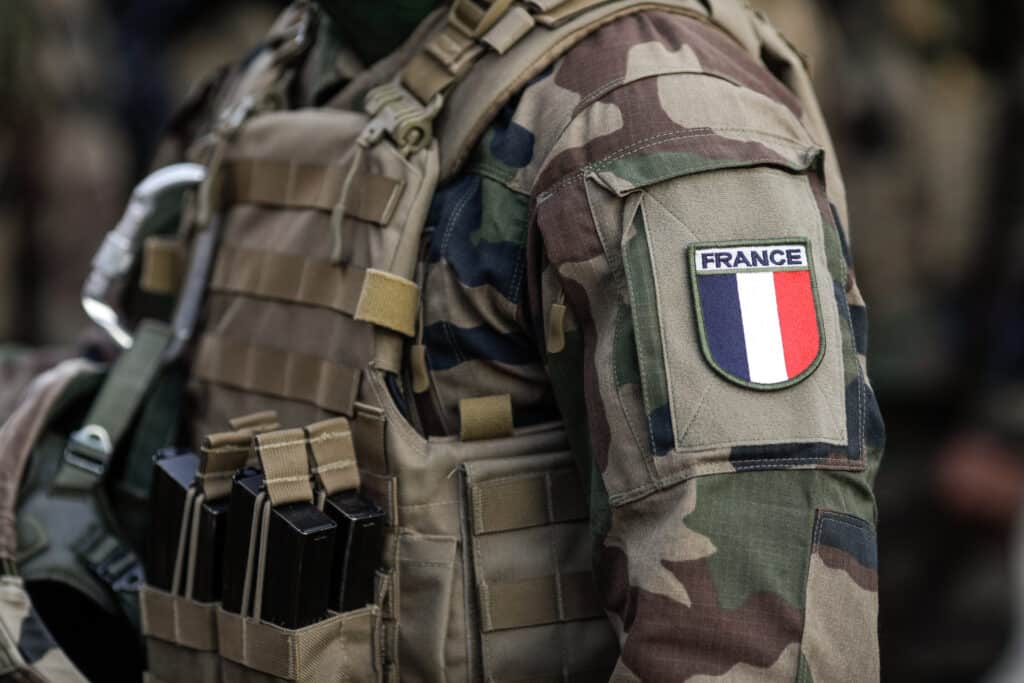
Yes, young people say they want to play their part in defending their country and protecting civilians. 57% of them say they would be prepared to join the army if France were involved in a conflict, and 63% would fight as civilians if the country were attacked. Just under half even say they would be prepared to sign up to defend a country other than their own, like the young people who left to fight in Ukraine.
Naturally, these averages conceal diversity. The gender divide is still a major factor: young women are still less inclined than young men to sign up for military service, particularly in the context of war (46% of young women say they are prepared to do so, compared with 70% of men). But 46% is already a significant proportion! This relatively recent development among women is in line with the real increase in the number of women in the French armed forces, which is one of the highest in the world.
The political-ideological divide also still exists, but it has become much more diluted, particularly with the disappearance of anti-militarism. So the traditional cleavages are still there, but they are smoothed out by a strong desire for engagement, common to all social and gender categories and all political persuasions.
Do you find this desire for engagement surprising?
No, because I’ve shown in other studies that a willingness to get involved is characteristic of this generation. Contrary to popular belief, they are not just turned in on their private interests and indifferent to public affairs. Recent surveys have shown that they are even more involved than older people, for example in environmental causes or in self-help networks. These young people are the bearers of ideals that they want to see put into practice: freedom, justice, attention to human rights, but also order and security. We often hear it said that they need direction; I would say more precisely that they need a direction for the future. They lack a narrative for the future, both in environmental terms and in terms of a vision for society. Involvement remains a landmark that makes sense in the way they see citizenship and their usefulness in society.
Anne Orliac
To find out more:
- CEVIPOF ‘political confidence’ barometers: https://www.sciencespo.fr/cevipof/fr/content/le-barometre-de-la-confiance-politique.html
- Anne Muxel, Florian Opillard and Angélique Palle, L’armée, les Français et la crise sanitaire. Une enquête inédite [The army, the French and the health crisis. An unpublished survey], Étude 95, IRSEM, June 2022: https://www.irsem.fr/media/5‑publications/etude-irsem-95-anr.pdf