


Can small modular nuclear reactors (SMRs) help us meet our greenhouse gas emission reduction targets? For many countries, nuclear power in general and SMRs in particular are a solution because they are potentially safer and, in principle, faster and cheaper to build than conventional nuclear reactors.
SMRs, cheaper and more flexible
According to the International Atomic Energy Agency (IAEA)1, there are currently 443 nuclear power plants in operation worldwide. Fifty more are also under construction in 19 countries. Most of these are ‘big’ conventional plants that produce more than one gigawatt of electricity (GWe). They take decades to build, however, and cost billions of dollars.
Since fission is a scalable technology, it can be applied to the construction of smaller reactors, defined as having a typical power of 300 MWe. Much more compact and cheaper, these SMRs can be built in a factory and then transported in modules to installation sites. Ultra-compact ‘micro-reactors’ are even being designed. These will have an output of only 1 to 20 MWe and will be even easier to transport. These reactors could be used, for example, to generate heat for industrial applications such as steel making, to supply electricity to communities in remote areas and to back up the main electricity grid.
SMR projects around the world
According to the International Atomic Energy Agency (IAEA), there are currently about 70 SMR projects worldwide and a wide variety of designs and advanced technologies are being studied. These include very small reactors, pressurised water reactors, boiling water reactors, sodium reactors, molten salt reactors and gas reactors. The products developed from Generation III and III+ reactors will be ready by 2030 since these are the most advanced technologies today.
SMRs in France
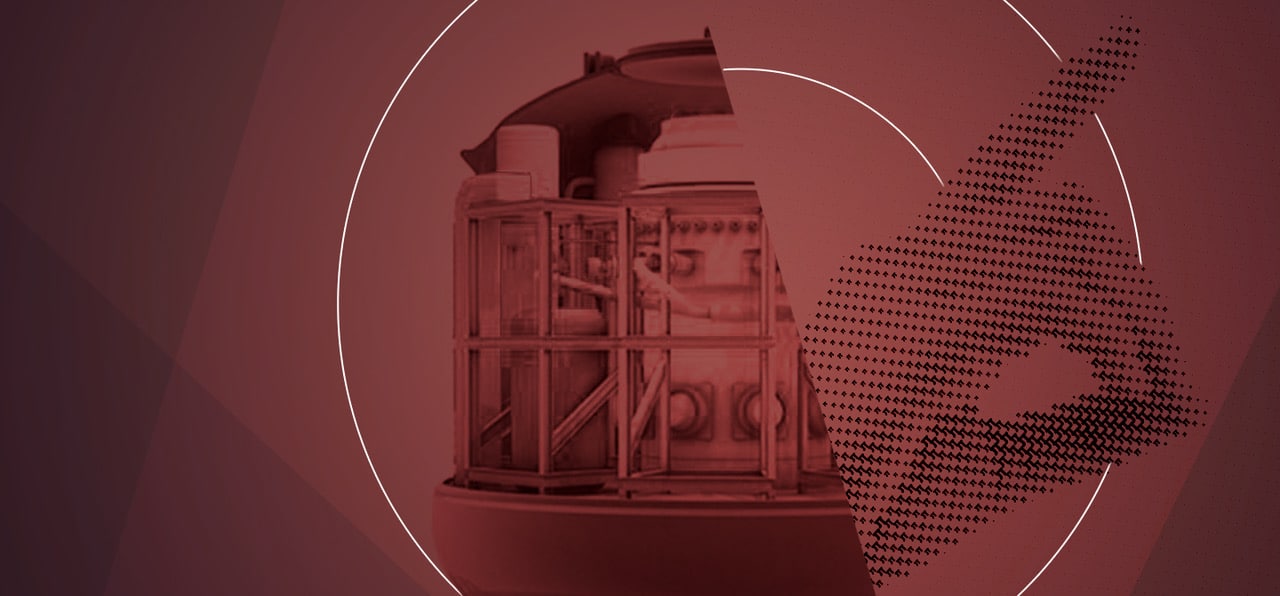
In France, the CEA, EDF, Naval Group and TechnicAtome are working together on the Nuward SMR, a pressurised water reactor (PWR) technology designed to meet the growing needs of the global market for competitive decarbonised electricity in the 300–400 MWe range. The project is in the preliminary design phase and will be extended to European players in subsequent phases.
The idea of working on small power plants is not new in itself. TechnicAtome, responsible for the design of Nuward, has been developing compact reactors for nearly fifty years, particularly for naval propulsion (submarines, aircraft carriers).
SMRs were originally intended to bring electricity to isolated geographical areas – a market that is inevitably limited. More recently, EDF put forward the idea of replacing coal-fired power stations (there are over 3,000 units to be replaced) with small reactors. This is because coal-fired power stations will be phased out over the next few decades to meet carbon emission reduction targets. This is a much larger market and a series of reactors of reactors could be built, an interesting perspective because it would allow to reduce the cost of a power plant – a significant competitive advantage.
In addition, in some parts of the world, the electricity grid simply does not allow for the installation of large power plants because it is too costly and takes time to modify the local grid. The possibility of installing an SMR, instead of, say, a coal-fired power plant, which can then be connected to the existing grid, is, in principle, easier. This is therefore the primary target market for SMRs.
“There is an effervescence in the field of R&D and industrial development of SMRs, the likes of which have not been seen for decades in the nuclear world,” says Renaud Crassous, SMR project director at EDF. “What is also striking here is that it is not only the historical nuclear companies that are actively involved, but also a number of start-ups that want to get into nuclear. With this, we might potentially identify new customers and discover new uses for nuclear energy in general.”
The development of SMR technology in France
France’s industrial experience in nuclear power will undoubtedly be an advantage in certain phases of SMR development. The government’s Plan France 2030 2 will also have an impact on Nuward’s development strategy since subsidies will be on the order of one billion euros for SMRs in general.
The Nuward consortium is currently working on the design of its project. This phase, which will be completed by end-2022, involves drawing up architectural plans for the plant and making important choices as regards the safety of the reactor. These decisions will then be submitted to the relevant safety authorities. This phase will be followed by the basic design phase during which all plant components will be detailed, specified and then ordered from manufacturers. A first reactor is expected to be operational in 2030.
Installing the first series of Nuward reactors on French soil would have many advantages, not least because it represents a unique opportunity for a whole network of small businesses in terms of activity and jobs. The consortium has not yet identified a physical site and says it will study possible sites this year before establishing a shortlist.