Assistant Professor of Economics at ENSAE (IP Paris) and HEC Montréal
Key takeaways
In the short term, reducing our dependence on Russian gas would inevitably mean a return to coal.
This would put policies to reduce greenhouse gas emissions on hold, as coal emits about four times more CO2.
The demand for Russian gas in Europe can be reduced by 18-20% by using coal-fired power plants. As it accounts for 11% of total energy consumption in Europe, there is talk of replacing around 2% of the energy consumed in Europe today as gas with coal.
In the long term, a complete halt to Russian gas imports will require massive investments, especially in renewables and liquefied natural gas infrastructure.
Assistant and Economist-Prospector at IFP Énergies nouvelles and Research Director at IRIS
Key takeaways
The war in Russia could impact trade in palladium, a rare metal which is very useful in car manufacturing and is mainly exported by Russia, accounting for around 37% in 2021.
Other metals, of which the importance Russian production in the world is undeniable, are: titanium (13% market share), platinum (10.5%), aluminium (5.4%), copper (4%), refined copper (3.5%) and cobalt (4.4%).
This war is happening in an already extremely tight market for rare metals. Between 2020 and 2021 the price of these metals jumped by 45%. Nickel's rise is the most significant, with the price rising to over $100,000 per tonne before falling back to around $30,000 per tonne.
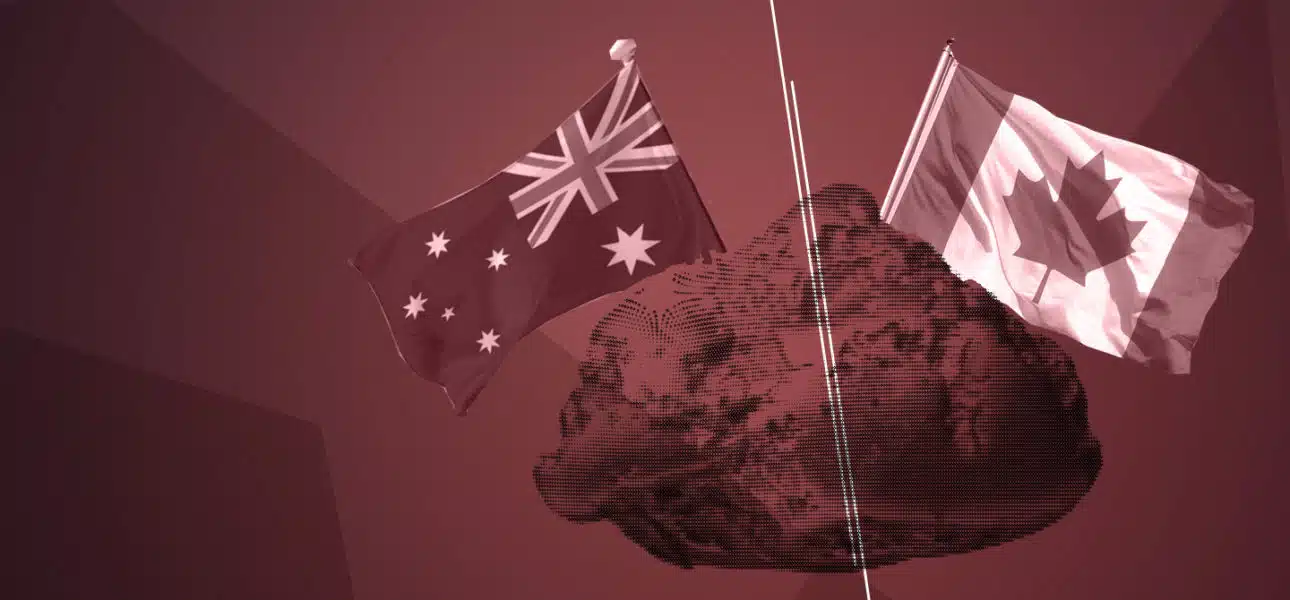
Because of this conflict, the whole world is looking for new partners such as Australia and Canada, which are alternatives to Russia for many metals.
Research Director at the LUISS School of Political Economics (Rome)
Key takeaways
In 2017, Emmanuel Macron’s proposal of "strategic autonomy" was initially met with reluctance in Europe, particularly because some countries were disinterested in defence issues.
The Russian-Ukrainian crisis has changed the game, revealing the nature of the Russian threat, highlighting the previous misunderstanding between "autonomy" and "NATO membership."
In response, the EU has reacted with speed and determination, the most spectacular development being that of Germany.
A European defence programme could now be possible but will not be easy to create because of the weight of the existing contracts and programs.
Cyber defence, a new subject, is the easiest to implement at federal level.
Contributors
Richard Robert
Journalist and Author
Richard Robert is editorial director of Telos and conducts forward-looking research as part of the Observatoire du long terme (Long-Term Observatory) and the Institut de prospective CentraleSupélec Alumni (CentraleSupélec Alumni Institute for Forward-Looking Studies). From 2012 to 2018, he was editor-in-chief of the Paris Innovation Review. His latest books include: Le Social et le Politique (The Social and the Political), with Guy Groux and Martial Foucault, CNRS Éditions, 2020; La Valse européenne (The European Waltz), with Elie Cohen, Fayard, 2021; Une brève histoire du droit d’auteur (A Brief History of Copyright), with Jean-Baptiste Rendu, Flammarion, 2024; Les Nouvelles Dimensions du partage de la valeur (The New Dimensions of Value Sharing), with Erell Thevenon-Poullennec, PUF, 2024; Les Imaginaires sociaux des smart cities (The Social Imaginaries of Smart Cities), Presses des Mines, 2025. Forthcoming: Sauver la démocratie sociale (Saving Social Democracy), with Gilbert Cette and Guy Groux, Calmann-Lévy, coll. ‘Liberté de l'esprit’ (Freedom of Thought), 2026.