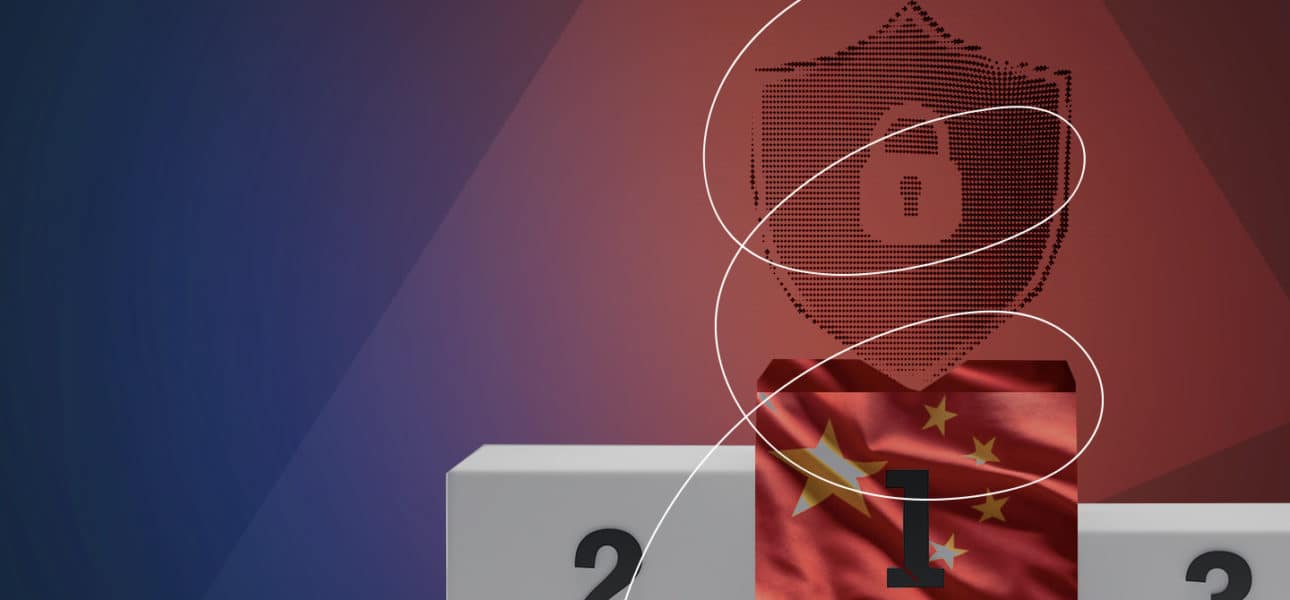



China’s rise to the top over the last ten years has been spectacular, especially with regards to technology. In many industries, it would appear they are aiming for technological supremacy. Is this part of a grand strategy? Was it predictable?
On more than one occasion, the Chinese Communist Party has been surprised by the consequences of their own policies. At the end of the Cultural Revolution, when China started its economic reform, the country didn’t take into account the impact of a large cohort of educated youth who had been sent down to the countryside and came back to the cities. Because of their “bad” class backgrounds, they couldn’t get government jobs. Many became entrepreneurs. Nobody had factored this in, but over time we saw this entrepreneurship taking hold.
China’s technological development was partly a haphazard process, which the authorities tried, if not to control, to manage. With ICT, the Chinese leadership proved to be very good, with a top-down view that creating a free-market environment would enable experimentation.
The Party simply sat back and watched as companies fought amongst each other, with the most successful ones making it to the top, before progressively moving in to exercise control over these entities. The tech giants behave in a way similar to what Shoshana Zuboff called “surveillance capitalism”: anti-competitiveness, abuse of consumer data. The Party is now working on regulating these companies, forcing them to leave space for new entrants and to stop exploiting their customers digital surplus.
There is a get out clause: the state can access all of this data whenever it wants. China is also collecting large volumes of Western data, stored in digital warehouses around the country, and private sector companies are pushed to sift through them to find information that could help the Party.
Western governments are still imbued with the idea that not all information needs to be protected. We are only beginning to realise that, aggregated together with other datasets and analysed throughout the filter of artificial intelligence, data which in and of themselves would appear innocuous can be very revealing – in ways that we might not want them to be.
What kind of supremacy is China working to achieve?
As China became a more confident technological power, it began to realise that it could use its growing capabilities to shape the international arena. In areas of cyber-governance and cybersecurity, China has realised that if they can establish their technology standards as the global ones, they can then use their overwhelming manufacturing power and economic reach to become globally dominant in key areas. This is what the USA did during 20th Century and what we the British did in the 19th Century with telegraphy. When you wire the world, it gives you a lot of influence and power.
A key objective is to enhance the international acceptance of China’s political and value systems, hence providing security for a Communist Party that lives in constant paranoia. There is also the military dimension. China has been working hard to become a credible competitor to the USA and is on its way to achieving this goal. It is indeed ahead in some areas of military technology such as hypersonics. There is also a huge advantage for China in terms of intelligence as it rolls out its digital “Silk Road,” which is a subset of a much wider global strategy.
While Russia has considerable cyber strengths, nobody is going to buy a Russian operating system or a Russian computer. Though Russia has been actively thinking about issues of cyber security and cyber governance, it is China that, through its domination and ability to commercialise this technology, is much better placed to make the weather in these areas.
How is the West reacting?
It is now an article of faith amongst the Chinese leadership that the USA is bent on preventing China’s rise. This is a dangerous situation. Mark Twain said, “history doesn’t repeat itself, but sometimes it rhymes”. If you look at Imperial Japan in the 1930s, there are similarities. Put bluntly, if China is backed into a corner and has no other option, it may lash out.
Commercial integration used to be a factor of peace. But this trend has reversed. There has been an overconcentration in the manufacture of strategic commodities in China. Before the Covid-19 crisis the private sector was already starting to diversify its sources. This movement is gaining momentum. The golden era where China was the world’s factory is coming to an end.
Earlier this year Chinese Foreign Minister Wang Yi said the big question is whether the USA is willing to coexist with a country with a very different culture, values and stage of development. Its external discourse is about coexistence. However, the internal messaging is one of existential competition between capitalism and socialism.
The question is: is there any room for Europeans in this global contest? The EU and the UK lack a basic corpus of expertise and understanding of China. They have great scholars, but their knowledge doesn’t feed through into political awareness. Besides, political and commercial interest might diverge, both at national level or within the EU between net exporters and net importers.
China’s preference would be to deal with Europe as a single, predictable block. Whereas, in reality, it is a kaleidoscope of 27 states, each with very different objectives. The temptation to divide and rule is overwhelming.
Does technology reinforce these trends? So far, it has been unifying the world, but it might become a barrier between two separate worlds in the near future.
I always suggest my Chinese friends to read Karl Popper on the poverty of historicism. They won’t read Popper because he’s very rude about communism. But his basic point is that you can’t predict the future because you can’t predict how technology will evolve.
Technology can be an empowering force for all countries, not just China and the USA. Take the example of the cheap Turkish drones that were able to alter the military balance in Nagorno Karabakh. Europe can shape its own destiny if it gets the fundamentals right. We need to create an enabling environment for European technology, and then develop applications of existing technologies that would add value and give the Europeans some leverage.
In quantum computing, Europe has a few champions. How do you keep these companies afloat long enough? In the USA such start-ups would be taken over by one of the big tech companies: in China they would receive generous state subsidies. Can Europe find a way to subsidise its tech start-ups until they can commercialise their research?
5G is stalled at the moment, just delivering faster download times for video. It will stay that way unless we develop the actual applications. If you don’t invest in autonomous vehicles or in robotics, if you don’t authorise adventurous applications for artificial intelligence, 5G will not fulfill its potential.
Europe should also start to move away from the precautionary principle and catch up with technology leaders in fields like AI, biotech and robotics. Data privacy is also an issue: there is a balance between privacy and innovation.
Emerging technologies can serve mankind’s interests if used properly. Maybe in every government committee dedicated to these topics, there should be a couple of career criminals, to be able to anticipate how malign actor might abuse these technologies and hence pre-empt abuse. In any case we need various competencies.
As such, technology issues should be at the very centre of the political agenda. Last year the Chinese Politburo spent two days looking at blockchain technology. This is how you do it if you want to understand, and to shape, the future.