

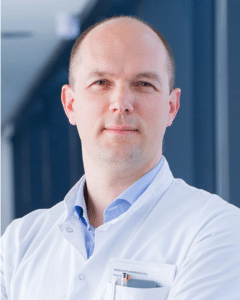
In France, more than 300,000 people are diagnosed with cancer each year with 382,000 new cases recorded in 2018, according to Inca. That same year, 157,400 deaths were attributed to cancer. However, the data shows that this figure is falling thanks to earlier diagnosis and therapeutic advances, particularly for the most common cancers. These advances include targeted therapies based on a new drug development strategy. “Whereas conventional chemotherapies were previously developed using a more empirical approach, targeted treatments are now being established in a more rational and systematic manner,” explains Philippe Cassier, medical oncologist at the Leon Bérard Centre in Lyon.
Until the 2000s, we were looking for molecules that destroyed cancer cells, without always knowing how they worked. Nowadays, however, progress in our understanding of the mechanisms involved and the contributions of molecular biology have changed researchers’ vision. The doctor continues, “it is now possible to identify a target, a key stage in the development of tumours, and then to look for molecules capable of acting on it – a radical change in the approach to drug development.”
Target tumours
New drugs target biological mechanisms that are important for tumour growth, which is harder than it may seem because tumours are very diverse. So, from patient to patient, tumours do not necessarily depend on the same biological processes meaning that targeted therapies needed to be accompanied by parallel progress in diagnostic tools. “It’s a revolution at every level of oncology,” says Philippe Cassier. Thanks to diagnostic tests, doctors can check that the target is indeed present in the patient’s tumour and thus decide whether or not to prescribe the treatment. These biological analyses identify signals that reflect the molecular functioning of the tumour, known as biomarkers. “Oncologists must now know how to handle biomarkers to know what to prescribe the patient,” adds Philippe Cassier. It is becoming essential to understand the machinery of tumour growth if doctors are to choose the most appropriate treatment.
New anti-cancer drugs are the result of this change in approach. Advances in studies concern, on the one hand, the reaction of the immune system to a tumour and, on the other, the molecular mechanisms that promote tumour proliferation. This has given rise to two new classes of treatments: targeted therapies and immunotherapies. The latter class of drugs – immunotherapies – is the result of an important discovery in immunology: tumours exert an immunosuppressive action in their environment. “They can manipulate the immune system,” he says. The cancer thus avoids being attacked by the immune cells that constantly monitor the body, able to detect cells that are dividing abnormally [the defining trait of tumours].
Monitor effects
“Even if our understanding of the biological role of the target is incomplete, clinical studies in humans will allow us to refine our analysis; it is a principle of translational research,” explains the oncologist. These developments are fuelled by a genuine dialogue between clinical and basic research. “Observing the effect of the drug on the patient helps to refine our understanding of its mode of action. Phase I trials no longer just allow us to study the toxicity of the treatment, they also establishes the clinical-biological correlation that underpins its effectiveness.”
These treatments sometimes have spectacular effects, which has contributed to their reputation as a ‘miracle’ treatment. “This is also true for chemotherapies. Some tumours are particularly sensitive to one type of treatment, and it is as if they have been given a magic wand,” says Philippe Cassier. As for tolerance, the results are more complicated than they seem. “With anti-PDL1 immunotherapies, the tolerance profiles are very favourable. But other types of immunotherapies, such as CAR‑T cells or neutralising antibodies, can have serious side effects, justifying hospitalisation in intensive care.”
These new therapies have nevertheless offered new treatment options and therefore increase the chances of finding an effective response for each patient. But they have not solved the problem. “Cancer is a fact of life: we can’t eradicate them entirely. It is a disease linked to longevity,” acknowledges Philippe Cassier.
Expect resistance
One of the main difficulties with cancers is the ability of tumours to develop resistance to treatments over time. “This problem is deeply rooted in the history of oncology,” explains Philippe Cassier. Clinical research has taken this into account and from which several types of response have emerged. Firstly, a solution proposed resides in developing drugs that are increasingly specific to targets. “These incremental advances extend life expectancy without tumour progression under a given treatment. This has particularly been measured in the case of lung cancers characterised by a translocation of the ALK gene,” explains the Lyon-based oncologist. Diagnostic progress and systematic screening procedures have also helped to ensure that treatment begins increasingly sooner. “The earlier the treatment is started, the more we minimise the risk of resistance emerging,” explains Philippe Cassier.
Also, the use of liquid biopsies and blood samples to screen for circulating tumour DNA makes it possible to identify resistance mechanisms more easily and earlier than before. Combined, these tools contribute to improving the management of patients suffering from cancer. “These practices are often implemented in expert centres. But they are more difficult to implement in other care centres, such as private clinics or smaller hospitals, particularly because of problems related to cost of these tests,” concludes Philippe Cassier. This is mainly due the way they are reimbursed, still considered in budgets for ‘innovation’ rather than being billed as routine medical treatments. Resolving the conundrum of cost and therapeutic effectiveness is perhaps the next big challenge for cancer research.