0_spaceEnvironnement
Home / Dossiers / Space / Crowded skies: is a crisis looming in low Earth orbit?
π Space

Crowded skies: is a crisis looming in low Earth orbit?

4 episodes
  • 1
    The proliferation of space debris in the Earth's orbit
  • 2
    Carbon footprint and space activities: an ambiguous common ground
  • 3
    Greenhouse gas emissions: a menace for low Earth orbit?
  • 4
    Starlink: low-earth orbit satellites could ruin radio astronomy
Épisode 1/4
On February 12th, 2025
4 min reading time
Christophe Bonnal
Christophe Bonnal
Space debris expert at the CNES launchers department

Key takeaways

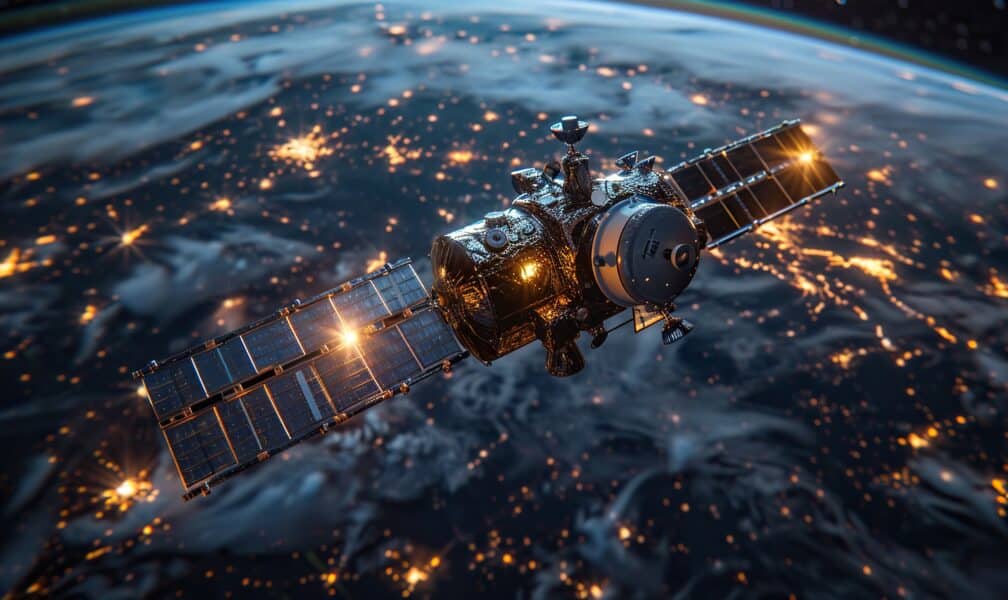
  • Today, there are 36,000 objects larger than 10 cm in space, of which 30,000 are catalogued and 6,000 are not referenced.
  • The mass of objects in orbit in space is 13,486 tonnes, which is a little more than the weight of the Eiffel Tower.
  • In the most congested area, the amount of debris generated by collisions is greater than the amount that is naturally destroyed by falling back into the atmosphere.
  • Observation satellites were often sent to the 80 km orbit zone, and they can still be sent there, but the chance of destruction is around 10%
  • The quantity of space debris could double in less than 50 years, so ten large pieces of debris must be removed every year before they fragment, and international regulations must be respected.
Épisode 2/4
On November 12th, 2025
4 min reading time
Jürgen Knödlseder_VF
Jürgen Knödlseder
CNRS Research Director in Astronomy and Astrophysics
Loïs Miraux_VF
Loïs Miraux
Engineer and Researcher at Institut d’économie de l’énergie (CEA)

Key takeaways

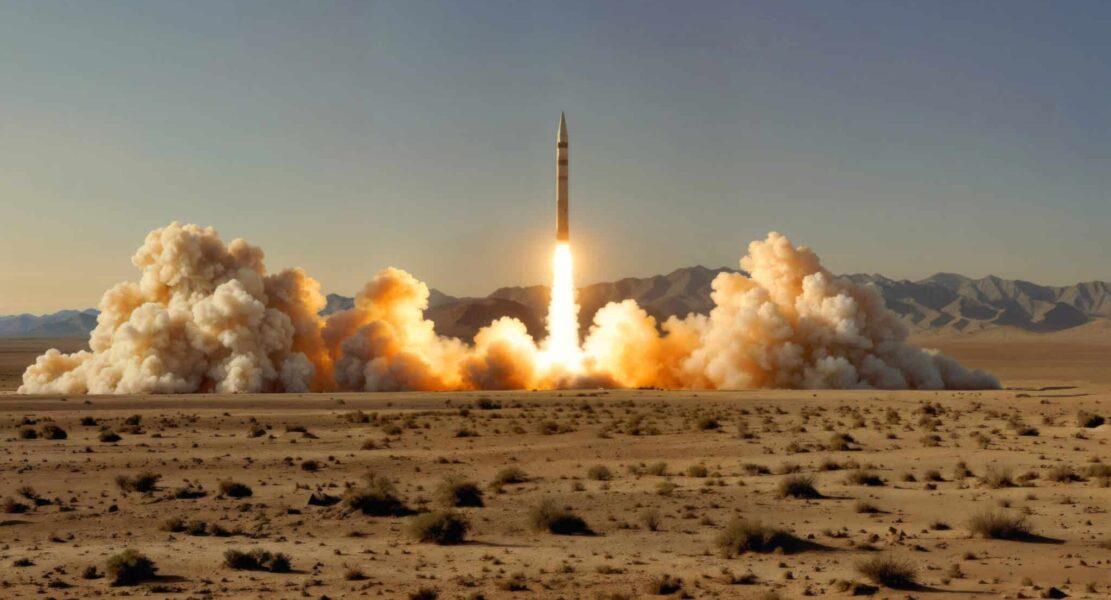
  • There is a lack of knowledge concerning the impact of rockets on the upper atmosphere, particularly in relation to particle emissions.
  • Between 2019 and 2024, the amount of fuel used by rockets more than tripled, and at this rate, the climate impact of space activities could reach that of aviation.
  • However, the cost-benefit analysis of Earth observation missions is difficult and requires debate and political arbitration.
  • According to the CNES, the space industry’s carbon footprint at the national level amounts to 1.8 million tonnes of CO₂ equivalent, or 0.3% of France’s national emissions.
  • One of the current problems is linked to the increasing number of launches, which, through the use of reusable launchers, is creating a rebound effect.
Épisode 3/4
On June 18th, 2025
3 min reading time
William Parker
William Parker
Graduate Researcher at Massachusetts Institute of Technology

Key takeaways

  • Increased greenhouse gas (GHG) emissions will make it increasingly difficult to maintain satellite operations in low Earth orbit, according to researchers.
  • CO2 and other GHGs have the effect of ‘shrinking’ the thermosphere, a layer of the upper atmosphere where most satellites currently orbit.
  • Space debris will remain in the thermosphere for longer, polluting this region and increasing the risk of collisions between orbiting satellites.
  • Low Earth orbit is becoming increasingly congested, and accurate atmospheric models are essential for predicting the long-term evolution of space debris.
  • This study highlights the urgent need for international coordination on space traffic management, without which we risk crossing dangerous thresholds.
Épisode 4/4
On June 25th, 2025
6 min reading time
xz_paris
Xiang Zhang
CNRS Researcher at Laboratoire d'études spatiales et d'instrumentation en astrophysique
Philippe Zarka 2024 OP violet
Philippe Zarka
CNRS Research Director at Laboratoire d'instrumentation et de recherche en astrophysique

Key takeaways

  • The growing number of satellites launched into low Earth orbit is seriously disrupting astronomical observations and space studies.
  • The signals emitted by these satellites are interfering with astronomical observations at different wavelengths.
  • Satellite operators want to reduce out-of-band emissions from their satellite systems, but these efforts have not yet been implemented.
  • To obtain the full spectrum of a satellite's electromagnetic emissions, expensive infrastructures must be built and, often, the companies launching the satellites do not take responsibility for these.
  • Starlink satellites pose problems such as radio contamination and complicate the study of the transient radio sky.