


Since 1969, the return of a human mission to the Moon has never seemed so close. Although scientific interest continued to flourish, space programmes had for many decades abandoned it in favour of the International Space Station and missions to explore the solar system. Dominated by the growing competition between the United States and China, the return to the Moon is now motivated by a desire to study and possibly exploit resources that can be found there.
Of these, helium‑3 represents the most significant potential in the field of energy. This non-radioactive isotope is an ideal fuel for the operation of a fusion reactor; it consists of fusing helium‑3 with deuterium, with the advantage of not producing neutrons. Whilst it is still in its experimental stages, the ability to contain such energy in the reactor’s containment chamber could make it a viable energy source.
In September 2021 US company, Commonwealth Fusion Systems based in Massachusetts, announced the creation of a 20 Tesla magnetic field using a high-temperature superconducting electromagnet, which constitutes a remarkable advance. From this perspective, the extraction of helium‑3 on the Moon could facilitate the development of this breakthrough technology.
What is the potential of lunar helium‑3?
As early as 1988, a NASA report on helium‑3 mentioned the potential of this isotope for use in a nuclear fusion reactor1. Theoretically, it offers several advantages compared to current nuclear power as an abundant, low-carbon energy and no nuclear waste technique. On paper, its advantages make it a competitive resource, while this isotope is useful for other applications including cryogenics, quantum computers and MRI lung imaging. Also, the Moon is its main reservoir.
For billions of years, the action of solar wind has released high-energy particles, including helium‑3, which has accumulated on the Moon in the absence of an atmosphere. A renewable resource by definition, the isotope is regularly deposited on the Moon’s surface under the constant activity of the Sun. However, as Ian Crawford shows, the notion of the abundance of this resource must be weighed up: the highest concentration observed in measurements carried out on samples is 10 parts per billion (ppb), depending on the mass, for an average concentration of 4 ppb in the regolith layer2.
The planned return to the Moon
As a prerequisite for the installation of a human base, many states (India, Russia, China, United Arab Emirates, etc.) are preparing new lunar missions in the coming years. By far, the Artemis programme, supported by NASA, is the most successful at this stage for this planned return. Alongside the United States, many countries such as Australia, Brazil, Italy, Japan, and Luxembourg have joined this ambitious project. China, together with Russia, is also considering the establishment of a lunar base. However, the specifications for such an undertaking remain incomplete for the time being, both in terms of the financial resources and the technical arrangements to reach the target set for 2030.
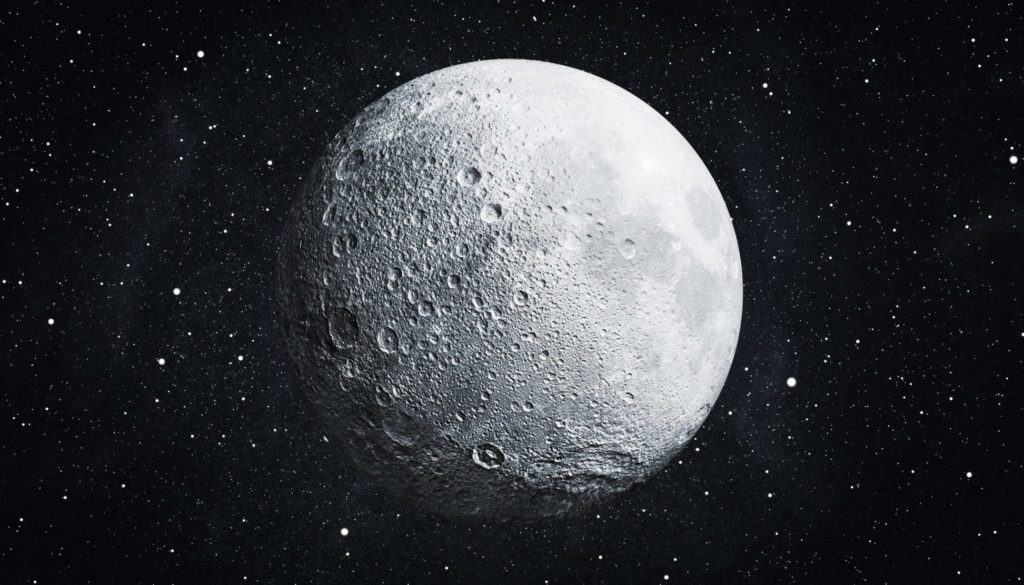
Clearly, a permanent installation requires the construction and maintenance of infrastructure through the use of locally available resources and the intensive use of robots. In this regard, the Australian company Luyten is looking to deploy 3D printing technology to provide on-site construction solutions3. In other words, the aim is to implement an artificial lunar ecosystem to facilitate travel to Earth. To achieve this ambition, the French incubator TechTheMoon, based in Toulouse, is the first in the world dedicated to developing a permanent settlement on the Moon4. Despite this emulation, the establishment of a human colony remains a distant prospect. A recent NASA audit report points to cumulative delays in the Artemis programme, particularly in the development and testing of the lunar module, which de facto postpones the mission beyond 20245.
China begins the race for this new mining frontier
China has demonstrated a meteoric rise in its space activities heading towards the moon – both economically and technologically. As a fundamental step in the development of its space programme, China sent its first probe into orbit around the Moon in 2007. Since then, the Chang’e 4 (2018) and Chang’e 5 (2020) missions have made significant progress in the knowledge and study of data on the topography and composition of the soil. One of the objectives of these trips is to determine the exact amount of helium‑3 present. To this end, the Beijing Research Institute of Uranium Geology (BRIUG) is measuring the content of helium‑3 in the lunar soil, evaluating its extraction parameters, and studying the ground fixation of this isotope. These advances also reflect Beijing’s overall strategy to control terrestrial minerals and metals and their use.
Overall, other countries are funding programmes to analyse the lunar soil, such as the future mission of the first Emirati rover scheduled for 20226. With the help of the Japanese company Ispace’s lunar lander, the ‘Rashid’ rover will study its geological composition and properties. These missions will undoubtedly help to assess its mining potential.
Many obstacles
Scientific missions are bound to continue over the next decade to continue surveying regolithic rocks in new lunar territories. This is an invaluable piece of scientific information that reflects one of the foundations of the human space exploration; based on the possibility of exploiting extraterrestrial resources that appear to be unlimited. In any case, the development of an extra-terrestrial mining industry entails investment and infrastructure constraints such that the deployment of existing renewable resources on Earth would remain less costly. In fact, the energy cost of lunar helium‑3 – from extraction to use in a nuclear fusion reactor – would make it at most a rather marginal contribution to our long-term energy needs.
While existing technological and financial barriers ostensibly hinder the launch of such a venture outside the Earth system7, sustained research and development policies in several countries are in this sense a way of keeping the possibility open. All in all, this feasibility could be unravelled when a technological threshold is crossed that correlates with its economic profitability. Finally, current international treaties do not provide a political and legal framework for mining activities on the Moon. In the meantime, thought must be given to the status of the celestial object, which could ultimately be like that of Antarctica, by becoming a neutral space dedicated to science.