


Every time we open a new window into the cosmos, that is, on certain colours or regions of the electromagnetic spectrum in the sky, we discover new objects and stars. This is because we have access to a whole range of wavelengths that are totally inaccessible from Earth’s surface. For example, the first time we sent a satellite to observe the Universe using X‑rays, in the 1960s, we discovered spots in the sky of an unknown origin. We later learned that they were due to plasma heated to several million degrees. These spots indicated the presence of ‘megacities’ in the Universe: regions inhabited by hundreds of galaxies.
This plasma is the material in which galaxies float, and it is completely invisible from the ground. When we study this source of radiation, we discover several things. First, that the temperature of this gas is directly related to the mass that is contained in the megacity. And second, that it contains ten times more mass than anything that radiates visible light. As such it is evidence for the existence of some form of dark matter in the Universe.
Using the electromagnetic spectrum to observe space
Thanks to X‑ray astronomy, we also discovered that iron exists between galaxies. According to current knowledge, this element can only be created during the explosion of a star, and notably in the core of the most massive stars. However, there are no stars between galaxies. This observation therefore provides evidence that galaxies must be losing some of their matter in the form of ‘galactic winds’. These winds come from the explosions of stars in the interior of galaxies, which project their matter far out from themselves and thus feeding the plasma between galaxies with their iron atoms.
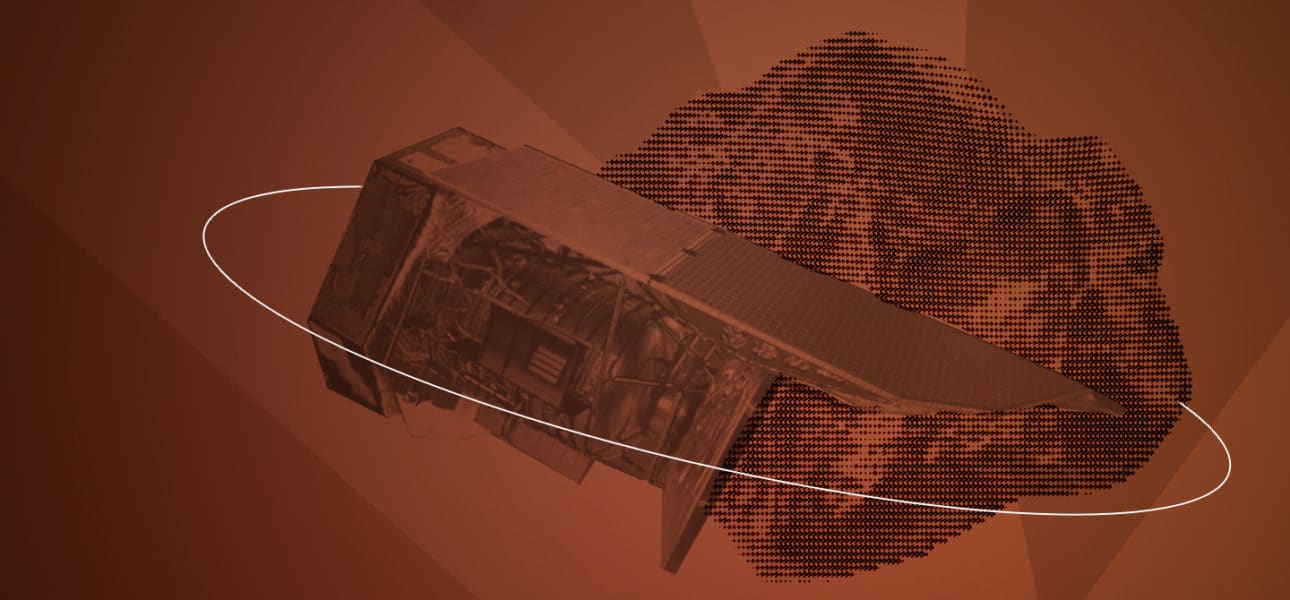
The other extreme of the electromagnetic spectrum, the infrared, is another area that is virtually inaccessible from the ground and for which we must send satellites into space. IRAS (Infrared Astronomical Satellite), an American satellite launched in 1985, was the first to observe the universe at infrared wavelengths. It made an astonishing discovery: what appeared as ‘holes’ in the sky were in fact the densest and most concentrated regions of matter in the Milky Way, so-called giant molecular clouds composed of atoms, molecules and dust grains. In short, places where new generations of stars are born.
This interstellar dust creates regions that absorb starlight, making them appear opaque. It is heated to a temperature of about 40 degrees above absolute zero (-230 °C) and radiates in the infrared. In our laboratory at the CEA, we developed infrared detectors that allow us to create the camera for the ISO (Infrared Space Observatory), a European satellite launched in 1995. Observations from the ISO showed that there are regions in which stars were born in the Milky Way that had escaped detection. Further analyses revealed that, in fact, throughout the history of the Universe, most of the births of news stars have eluded us.
This satellite was followed by Spitzer (Space Infrared Telescope Facility), an American satellite, in 2003 and by Herschel, from Europe, in 2009. Again, our laboratory built one of the most important cameras on Herschel.
Advances in space materials research benefit applications on Earth
Space telescopes are unique in that all the electronic components on board must withstand the harsh conditions of the cosmos. For one, they must be resistant to cosmic rays. They must also be robust to vibrations. Even the screws used in these satellites are specially designed to withstand the cold of space. It is therefore a whole new type of technology that we are constantly developing and improving.
This quest for high-performance materials for space is driving research into new materials and detection systems. For example, when we observed objects that are extremely faint, we realised that we had to develop cameras capable of capturing only a few photons (particles of light). In everyday life, there was no reason to do this, other than to observe the stars in the Universe – it was essential.
We realised that such detectors can be useful elsewhere; when we have a small aperture, as is the case in our mobile phones, we need to have detectors capable of collecting very little light and, despite this, produce a very good image. So, a good part of the optics and detectors found in phones and other devices today have benefited from space exploration.
« La plus belle ruse de la lumière »
What has surprised me most is that when I study the Universe, from the earliest times to the present day, what I see seems to be in total contradiction with what we learn in physics – that the second principle of thermodynamics leads to an increase in entropy, or disorder. Some say that this is the logical consequence of the fact that the natural evolution of the Universe is to go towards more and more disorder. In reality, what we observe is that entropy increases not through disorder, but through the production of light. It is much more efficient for matter to organise itself by forming complex structures, which in turn will produce entropy in the form of light, than to be disordered. My book « La plus belle ruse de la lumière » tells the story of how the history of our Universe is based on the structuring of matter into such increasingly complex structures.