How digital platforms use underpaid microworkers


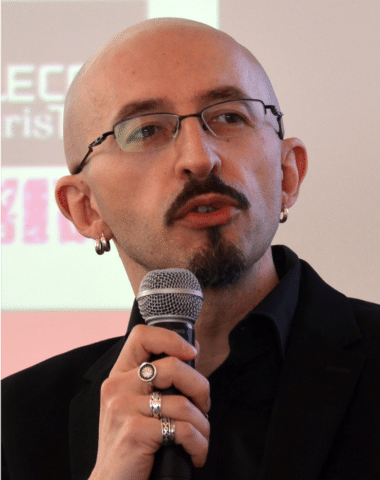
Technology is not going to eradicate work for humans. Quite the opposite, in fact – there is a strong risk that it will “proletarianise” it, by making that work invisible and limiting it to small, repetitive, underqualified tasks. This is the argument put forward by digital sociology researcher Antonio Casilli.
Who are France’s microworkers?
They are workers who log on from home to platforms like Amazon’s Mechanical Turk to complete so-called “human intelligence” tasks paid on a per job basis. They never know who they are working for, or to what end, because most of the time companies publish their jobs anonymously. The tasks, which are often used to supplement artificial intelligence, are repetitive and require few qualifications – circle tomatoes in a photo to assist nutrition applications, transcribe receipts, calibrate virtual assistants by assessing the quality of speech synthesis, copy and paste, say words aloud, indicate the colour of a character, and so on – all for a few cents.
According to the “Microwork in France” study that I conducted with my research group DiPLab (short for Digital Platform Labour), there were approximately 260,000 people microworking at least occasionally in France in 20191. The majority are women (56%) who are 25–44 years old (63%), and nearly half of people surveyed said they resort to this kind of work out of financial need. Hence, microwork is often a source of extra income, even though the average monthly pay was only €21. Even more surprisingly, these “clickworkers” have more qualifications than the average French person – 43.5% have done minimum two years of post-secondary studies. Yet, despite their significant numbers, these workers remain completely invisible.
Why are they more invisible than other workers in the digital space, like food delivery or rideshare drivers?
Firstly, it’s because of the very nature of their job. In reality, microwork is just remote working pushed to the extreme. It’s a remote activity, but for bosses and with colleagues who are often completely anonymous. On the other hand, Uber and Deliveroo drivers have been seeking out collective solutions and forming unions to make their voices heard. This is even more the case since they are vastly more visible than before when they roam the deserted streets of cities under Covid lockdown. But, unlike these workers, microworkers have zero presence in the public sphere. And the super-strict confidentiality agreements that they may have to sign make it harder for them to seek recognition for their work.
More and more countries, such as Spain, the UK and France, are requiring platforms (particularly Uber) to recognise the employment status of their workers. Yet the many hands that train our AI in the form of microwork are still ignored. I think efforts to regulate the industry come in large part from workers’ visibility, and from the physical proximity between deliverers and clients. It’s quite a paradox, as there are significantly more microworkers, both in France and internationally, at least according to our estimates and those of our colleagues at Oxford Internet Institute2.
What we do know is that physical effort is not the only way that deliverers produce value. They, too, perform invisible tasks, producing data for the platform and thereby feeding the algorithms and AI that serve in part to improve algorithmic solutions. This data must then be processed and, contrary to what you might think, it cannot be processed without the support of a large human workforce – which does not need to be located in the country of production. While France has 260,000 microworkers, these platforms have more than 100 million people signed up internationally. The vast majority of these “crowdworkers” are found in developing countries, in Indian, Southeast Asian, African and Latin American “click farms”.
This huge level of outsourcing is redefining the geography of the future, but it also influences the recognition of this work. There are purely political stakes with regards to the issue of the invisibility – not only are these workers not visible in the public sphere, but the overwhelming majority also cannot vote in their (developed) country of residence, unlike delivery and rideshare drivers. Consequently, their recognition is not a political priority.
Are you in favour of a “digital social income”?
The automation and “platformisation” of the economy is causing human work to explode, not die out! We are all microworkers in our own way – when you complete a CAPTCHA or add a hashtag on Instagram, you’re helping to train a computer vision system or providing a category for your post, instead of the platform doing it.
This is why there has been discussion in France since 2012 about the fiscal recognition of this “free work” done by app users3. Of course, it’s not the users who should pay these taxes, but the companies that own the platforms. Some 93% of French people use Google, and the company should pay taxes in proportion to the amount of data produced by French citizens. This fiscal revenue could then be used to fund redistribution policies, including a “digital social income”.
The aim of this income would be to divide up the value generated by clickworkers, microworkers and ordinary users, in an unconditional way with all social services considered equal. The aim is not to compensate people individually according to the amount of time spent on platforms. The consequences of that would be disastrous, with superpower platforms paying peanuts for our clicks while we slave away over microjobs! The aim is simply to redistribute the value produced, which until now has been hoarded by platforms, to prevent the “proletarisation” of human work.
Interview by Juliette Parmentier
Contributors
Antonio Casilli
Antonio A. Casilli directs the DiPLab (Digital Platform Labor) research group and was among the founders of the ENDL (European Network on Digital Labor). His publications include "Waiting for the robots. Enquête sur le travail du clic" (Seuil, 2019 laureate of the Fondation Colbert-Institut de France) and "Les liaisons numériques. Vers une nouvelle sociabilité?" (Seuil, 2010). He was the editorial advisor of the documentary series based on his research "Invisibles - Les travailleurs du clic" (France Télévisions, 2020).