



Rechargeable lithium-ion (Li-ion) batteries first appeared in the early 1990s and have revolutionised modern electronics. These batteries are now increasingly used to power electric and hybrid vehicles, thanks to their high energy density and excellent performance, and as key components in devices that store energy produced from renewable sources. Over the last two and a half decades, this technology has improved, gaining 5 to 10% in efficiency every year by optimising existing architectures.
However, if we are to move towards a truly carbon-free economy, we will need batteries that are more efficient than today’s Li-ion technology (and even those of tomorrow). In electric vehicles, these batteries will need to be as small and light as possible, which will require energy densities well above the 300 Wh/kg and 800 Wh/L considered to be the practical limits of current Li-ion technology. Other challenges include reducing costs, improving safety and durability, reducing recharging time, and increasing their lifespan (to around ten years or more) as they are used in economically important applications such as grid storage.
What do you see as the challenges for the batteries of the future?
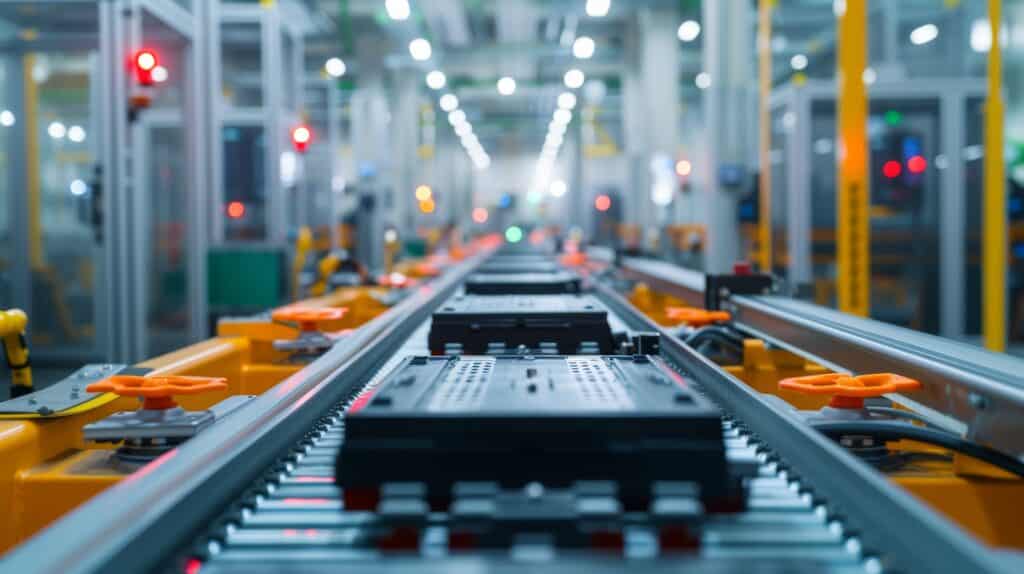
Cyrille Sollogoub. Li-ion batteries are widely used in all types of portable electronic devices, and their use really took off in the 1990s. Today, it’s batteries for electric vehicles that are taking centre stage. The main challenges lie in manufacturing batteries that are efficient, safe and produced on a large scale, in order to meet rapidly growing demand. The need for electric vehicles that can be recharged quickly is set to increase almost exponentially in the years ahead. These batteries will also need to be designed to be as light as possible.
Didier Dalmazzone. Other challenges include the availability of critical metals and supply chains, as well as control of these chains, which is currently largely held by China. The recyclability of existing batteries is also becoming an issue as they approach the end of their life cycle, which will only get worse in the future. The battery recycling industry is not yet in a position to meet this challenge. It is also essential to regain our industrial sovereignty in Europe and France.
CS. This last point is directly linked to manufacturing issues, because none of the necessary materials, at least those used for the active part of batteries, are currently available in Europe. It is clear that we are heavily dependent on other countries: not only are batteries not manufactured in Europe, but we have not yet mastered their large-scale manufacture. The EU is aware of this problem and has set itself the target of building around thirty ‘gigafactories’ capable of manufacturing lithium-ion batteries for electric vehicles. France and the EU have therefore invested heavily in this infrastructure. The initial target was for 20% of batteries to be produced in Europe by 2030. However, this figure is now less than 2%. This low proportion is due to major delays, and the 2030 target will probably not be met.
DD. Another problem is that even if we manage to build these gigafactories, we won’t have the materials needed to manufacture the batteries. That’s the current situation.
Do you have any proposals or ideas for moving in the right direction?
DD. We absolutely must regain our sovereignty. France was at the origin of battery technology1. And even if there are still a few industrial players in France – we haven’t completely disappeared – it’s clear that we’re going to have to act very quickly to catch up with the Chinese, who are themselves making very rapid progress at the moment. In terms of price, the cost of batteries is falling at an incredible rate. So, it’s a huge challenge for manufacturers who are still in the race and want to remain competitive.
One example is Verkor, a conglomerate of different groups trying to join forces to advance the production and manufacture of Li-ion batteries. In-depth research into the chemistry of these materials has been carried out all over the world. John B. Goodenough, Stanley Whittingham and Akira Yoshino have been awarded the Nobel Prize in Chemistry in 2019 for their contribution to their development2. However, I believe that we now need to be productive to meet the growing demand. That’s why, as someone more involved in the processes, I think there’s a lot to be done in this area. We also need to make these batteries more robust.
CS. There is one important aspect to consider: safety. This is one of the limitations of current Li-ion batteries, particularly those containing flammable liquid electrolytes. If we want lithium-ion batteries to be part of our everyday lives, in electric vehicles for example, we need to make them safer. This is where batteries based on solid compounds come into their own.
DD. The question of safety becomes even more pressing as energy density increases. As the aim is to move towards ever higher energy densities, current technologies, based on liquid electrolytes, which are in fact organic solvents and therefore flammable, need to be reviewed. My colleagues on the IP Paris campus are working on replacing certain Li-ion battery materials, such as graphite, with silicon. Other approaches involve metal-air batteries. Ultimately, we would like to replace lithium with other materials, as this element will become increasingly rare.
But isn’t lithium available in France?
DD. Lithium is found almost everywhere in the world, but it must be extracted properly because mining this metal is extremely polluting. The ore must also meet specific quality criteria. In France, we find it in Alsace and the Massif Central, but we must be careful. Just look at the devastating effects of lithium mining on the landscapes of South America. Purification is also a problematic stage after extraction. In conclusion, demand for batteries will increase considerably in the future, so we need to start preparing for this. And today, liquid electrolyte Li-ion technology is already reaching its limits.
Do you already see alternatives to lithium-ion? Sodium was mentioned earlier?
CS. Two or three years ago, I would also have mentioned hydrogen, but it seems to be losing momentum. What’s more, it poses a lot of problems. I think that batteries have taken the lead, particularly for electric vehicles. Even if existing lithium-ion technology can be further improved, it will not be enough to meet future needs. We therefore need to work on post-lithium-ion batteries (‘all-solid’, sodium-ion, lithium-sulphur, etc.), which means developing new chemistries and electrode architectures offering much higher energy densities and new electrolytes capable of providing the high conductivity required. The challenge is to combine all these qualities in a battery that is safe, durable, economically viable and compatible with large-scale production.