Transforming organic waste into hydrogen using marine bacteria




- While Europe is aiming for a low-carbon world by 2050, 99.3% of hydrogen (a major vector of the energy transition) is currently produced by fossil fuels.
- One way of producing low-carbon hydrogen is high-temperature fermentation.
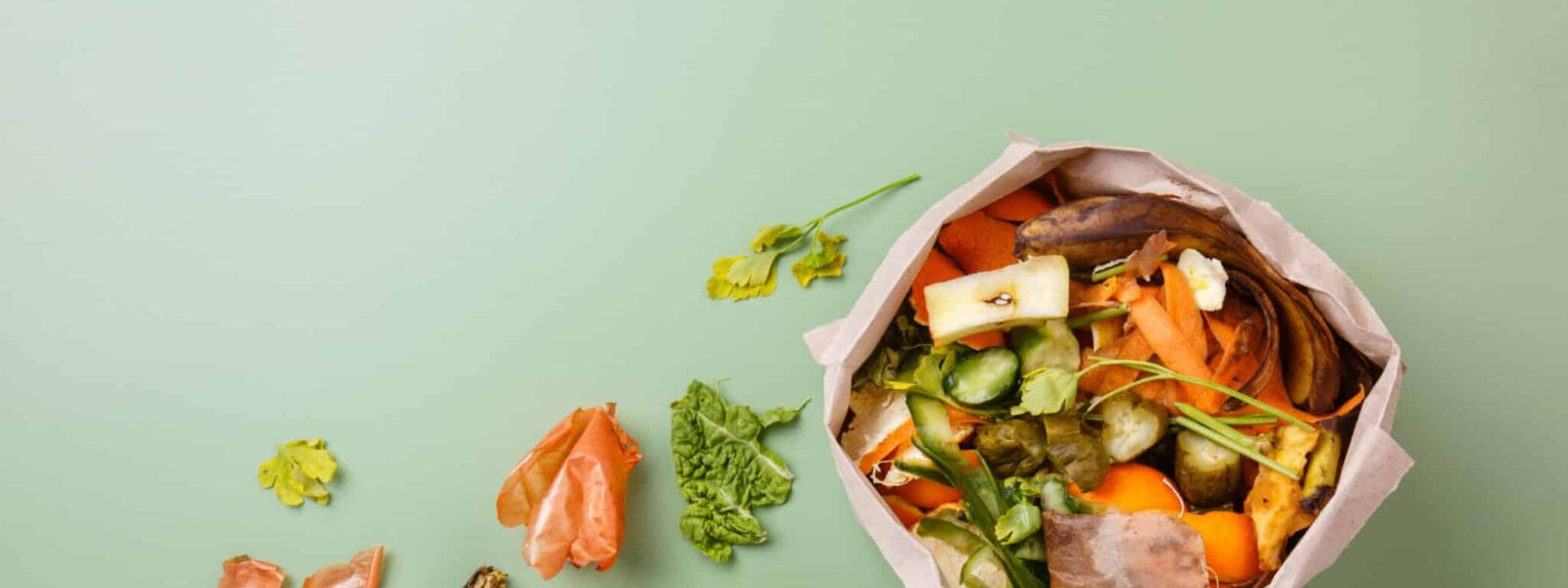
- This involves incubating food waste with a marine bacterium under very specific conditions, leading to the degradation of bio-waste.
- Hurdles to overcome include higher bio-hydrogen production and recovery of solid product after fermentation.
Hydrogen is an energy source favoured by the French government to decarbonise transport. To date, 99.3% of the world’s hydrogen is produced using fossil fuels. Only water electrolysis generates low-carbon hydrogen. Of all the known low-carbon production methods, the BIOTEC H2 international joint laboratory – due to open in Hammamet in 2022 – is dedicated to the production of biohydrogen by dark fermentation at high temperature.
What does hydrogen production by “dark fermentation” involve?
Hana Gannoun. This process is based on the recovery of fruit and vegetable waste by acetic fermentation. We use a marine bacterium, Thermotoga maritima1. The waste and bacteria are placed with seawater in a bioreactor. The bioreactor is heated to 80°C, maintained without light or oxygen, and the agitation and pH are controlled to provide optimum conditions for the bacteria to grow. The degradation of biowaste by bacteria produces dihydrogen (H2), CO2 and acetate.
Pierre-Pol Liebgott. This process has been known about for twenty years, and there are no obstacles to producing biohydrogen. We have demonstrated the feasibility of this process in a 2L fermenter fed with waste from food markets in Tunisia.
Why use marine bacteria?
HG. We wanted to use marine bacteria so that we could supply the reactor with salt water. This avoids adding an additional use to the freshwater resource.
PPL. From the taxonomic map of existing micro-organisms, we chose Thermotoga maritima, which is a very special marine micro-organism: it is polyextremophilic. This means that it can withstand very high temperatures and high salt concentrations. In nature, this bacterium thrives in underwater hydrothermal springs. Why choose these specific characteristics? In a sugar-rich environment, many contaminating bacteria can develop and disrupt the reaction. But at 80°C, no contamination can develop, ensuring that only Thermotoga maritima is at work.
High-temperature fermentation has another advantage: it is more energy-efficient. Fermentation is a process that releases heat, and maintaining a fermenter at a temperature of 20°C requires cooling. Cooling requires more energy than heating, for which we use a solar water heater.
What are the advantages of this process compared with other ways of producing hydrogen?
PPL. Biological processes are inexpensive and require less energy. To produce 1 mole of hydrogen, you need 0.2 moles of energy with a microbial electrolysis cell. This figure rises to 1.7 for water electrolysis. Above all, dark fermentation makes it possible to utilise an enormous amount of organic matter. In France, almost a third of household waste is putrescible, and its collection is now compulsory. In Tunisia, this figure is 70%, and much of this waste is dumped directly into public landfill sites.
HG. We are working to improve the way we handle waste over the course of the year. We have three study sites: a wholesale market in Tunis, a municipal market and a hotel. The Tunisian government wants to set up a management system for this type of waste: our objective is to ensure that the bioreactor operates in a stable and efficient way throughout the year.
Isn’t it more advantageous to convert organic waste into methane rather than biohydrogen?
P‑P. L. Methanisation is simpler to implement, and the process is already relatively well developed. But methane is less advantageous from an energy point of view. Moreover, hydrogen is in the process of being adopted more widely in Europe, spurred on by several investment plans. By converting organic waste into bioH2, we propose to make the most of the infrastructures – production, distribution, etc. – that will be implemented.
What is the yield of the H2 bioproduction process?
PPL. The theoretical yield is around 4 moles of H2 per mole of sugar, but in reality it is currently less than 3, which is still a good result. In practice, with one tonne of waste, we produce one kilo of bioH2.
HG. We are currently looking to improve this yield. To do this, we are studying other marine micro-organisms and also synthetic consortia – mixtures of several bacterial strains.
Once the process is fully developed, how could it be implemented?
PPL. The process is still in its early stages: we’re at TRL 3–4, which corresponds to a small-scale prototype. We will shortly be upgrading from a 2 litre to a 10 litre fermenter. But we’re not aiming to use large volumes, like large methanisation units. The aim is to develop a unit designed for domestic production of bioH2 from household waste. This will enable us to target a less competitive market and offer people energy independence.
After fermentation, is there a solid digestate as in a methanisation unit? If so, are there any ways of recycling it?
HG. Yes, we’re talking about slurry. It’s an aspect we’re working on because we’re trying to take a complete circular economy approach. Unlike digestate from methanisation, there are several obstacles to the recovery of slurry: it is rich in salt and organic fatty acids. It is therefore not possible to use it on agricultural soils. We are working on the solid fraction of the slurry: by composting it, it would be possible to produce enzymes or polymers that could be used in packaging.
PPL. If we succeed in treating the fermentation slurry, our process will be a competitor to methane production.