


Since the Covid-19 pandemic, the mental state of young people has been a cause for concern. The subject was even cited as one of the government’s major causes by French Prime Minister Gabriel Attal in his general policy speech last January. In March 2023, the French High Commission for Childhood and the Family published a report on the increase in mental distress among young people, highlighted by several national and international bodies. At the same time, the Court of Auditors noted a “high incidence of mental disorders among children and adolescents in all industrialised countries.”
“There has been a significant increase in the demand for psychological help, which can be received in medical-psychological centres, youth centres, medical emergencies and paediatric wards,” explains Guillaume Bronsard, head of the child psychiatry department in Brest and chairman of the Ile-de-France School of Parents and Educators in charge of the Fil santé jeunes (EPE-IDF).
There is no general or widespread outbreak of mental health problems.
Following the pandemic and lockdowns, numerous reports pointed to an increase in psychological disorders among children and adolescents. The Cour des Comptes (French National Audit Office) points to an increase in anxiety and depressive symptoms, psychological distress and suicidal thoughts. Between 2016 and 2021, the number of emergency room visits for mental disorders among minors rose by 65%. In comparison, for the same age group, the overall number of emergency room visits – for all other reasons combined – rose by 4%.
However, according to Guillaume Bronsard, it would be difficult to infer from these findings a general state of mental health among young people. “We cannot infer that there is an outbreak of mental health problems (as we are often told) that is widespread, generalised and uncontrollable.” Indeed, the Cour des Comptes notes that “changes in the prevalence of mental disorders among children and young people over time have not been documented, and do not allow us to conclude that there has been an overall decrease or increase.”
Already precarious situations have worsened
The so-called generalised deterioration actually conceals a heterogeneous situation. The increase in requests for psychological help is not evenly spread across France. For example, there are more requests in places where there are more child psychiatry services. According to Guillaume Bronsard, this highlights the lack of correlation between the number of requests and the actual state of suffering.
The increase in requests for help since the pandemic has mainly concerned people who were already vulnerable. “During this period, many points of reference have been shaken up and situations have worsened. However, the majority of young people show no particular signs of suffering. It’s more a question of an intensification of an already vulnerable minority sub-group, rather than an absolute increase in the number of people affected,” explains the doctor.
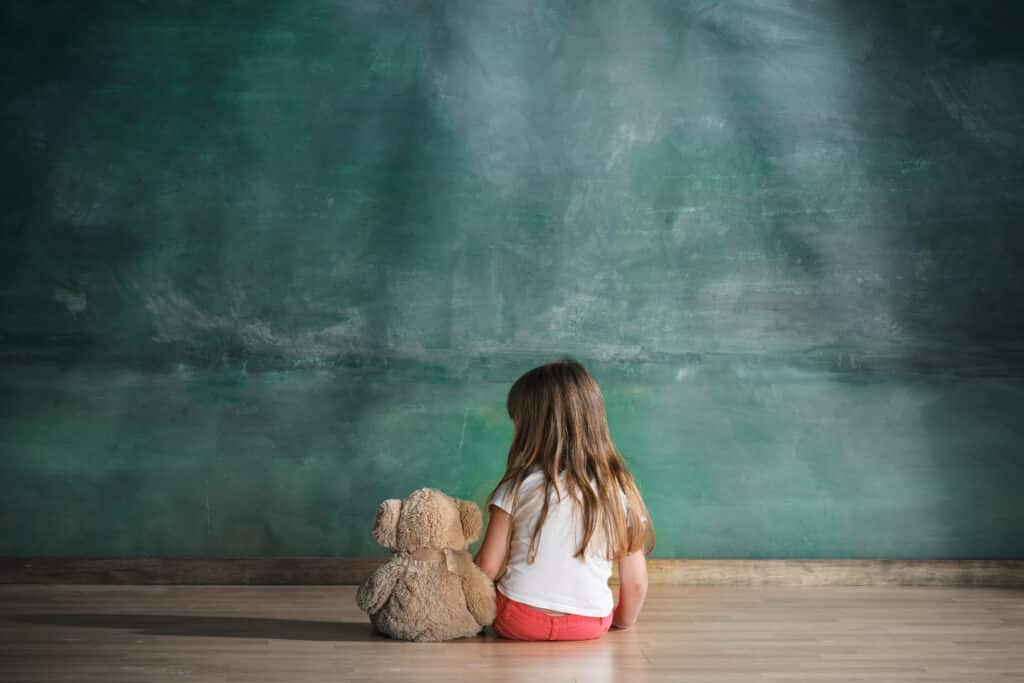
What’s more, this increase particularly affects young girls. “Generally speaking, young girls in their teens have for a very long time been much more prone to internalised disorders, i.e. suicide attempts, scarification, damaged relationships with their bodies and so on. This is linked in particular to the reality of puberty, which is more intense in young girls than in young boys. This is a well-known and long-standing phenomenon, which the Covid-19 period has exacerbated,” explains the child psychiatrist.
Informing and raising awareness, but not alarm
According to Guillaume Bronsard, it is untrue to say that young people are in a bad way. What’s more, fuelling unjustified concern could have negative consequences. “This statement may be the result of adults projecting themselves onto young people. The relationship between the generations has always been one of ambivalence, and we mustn’t allow it to become one of intergenerational aggression masquerading as compassion,” warns the president of the association in charge of the Fil santé jeunes.
In recent years, awareness of mental health issues has become more widespread. Communication campaigns have been set up, in addition to media coverage of certain situations such as aggression and harassment. “All this is positive, as long as there is communication about where to go for help and care. This will increase demand, which is all to the good. However, we need to be careful to inform and raise awareness, without causing alarm,” warns Guillaume Bronsard. He points out that, at the same time, there are a number of social trends that attest to good mental health, such as political engagement amongst teenagers, which used to be much rarer.
A societal shift that began in the 1970s
According to the child psychiatrist, the current situation cannot be explained solely by the pandemic, or by greater awareness of the importance of mental health. Demand for child and adolescent psychiatry began to rise at the end of the 1990s, and stabilised around 2010. Guillaume Bronsard explains that this is primarily due to a major change in the organisation of families and schools, which began in the 1970s: “Many anomalies or disturbances used to be dealt with in the privacy of the family. Disruptive behaviour was not treated medically, because families or schools dealt with it, generally in an educational, often punitive and sometimes violent way. On the whole, it was a positive change in our society,” says the doctor. Since then, there has been greater recognition of psychiatric disorders in children and adolescents, better screening for learning disabilities, and medical treatment.
“These factors have led to a tenfold increase in demand, yet there has been no sufficient increase in child psychiatry resources,” laments Guillaume Bronsard. “In the 1990s, supply and demand were closely aligned. Today, demand has increased dramatically, but there is too little supply, giving rise to the waiting lists and bottlenecks that we see in child and adolescent psychiatry.” For several years now, professionals in the sector have been warning about this lack of psychological care, particularly for young people. According to an article published in Le Monde in April 2023, of the 1.6 million children and adolescents suffering from mental illness, only 750,000- 850,000 receive specific care from child psychiatry professionals.
Sirine Azouaoui
Reference: the Court of Auditors: https://www.ccomptes.fr/sites/default/files/2023–10/20230321-pedopsychiatrie.pdf