“Hospitals must retain the agility acquired during the crisis”


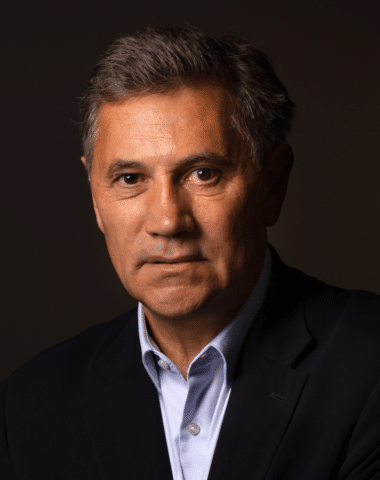
The pandemic has put both our healthcare system and hospital management methods to the test. During the first wave, health workers adopted new, highly effective management techniques whilst working in crisis mode. Will we retain these approaches? In July 2020, Étienne Minvielle and Hervé Dumez (CNRS/Institut Polytechnique de Paris), published Le Système hospitalier français face à la crise Covid-19 [“How the French Hospital System Dealt with the Covid-19 Crisis”] a study based on 55 interviews with health professionals.
How would you sum up your field of expertise?
Health management research is a field of social science that studies key issues in public health, such as organisational performance, coordination of health professionals and treatment plans. It is a relatively new field in France because health professionals generally have little formal management training.
Why did you decide to specialise in this field?
Over the course of my medical studies, I became passionate about management. I studied at the Essec Business School and have a doctorate in Management Science from the Institut Polytechnique de Paris. Our country has one of the best health sectors in the world when it comes to clinical practice and research, but we have major management problems. Fixing these would lead to massive improvements, as well as increase quality, limit waste, and reduce inequalities. The field is still a minority in the healthcare sector. I am trying to develop a large-scale patient-centred approach to respond to specific needs of individuals. And to subsequently make that offer as widely available as possible.
What lessons can we learn from the pandemic?
Our health system has had to deal with an increasing number of crises lately: terrorism, natural disasters and, in our case, a pandemic. In order to face these challenges and be more adaptable, we have to adjust our skill set to implement new kinds of management strategies.
Do you think our hospitals were adaptable enough during the lockdown during the first wave of Covid-19?
Yes. Our study summarised this in six points. We observed:
- A great deal of organisational creativity, including the mass development of tele-health services. This sometimes involved a more relaxed approach to certain rules, such as exchanging medical information via WhatsApp, which under normal conditions is a violation of patient confidentiality.
- Forward planning: health professionals assessed the situation and made decisions in real-time, highlighting the vital importance of field studies. Data obtained from an assessment of the situation in the French city, Mulhouse, was used to make decisions in Paris, for instance.
- Supportive management based on listening, extensive communication, the consideration of everyone’s perspective and flattened hierarchies made a big difference. This went hand in hand with fair distribution of financial resources between services, physical presence of leaders, and transparency.
- Adaptation through autonomous, co-operative group work. For instance, rapid testing and evaluation of new patient orientation protocols were developed by local teams.
- New partnerships between start-ups and hospitals, and between public and private institutions.
- Government support such as removal of financial constraints and provision for local initiatives.
How can we foster creativity in an environment which is understandably highly regulated?
Humility and doubt must be valued above all things. Creativity can only happen when there is a willingness to let go of previous assumptions. And errors must be recognised.
What did we see during the second wave of the pandemic?
First off, it was slower and more widely spread. Because of its re-appearance after a short period of calm, healthcare teams who are often tired are being tested again. The word that comes back most often is ‘weariness’. An ability to adapt is still necessary but with an emphasis on supportive management. The initial solidarity is waning thin, so it is important to support teams on a daily basis and address worries of healthcare professionals.
Between the two waves, were we seeing management return to the way it was before? Or were services retaining the knowledge learnt from previous crises?
Under normal circumstances, performance relies on specialisation, hierarchy and evaluation; contrary to adaptability which relies on short networks and quick reactions. However, if we take a closer look, we can see that proximity management is essential in both cases. It encourages adaptation and can work to resist the loss of attractiveness we are seeing in the health professions.
Conditions at hospitals have deteriorated; the organisational structure is unclear and undermined by politics. This makes healthcare a tough work environment, and the ongoing crisis highlights the urgent need for proximity management. The boundary between normal conditions and those of the crisis is now blurred. For that reason, we could say that the management challenge needs to deal with a ‘normal crisis’.
Does the entire culture have to change?
I don’t really like the word “culture”. There is no manual for changing a culture. To me, training is paramount. A head of department, for example, is often chosen on their expertise as a researcher, which does not necessarily make them a good manager who can unite staff, foster creativity, encourage introspection, and so on. For me, the key is on-the-ground management training.
Is there a “post-Covid crisis” in public health?
Yes, because we have realised that large scale threats are real, something that would have been impossible without the pandemic. Think back to the beginning of the year: the signs were there, in China, in Italy, but people were often in denial.
Will we see more crises on the same scale?
Probably. We will face other threats, such as bio-attacks, new epidemics, cyber-attacks, climate change, and terrorism. We live in an uncertain world, and we must be prepared. During the crisis, the army built an emergency military hospital (in Mulhouse) in record time, as part of a test for a chemical attack response. Staff wore very uncomfortable NBC suits. We need to understand that each crisis is unprecedented, that each situation requires a new strategy. But we are learning. We saw, for instance, that staff who had lived through the 2001 chemical explosion at the Toulouse AZF plant retained good cognitive reflexes and adaptability.
How did they behave?
They were resilient. They had a way of remaining constructive under pressure, which is absolutely essential. In times of sudden, short-term crises, solidarity is pervasive. In chronic situations, however, that solidarity erodes. Organic solidarity (“we are all in the same boat”) gives way to a more mechanical solidarity (“we are in this together, but relationships must be negotiated”). Unless management finds a way to counteract this, we will lose our effectiveness.
Interview by Clément Boulle
Contributors
Etienne Minvielle
A former intern at the Paris hospitals, a graduate of ESSEC and holder of a doctorate from the Ecole Polytechnique, Etienne Minvielle is also Director of Quality, Risk Management and Patient Relations at the Gustave Roussy Institute. He is director of the Centre de Recherche en Gestion (i3-CRG*) at Ecole Polytechnique (IP Paris).
*I³-CRG: a joint research unit of CNRS, École Polytechnique - Institut Polytechnique de Paris, Télécom Paris, Mines ParisTech
Other contributions
Voir toutes ses contributions