

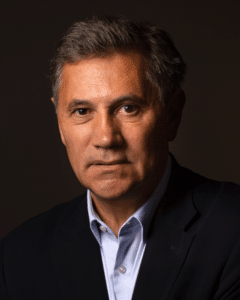
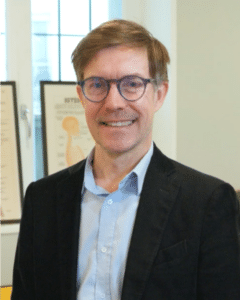
Innovations in the healthcare sector have increased exponentially over the past few years thanks to the widespread use of digital technology. A digitally connected world like ours not only enables technological advances, but can also open the door to a whole new range of benefits that have long gone unnoticed. “Digital technology is having a number of positive impacts on the healthcare sector,” says Étienne Minvielle, CNRS research director and professor of healthcare management at I³- CRG. “It enables patients to be monitored remotely, while increasing their autonomy in their care, because they can move around more easily and contact a hospital system.”
According to studies led by the professor, digital technology improves the quality of care. Through remote monitoring, “Digital health is something that has been developing rapidly in recent years,” says Alexis Hernot, co-founder of Calmedica. “And France wants to become the leader in Europe.” Given the benefits that e‑health can bring to the medical world, Alexis Hernot is convinced that: “Digital technology has gone from being a threat to a tremendous opportunity.”
An organisational advantage
“When it comes to digital technology and technological innovation in healthcare, the issue of organisation is a fundamental one,” insists Étienne Minvielle. “So you have to be able to put it into its organisational context straight away.” It was in this sense that the professor conducted a study at the Gustave Roussy hospital. Following the development of a communication system called CAPRI, cancer patients receiving oral treatment could be monitored more easily from a distance. “In oncology, for example, patients spend more than 90% of their time outside hospital,” he explains. “It’s important to know what’s going on there, through a range of players who need to be coordinated along the way to ensure that things go as smoothly as possible for the patient.”
There are many advantages to this kind of monitoring: “We can prevent the toxic effects of drugs,” adds the professor, “by prescribing them more effectively. At the same time, patients are happier, and it has been shown that this avoids hospital visits in statistically significant proportions. What’s more, when they do go to hospital, they are less likely to go to A&E. This is another key point, because in modern healthcare systems, overcrowding in emergency departments is a real problem.”
This type of monitoring also makes it possible to personalise the patient’s care pathway. Rather like the suggestion algorithms used by streaming platforms, an application of this kind will enable carers to gain a better understanding of the patient’s lifestyle habits, and therefore to better guide them in their treatment. “We’re combining knowledge of socio-economic determinants with knowledge of the patient’s behaviour,” explains Étienne Minvielle. “A patient who is on their own will not receive the same care as a patient whose family is around them. As far as patient behaviour is concerned, it’s important to know whether they are anxious, motivated to take their medication, or are going through a difficult period.” Étienne Minvielle’s work is still at the experimental stage, but the results are promising.
A shortage of carers requires a solution
A similar remote monitoring system has already been introduced, under the name Calmedica. “Regulations introduced by the French National Authority for Health require ambulatory surgery patients to be called the day before and the day after their operation,” explains Alexis Hernot. “With the current shortage of nurses, these calls, which are very time-consuming, prompted us to set up Calmedica.” The former Polytechnique graduate and his colleague came up with an automated system to replace these calls. This automated system, which involves sending text messages, will communicate instructions to patients before the operation and ask them about their state of health afterwards.
“Since the start of Covid, one problem in the health sector has become more acute: the shortage of care workers,” he says. “As a result, the number of vacancies in hospitals has increased.” An automated tool that communicates with patients makes it easier to monitor their care. “When you have 40 patients a day, you spend 6 to 7 hours a day contacting them,” adds Alexis Hernot. “You’d need a full-time nurse for this simple task.”
Calmedica’s software uses decision trees to communicate with patients by text message. “A system like this frees up 90% of nurses’ time,” he explains. “This time is used to improve the quality of care, but also enables more patients to be cared for while reducing waiting times.” What’s more, its use has been simplified as much as possible: “The system we’ve designed is simple,” he says. “We don’t need to train patients, because we tell them: you’re going to receive text messages, and if there are any questions, you have to answer them. And for the carers, we tell them: you have a dashboard and if something has been reported, there will be a red dot on the line that corresponds to the patient.”