LSD, MDMA… how psychedelic drugs can treat psychiatric disorders


- For a number of years, medical and scientific circles have been interested in the use of psychedelic substances to treat certain mental disorders.
- LSD and psilocybin are used to treat patients suffering from depression and/or anxiety disorders, with or without addiction problems.
- During their psychedelic journey, patients generally experience traumatic memories being brought back, but in a new context.
- The effects can be dramatic, with symptoms sometimes resolving after just one or two sessions.
- The psychiatric world had not seen such innovations since the advent of antidepressants in the 1960s.
Will LSD, psilocybin – the main psychoactive substance found in hallucinogenic mushrooms – or MDMA soon become treatments for depression, addiction, or obsessive-compulsive disorder? Psychedelics are a family of substances that induce a state of altered consciousness and perception. These psychoactive substances act on the receptors for serotonin, nicknamed the “happy hormone”. Long demonised as dangerous, these drugs were the subject of much research in the late 1940s. But their association with the protest movements of the 1960s and 1970s led governments to ban them.
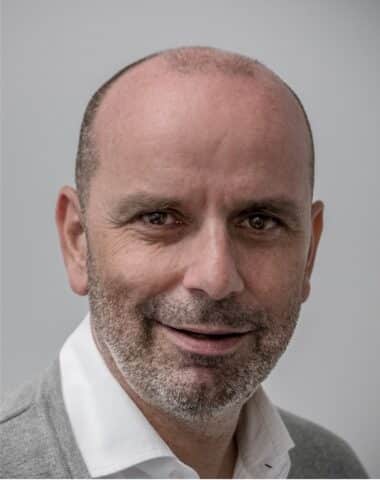
For several years now, scientific research has been taking a closer look at the effects of LSD and psilocybin on mental illness and addiction, and as a support for patients at the end of their lives. Research and studies are multiplying. Psychiatrists have analysed 25 studies on the effectiveness of LSD and psilocybin in psychiatry, anxiety-depressive symptoms, addictive disorders, and obsessive-compulsive disorder (OCD). Their conclusion is clear: “Psychedelics are promising therapies with rapid and long-lasting efficacy, and their use appears to be generally well-tolerated”. Switzerland, where LSD was synthesised in the 1930s, is a pioneer in this approach. For the past three years, Professor Daniele Zullino has been conducting psychedelic therapy (LSD and psilocybin) for patients suffering from anxiety, addiction and/or depression, at the Geneva University Hospitals.
What is the connection between the Swiss scientific community and treatments using hallucinogenic substances?
Over the last twenty years or so, we have witnessed a “psychedelic renaissance” in Switzerland. Research had never actually stopped, despite the prohibition introduced by President Nixon in 1971. There have always been experiments with different substances, notably in Zurich and Basel. And it was in the early 2000s that two psychiatrists, Peter Gasser and Peter Oehen, were given authorisation to use them as treatments, particularly for people at the end of their lives. Then, in 2014, the Federal Office of Public Health (FOPH) decided to authorise exceptional treatments for doctors who requested them. Research is therefore quite well developed, with around thirty doctors involved in recent years.
Which patients do you treat in this psychedelic-assisted psychotherapy?
We treat Swiss patients who have been suffering from depression or anxiety disorders for years or even decades, using a range of therapeutic effects, both pharmacological and psychotherapeutic. These patients must already be under the care of therapists but are experiencing problems with their usual treatment: this therapy should be a last resort, never the first line of defence. More than half also come with an addiction problem. So, these are patients for whom we hope that a moment of digressive thinking, with new associations and the development of certain cognitive schemas, can kick-start the psychotherapeutic process. As such, it’s not pharmacotherapy in the traditional sense of the term, but rather a treatment outside the research protocol: this is compassionate use.
How does the treatment work?
Before the first session of LSD or psilocybin administration, we carry out several assessment interviews, enabling us to do a full psychiatric investigation and review the patient’s history. Preparatory sessions are then held to explain everything to the patient, show them around the premises and introduce them to the staff. We also assess the patient’s motivations, treatment objectives and expected effects. On the day of treatment, patients arrive at 8.30 a.m. and undergo psychometric tests and a check of their vital signs. Thirty minutes after taking the substance, they go to bed in a room with a mask over their eyes and music in their ears. The psychedelic journey then begins, lasting around eight hours for psilocybin and twelve hours for LSD. The choice between the two substances is largely left to the patient, depending on the duration of the effect and the price (CHF 130 for a standard dose of 10 microgrammes of LSD and CHF 440 for 25 mg of psilocybin). The effects are similar.
It’s a real innovation in psychiatry, the likes of which has not been seen since the discovery of antidepressants.
The next day, the patient returns for what is known as the integration session, where everything that has happened is reviewed. The patient writes down everything he or she has experienced as accurately as possible. We discuss how these experiences can be integrated into daily life and the psychotherapeutic approach. The interview is recorded, so that the patient can listen to it again alone and with his therapist. Four weeks later, an amplification interview takes place to take stock again and decide on a potential new session. The treatment is administered in one to three sessions – although some patients respond very well after just one or two sessions. However, each session should ideally be spaced two to three months apart.
Why treat these patients with LSD and psilocybin? What is the history of these substances?
We have scientific data to support our approach for resistant depression, for anxiety disorders linked to severe illnesses, for the treatment of alcohol and tobacco addiction, and for OCD. What’s more, there have never been any severe side-effects with LSD or psilocybin. And LSD and psilocybin are not addictive: this was made-up by Richard Nixon’s administration in the 1970s. In order for these substances to be placed on the list of narcotics, they had to be addictive and of no therapeutic value. At the time, it was a political decision to combat protest groups linked to the Vietnam War and the civil rights movement led by African-Americans. Otherwise, other substances are of interest, such as DMT, the active substance in ayahuasca, but we don’t currently have authorisation to use them.
What do patients generally experience during these sessions?
One of the most common experiences that patients have is the appearance of certain important memories that have been experienced in a traumatic way, but which are then put back into a new context, leading to learning signals. Then, to treat OCD, phobias or claustrophobia, we also use exposure: the patient is taken into a lift, and the panic reaction does not occur because the attention is focused on something else. This situation, which has been seen as highly anxiety-provoking for years, is experienced in a completely different way, and a beneficial process begins.
The experiences with the most spectacular effects are the “challenging experiences”, i.e. difficult experiences, memories or emotions that resurface in a particularly painful way, with a certain anxiety about facing them. These patients describe enormous changes in the days that follow.
What effects have you observed in your patients?
We haven’t analysed all the data yet, but the impact is very positive. After two sessions, half the patients are in remission from their disorders, whether addiction or depression. Some people with decades of treatment stop taking antidepressants, patients suffering from OCD see their symptoms disappear directly after one session, others treated for depression come back a month later and have completely stopped drinking and smoking without having made the decision to do so. Of course, in some cases, not much changes. But we are sometimes surprised by the dramatic effect, and that’s very encouraging.
Where do you think we are in terms of the use of psychedelics to treat mental health problems?
Research is developing: the UK is quite active, studies are being carried out in Germany and pre-clinical research is taking place in France, particularly in Amiens. There’s real enthusiasm. At conferences, psychedelic topics are being discussed in front of packed audiences. This is something new, because these are what we call disruptive treatments – they’re not continuous – something we haven’t had until now. This is a real innovation in psychiatry, the likes of which has not been seen since the early 1960s with the discovery of antidepressants. Everyone is expecting a major revolution.
How do you see the future of this type of therapy?
We’re likely to see an acceleration in the development of these treatments, with the first psilocybin approvals in the United States expected in one or two years’ time. There’s huge interest from start-ups: it’s going to have a snowball effect. In ten years’ time, it will be a well-established treatment, which will certainly not make depression or addiction disappear, but which will take up a certain place in the therapeutic arsenal. The big challenge is to integrate it into current psychotherapeutic models. But we’re at the very beginning of the process, because we can’t start again from what was achieved in the 1960s: the scientific methodology wasn’t the same. So, we need to see how we can combine psychotherapeutic techniques with the effect of these substances to derive maximum benefit.