



Sports performance seems to be improving year after year, with records being broken all the time. On the other hand, worldwide physical activity is steadily declining. This decline is generally linked to innovation and is present in almost every aspect of society. For example, farming requires less and less physical effort, and the simple act of walking or cycling is becoming rarer. One study even points to a 10% drop in the physical fitness of teenagers worldwide.
In scientific studies of sport, it is therefore important to distinguish between physical activity and sport. “In sport, there is physical activity and sporting activity,” explains Vincent Nougier, professor at Université Grenoble Alpes. “So it’s not just high-level sport, but simple movement. Walking, at its simplest, is already a form of physical activity.”
The two are perhaps inextricably linked, and the study of each is of different scientific interest. “The first area of interest, which is quite trivial, is of course in improving the performance of sportspeople,” continues the professor. “A second area of interest is in the field of sport and health, where questions revolve more around physical activity. The final area of interest, which has been somewhat sidelined, is that sport remains a complex model, bringing into play many of the physical characteristics of our world. Studying it also helps us to understand them better.” As research in the field of sport is not very well developed at the CNRS, the Sport & Activity Research Group was set up to address these three issues.
From sporting activity…
With the arrival of the Olympic and Paralympic Games in Paris, research is naturally focusing on optimising the performance of athletes. There are many ways in which research can have an impact on performance. “The most obvious is through technological innovation,” adds Vincent Nougier. “Such as improving the materials used in equipment to improve its weight, aerodynamics and so on.” By understanding the physical elements involved in performance, it is possible to optimise sports equipment. From runners’ shoes, which incorporate new, high-performance technology every year, to ping-pong rackets and their special-purpose foam. These developments can even be applied on an individual level. “I often use the example of windsurfing foils,” he explains. “Although their manufacture is standardised, their physical characteristics are not exactly the same. The point is to bring together the athlete’s impressions regarding their preferred foil with the foil’s objective indicators, which give it its physical characteristics.”
In some sports, optimisation can have such an impact that the rules have to evolve. Today, lawyers specialise in sports regulations to determine the limits that must not be exceeded, inevitably leading competitors to want to get as close as possible. “The recent example of François Gabart’s boat is a case in point,” notes Vincent Nougier. “The boat’s architects thought it complied with the rules, but the Ultim class didn’t think so. This story went all the way to court, and ended up with the boat in question being modified.” This optimisation pushed to the limit is not limited to the equipment used, it can also be found in the training sessions. “Certain training methods seem to be more effective in certain respects. Training at altitude allows the body to adapt to physical activity in an environment with less oxygen. Even if this subject is not yet fully understood, research shows that it can have a number of positive impacts on performance.”
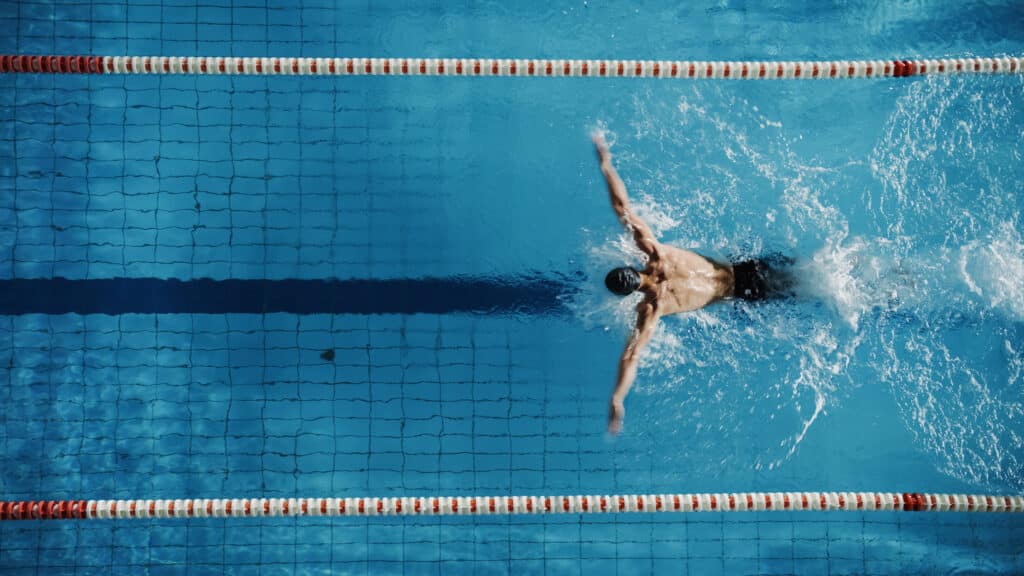
So training is another way in which science can optimise performance. “Then there’s everything to do with the human being, the athlete,” says the professor. “A better understanding of physiological mechanisms for physical preparation, but also a better understanding of mental preparation.” Because, although sport is apparently based on the physical aspect, and science is also providing better control over potential injuries to the athlete, the hidden part of the iceberg remains the mental aspect. Psychology is therefore becoming a key area of focus. “From there, many different aspects emerge in the studies,” he reports. “How do we deal with stress, pressure and even failure? How does our brain coordinate our movements? How can we make it more efficient, so that it learns faster and better?” All these elements are still relatively unknown today. While working on it offers better physical preparation (avoiding injury and getting the best out of the athlete), better mental preparation enables them to perform at the highest level. “Today, at the highest level of sport, it is the mental aspect that makes the difference,” he insists.
… to physical activity
“Aside from performance, a better understanding of the health benefits of physical activity is crucial these days,” adds Vincent Nougier. “All the more so in a society where the population’s level of physical fitness declines drastically every year1.” Among other things, one study highlights the fact that regular physical activity reduces the risk of developing a chronic disease. In addition to the known physical benefits – improved physical condition, better sleep, etc. – it also boosts the immune system and improves mental health.
“At the same time, there is an increase in the number of chronic diseases,’ adds the professor. Whether it’s diabetes, obesity, cardiovascular or respiratory problems, practising sport is important and we need to encourage it.” The only problem is that there are a lot of societal costs involved in doing so. “We therefore need to better understand how this “medicine” [editor’s note: physical activity] can be administered, and also better understand the aspects of sustainable regional development and education.”
In this respect, the study of sport is moving away from an interest in technological innovations to focus on the levers that will increase participation. “Understanding the individual mechanisms that drive people to take part in physical activity, such as motivation, and optimising regional planning are two angles of attack for encouraging people to do so,” says Vincent Nougier.
A two-way street
The last point is the one that often comes to mind at the end of a debate on the value of scientific studies on sport. However, a whole host of examples come to mind upon further reflection. “There are certain issues related to the practice of sport, particularly at the highest level,” says Vincent Nougier. “Even considering the trajectory of a ball or javelin makes scientific sport complicated to manage and explain.” Optimising performance, as demonstrated above, requires us to understand and tackle these issues as effectively as possible. And, generally speaking, once the knowledge has been acquired, it can benefit other sectors.
“When it comes to the question of ‘how are we going to get to Mars’, one of the issues to consider is the reduced physical activity of astronauts over an extended period of time,” he argues. “As humans cannot remain inactive, the knowledge we have developed about the physical preparation of athletes is particularly useful.” Similarly, muscle recovery techniques have been adapted for patients undergoing rehabilitation after injury or surgery[1]. Prostheses and ergonomic work equipment are also optimised through sport. Technological innovations resulting from competition, such as the lightweight materials used in Formula 1 cars, their aerodynamics and innovations in driver safety, are just some examples. Many of these innovations are spreading to other sectors. For Vincent Nougier, it’s obvious: “Sport brings as much to science as science brings to sport.”