What is a near-death experience?



- Near-death experiences (NDEs) are altered states of consciousness that can affect anyone.
- Testimonies almost universally attest to an out-of-body sensation or an encounter with entities; these are referred to as prototypical elements.
- NDEs can be experienced in a variety of states: coma, anaesthesia, syncope or even orgasm.
- The phenomenon is still poorly understood, but scientists today explain it as the synergy of a spike in cerebral electrical activity and the release of certain hormones.
- Explaining near-death experiences would provide a better understanding of consciousness, its origin and its construction.
Out-of-body experiences, meeting deceased loved ones, seeing a light at the end of a tunnel… These images and sensations are recounted by people who have come close to the boundary between life and death. Near-death experiences only became of real interest to science in the 1970s, yet they are not that uncommon and they say something about our consciousness. After the publication of the book Life After Life, written by the American doctor Raymond Moody in 1975, the first scientific studies were published. Interest in this phenomenon has peaked over the last ten years. The Coma Science Group team has been studying near-death experiences for a decade, with the aim of gaining a better understanding of consciousness.
Near-death experiences (NDEs) are altered states of consciousness that can affect anyone, regardless of age, sex or religious belief or lack thereof. The team gathered around 2,000 testimonies from all over the world, with greater representation from French and English speaking countries, in order to obtain a more precise definition. NDEs are rich and intense subjective experiences, with clear prototypical elements: an out-of-body sensation, encounters with entities, sometimes deceased people, and the vision of a tunnel with a light at the end. Each experience is personal and unique, but there are recurring elements. It is these prototypical aspects that differentiate NDEs from other subjective states, such as dreaming, which is infinitely variable. Usually, these are positive experiences, despite the context.
Major consequences for people’s lives
A wide variety of states can lead to an NDE. Most often, the person is clinically dead, i.e. in cardiac arrest, but coma, trauma, anaesthesia or stroke can sometimes be the cause of a near-death experience. Individuals may experience this phenomenon in other contexts where their life is not in danger: during fainting, in meditative states, during intense anxiety or orgasm. In addition, people with a tendency to experience dissociative states are more prone to these phenomena. For example, they may perform an action mechanically, without realising it, until they reach a more intense state, a feeling of leaving their body.
Near-death experiences have a significant impact on people’s lives, and for the most part they are largely positive. People report a reduced fear of death and a more altruistic, less materialistic and more spiritually oriented state of mind. However, 10–15% of testimonies attest to negative consequences. The experience of an NDE is too extraordinary to be integrated into one’s life afterwards. This can lead to anxiety and post-traumatic stress. The number of negative NDEs may be underestimated, as they are not necessarily shared.
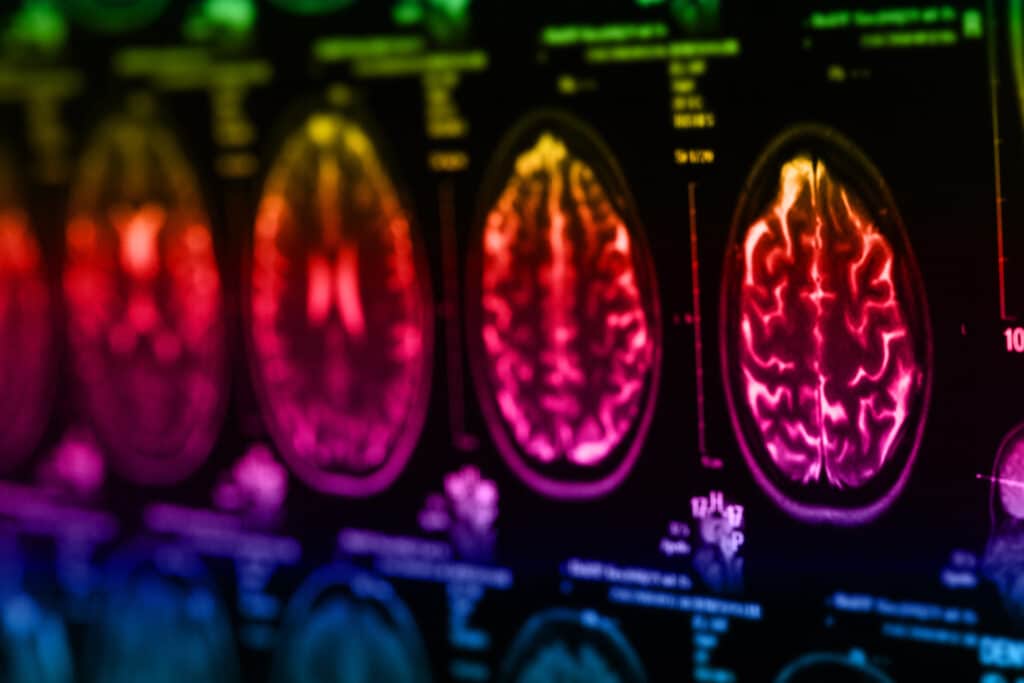
The Coma Science Group’s first task is therefore to determine the precise characteristics of near-death experiences. The laboratory is also interested in understanding the potential neurophysiological or cognitive basis for these phenomena. What happens in the brain during a near-death experience? Immediately after cardiac arrest, there is a peak in electrical activity in the brain, which emits faster waves in certain specific regions, including the temporo-parietal region, the area associated with consciousness. The brain would be in great pain, but just before and after the heart stopped, a spike in electrical activity would allow an NDE to be generated. This could be a defence mechanism or a way for the brain to cope with this physiological suffering. At the same time, certain hormones or neurotransmitters, such as endorphins, seem to contribute to the feeling of well-being. However, most of these explanations are merely hypotheses. Although the phenomenon is becoming better understood, there is still a great deal of research to be done to prove it.
Similar effects observed with psychedelic drugs
To gain a better understanding of what happens in the brain during clinical death, the research team studied the electroencephalograms (EEGs) of patients between life and death. The scientists then gather testimonies from surviving patients. In the laboratory, they also work with psychedelic substances to try to reproduce subjective experiences that resemble IMEs. To do this, healthy participants (with no particular disorders and who have never experienced an NDE) are given a dose of dimethyltryptamine (DMT), psilocybin or ketamine. By cross-referencing the results with those of a study carried out by experts in psychedelics at Imperial College London, the scientists observed significant overlaps between experiences under DMT and during an NDE. The same images and sensations recur, such as encounters with entities or a feeling of harmony with one’s environment. However, one difference was noted: during an IME, people have the feeling of being on a frontier, particularly that of death. This feeling is less prevalent with DMT.
According to current research, an NDE is a form of hallucination. It is a mental experience with perceptions dissociated from the physical environment. Nevertheless, despite their recurrent nature, there are still many unknown elements about the brain, death and consciousness. This definition could therefore be called into question tomorrow. Explaining near-death experiences would give us a better understanding of consciousness, its origin and its construction.