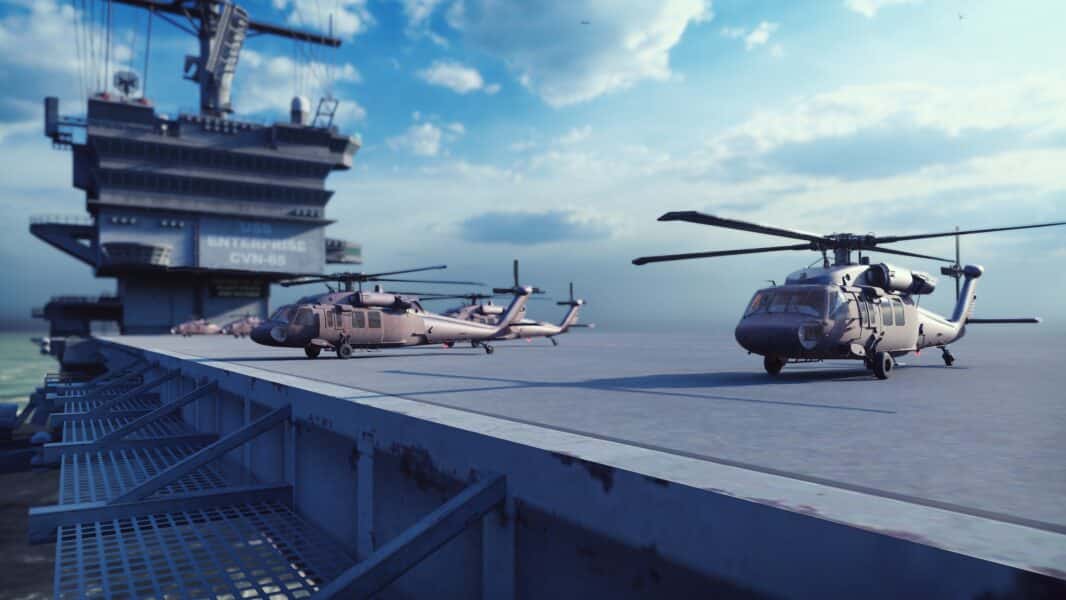



Most navies in the world are now interested in drones. Whether for underwater or surface missions, or through adapted aircrafts, the use of drones in naval operations seems to be on the rise. These remotely controlled or autonomous systems can supplement the more expensive manned ships and can be used for a wide range of missions: surveillance, transport, refuelling, lethal intervention, etc.
The United States and China remain the leaders in this field, but they are not alone. Turkey, Korea, and the United Kingdom are also ahead of the game. What about France? Is the French Navy developing a policy regarding drones in line with its ambitions?
How is France progressing with the development of its naval drones?
France, which has great ambitions for its Navy, is not rushing into these issues. The projects that do exist are often quite long and rather limited in their ambitions. There are three main drone projects for the French Navy: a medium helicopter drone, a small airborne drone, and a mine countermeasures drone system. Most of the projects were launched more than ten years ago, are still in the experimental phase and will not be delivered for some time, with the possibility that the technologies will be outdated by the time they are put into service.
Does France have the industrial capacity to conduct a major naval drone policy?
In France, there are several industrial champions, such as ECA-IXblue and Naval Group. There are also smaller structures, such as Diodon. There is already a whole ecosystem, a very active technological and industrial base, which is relatively advanced when it comes to the field of naval drones. As the Navy’s interest is limited, these companies will either start exporting or they will stop production.
What are the challenges that drones can address for France?
Most of the critical infrastructure needed to maintain the most important ships is in mainland France. Having an ambitious drone policy that requires less infrastructure could allow for a stronger presence in less well-equipped territories and extend the Navy’s reach. Moreover, the most modern frigates are very efficient, but they are also massive, expensive, and vulnerable. Adding small, unmanned platforms to them would both free up manpower for other missions and reduce vulnerability by decentralising sensors and effectors. If you lose a drone, in principle the crew is still safe at the command centre.
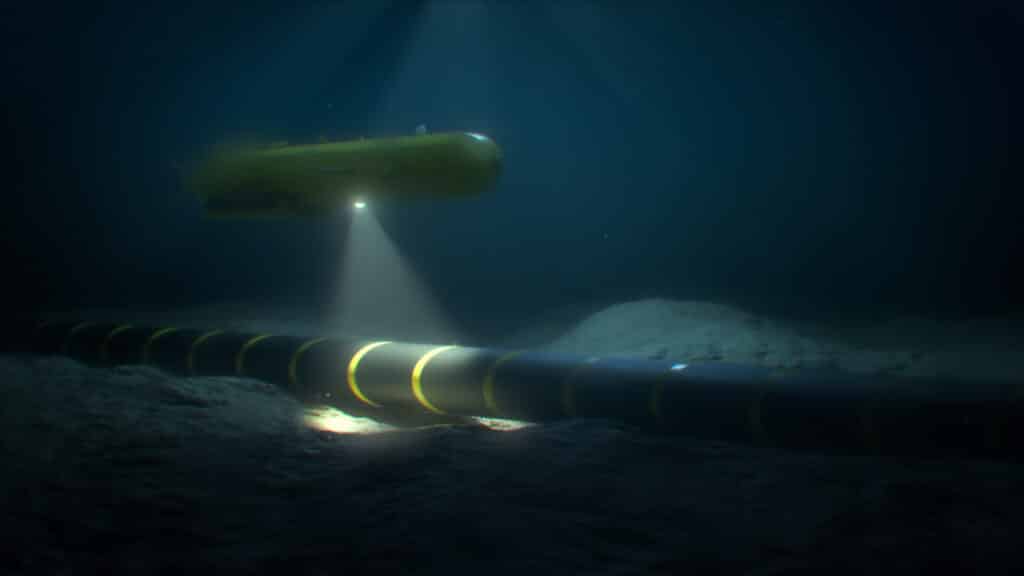
What is preventing us from developing an ambitious naval “drone” policy?
In my opinion, we need to review the way we develop weapons systems. When the military wants something, it transmits extremely precise specifications for a system, within the framework of a mission: to go to such and such a depth, at such and such a speed, for such and such an autonomous time. The manufacturers must quickly decide on an architecture with the components of their time to present the system. There is then a long delay between the definition of the architecture and the commissioning, and the components often end up being obsolete. In the end, the system is too specific to evolve and be used for other missions. With technologies that evolve so quickly, it is better to rely on a mission objective rather than a performance objective in a longer-term partnership approach. The systems would end up being more flexible and more in line with the evolution of technologies.
If this strategy remains the same, how do you see the future of naval drones in France?
By 2030, the Navy will have the three systems currently developed, and another for the seabed bought off the shelf. Others will have been more ambitious and faster, working hand in hand with their manufacturers. Fifteen years ago, France had interesting industrial opportunities regarding aerial drones, but as the Air Force was not interested in them, we missed the boat. We must get on board while we still can, otherwise we will be left behind and will have to buy from abroad, as we do for our aerial drones.
How do you explain this reluctance on the part of the Navy?
Armies are constantly trying to juggle very limited budgets. The navy fears that investment in drones will take funds away from other areas. Historically, the military has been rather cautious about change. They have had bad experiences with technology that has been touted as revolutionary. Naval drones are not revolutionary, but they will be an indispensable component of future fleets. The drone culture should be introduced into the navy. For each problem, we should ask ourselves whether a drone solution is possible. We have advantages that some people do not have, so we must take advantage of our strengths.