


Road transport, and in particular the car market, is at the heart of the energy transition. And the focus is on private cars. Indeed, 30% of CO2 emissions in France are linked to transport, 16% of which are specifically linked to private cars. To reduce these emissions, there are several avenues to be explored, including technological developments – in particular the switch from thermal vehicles to electric ones – and a shift towards collective transport.
Evolution of mobility
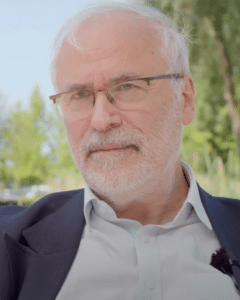
The technological path, with which we are all becoming increasingly familiar, is that of switching the existing fleet of combustion engine vehicles to electric – or in the more distant future, perhaps even to hydrogen powered transport. “This is already a major breakthrough, because electric vehicles will not only benefit their drivers, but also to those who live alongside them and are affected by their use,” explains Christophe Midler, Professor Emeritus of Innovation Management at École Polytechnique (CNRS/IP Paris). “This evolution broadens the notion of customer beyond the driver and the passenger to include the city, the country, the communities.”
In any case, on 8th June 2022, the European Parliament voted in favour of banning the sale of new combustion engine vehicles by 2035. So, this technological approach can be considered to be well underway.
The second way to reduce CO2 emissions is to convince drivers to stop using their cars alone. This solution takes the form of a modal shift from individual to collective transport. This certainly involves improving public transport, but also reducing car use.
“On average, in Europe, there are 1.1 people per vehicle,” states Christophe Midler. “To change this, we need a small revolution, which consists of developing new collective mobility services based on private cars. This means coordinating players who are not used to working together: drivers who own their own cars, local authorities, infrastructure, and application managers.”
Car-sharing therefore requires the development of car-pooling, but also of autonomous, driverless vehicles, and it reveals a much more serious trend, perhaps even heralding the end of a model based on the individual car. “If we set up carpooling, we will increase to 1.8,” says the professor. “Especially on daily trips between home and work.”
However, this economic model is not straightforward because, as Christophe Midler points out, “manufacturers know that they will have to support their customers in learning about this new type of transport. When a new car is launched on the market, the customer is quick to see what is better about it than previous ones. But with this sort of technological breakthrough, it is necessary to experiment, to help passengers become accustomed to the idea of a vehicle without a driver.”
Car-sharing and the public
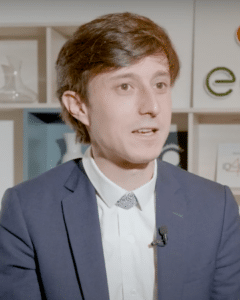
Thomas Matagne, a young French entrepreneur and the founder and president of Ecov, is trying to bring his car-sharing service to several regions throughout France. His objective is to provide a solution to the inhabitants of peri-urban and rural areas that do not have access to public transport, in order to make everyday mobility possible.
To do this, he decided to turn the car into a means of collective transport, and to deploy, in conjunction with local authorities, carpooling lines that are like bus lines. After identifying the flow of cars in a given area, stations are set up, marked by LED panels on which the destinations of passengers requesting carpooling are displayed.
Neither the driver nor the passenger has booked the carpool in advance, and this is what makes the system so successful. The average waiting time on the networks already in operation is 4 minutes, and Ecov guarantees a taxi or VTC if the passenger does not find a driver within 15 minutes. “Passengers can be certain that they will be able to leave and return, and this is the key to creating trust in the service,” stresses Thomas Matagne.
Depending on the local authority, the service may be free or charged. Just like RATP, Transdev and Keolis operate bus, metro, and tram lines, Ecov has already opened some 60 carpooling lines for local authorities.
What remains to be done is to scale up the service: “Our next step is to work with local residents, potential users, to co-construct this shared public service,” he comments. We are also thinking of developing abroad, because we are working on a technological and organisational breakthrough that no other player in Europe knows how to organise at the moment.

But it is not just software that Ecov has developed: “Our employees include analysis engineers, of course, but also road engineers, transport engineers and marketing specialists, who can support changes in behaviour, but also lead communities and assist users. We call each user who makes a first journey in real time to let them know that they are not alone, that we are monitoring what is happening.”
A multi-faceted market
These changes in behaviour would obviously have a significant impact on manufacturers, who find themselves in the position of providing vehicles to mobility services. And these services are increasingly driven by smartphone operators such as Orange or Bouygues Telecom… “This is why almost all car manufacturers, including Renault, Daimler and PSA, have invested in the field of rental mobility services,” explains Christophe Midler. “They all have operations either directly or by holding shares in the mobility service provider, in order to control this part of their value chain, which previously belonged to them.”
Energy sufficiency is a collective effort that allows individuals to consume less while living well.
As a result, car manufacturers must deal with several strategic and operational areas that are situated in different sectors. We are talking here about the electric vehicle, the autonomous vehicle around 2035, and thermal vehicles which still make up the bulk of their sales. It is not easy for them to prepare for the future by developing technologies that are in direct competition with the combustion vehicle!
“At the heart of these changes, we must remember that these are innovations which society is asking for,” emphasises Christophe Midler. “In the case of the electric vehicle, for example, it was neither the manufacturers nor the customers who said, ‘I want an electric car’, but civil society which demanded a reduction in CO2 emissions.”
Finally, as Thomas Matagne points out, sobriety cannot be a matter of individual choice alone. “Energy sufficiency is a collective effort that allows individuals to consume less while living well.” If people are ready for an ecological transition, society still needs to give them the means, in particular, to travel differently…