


Does climate change have an influence on flooding around the world?
Jan Polcher. Climate change influences the water cycle. As a colleague described it best: with climate change, dry regions become drier and wet regions become wetter1. This is explained by a well-known physical process: the Clausius-Clapeyron relationship. An increase in the surface temperature of the atmosphere leads to an increase in the amount of water vapour in the atmosphere, of around 7% for each additional degree.
As a result, precipitation is more intense. According to the latest report by the Intergovernmental Panel on Climate Change (IPCC), there has been an increase in the frequency and intensity of extreme precipitation events on a global scale across all continents since the 1950s, particularly in Europe, North America and Asia2. But it should be noted that our understanding of this subject has changed little in recent decades, and we cannot say that we have a good understanding of the impact of climate change on extreme precipitation.
Why is it so difficult?
It has to do with the very nature of extreme precipitation: it is both highly intermittent and geographically variable. It can rain heavily in one valley for a few hours, and not at all in the next. Our rainfall observation system is not at all suited to recording this type of weather event, which requires the installation of many instruments such as rain gauges. While some regions, such as Europe and North America, are better equipped with instruments, this is not the case in many areas, particularly tropical zones.
This lack of data is compounded by the performance of the computer models used to simulate and better understand the climate. Conventional models simulate the planet’s climate by dividing it into grids of around a hundred square kilometres each, a resolution that is far too high to simulate extreme rainfall. We are working to reduce this scale, but it is a colossal scientific and technical challenge.
Is it even possible to predict the extreme rainfall and flooding of the future?
It is extremely difficult. The physical processes involved – such as the Clausius-Clapeyron relationship – will always be the same, and we can rely on them for our forecasts. But there are many other processes that make a rainfall event a flood: they can be biological (such as vegetation), chemical (such as the number of aerosols) or human (such as land use).
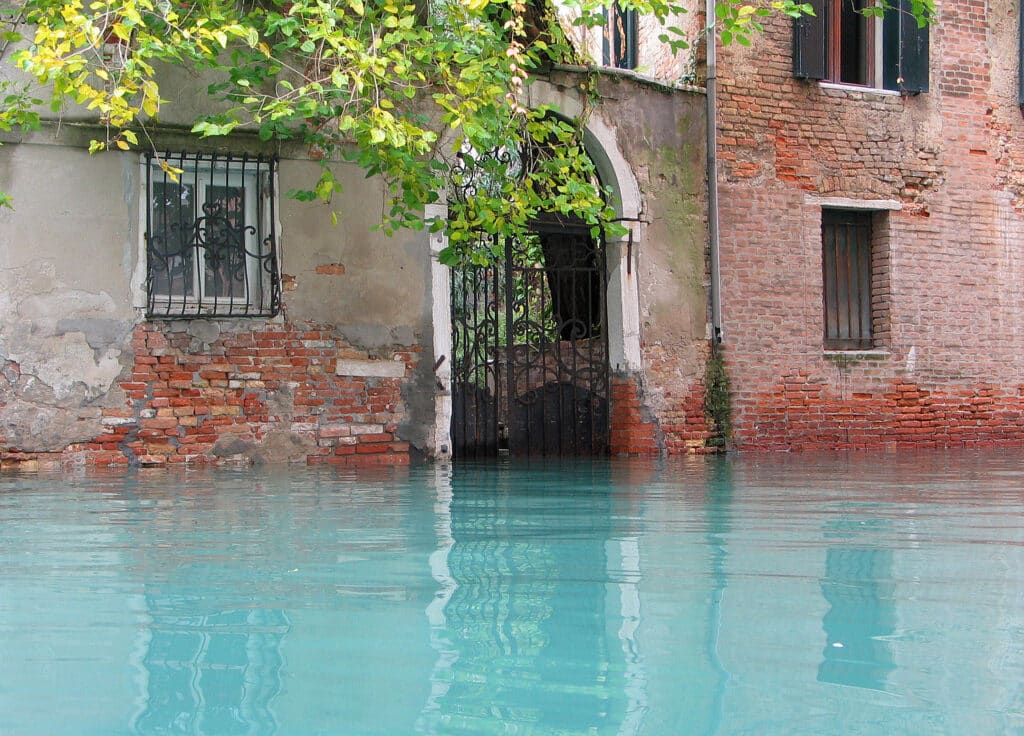
All these parameters are changing at the same time as climate change, so it is very difficult to predict hydrological trends, particularly extreme rainfall. The only widely accepted outcome is the global trend towards an increase in the frequency and intensity of extreme rainfall as the climate warms. But this does not provide any information about local or seasonal impacts.
Are certain regions more affected than others?
No, everyone is affected. The impact of global warming on the water cycle is the most significant for human societies. One of the main problems is that mankind has learned to control hydrological resources since Antiquity, and this has been fundamental to the development of modern societies. But hydraulic structures – designed to store water and control floods – are designed for a climate of the past. Now, with today’s climate (and that of the future) being so different, our infrastructures are no longer adapted, and we are losing this control.
You are talking about extreme rainfall, not flooding. Why?
Flooding and extreme rainfall are two different concepts. Extreme rainfall does not always cause flooding, and vice versa. The risk of flooding depends on the climate, but also on the direct impact of human activities. This is an important factor: in Europe, most of the hydrological variations observed can be explained by the anthropisation of the hydrological cycle3. This can be seen, for example, in soil sealing, which increases the risk of flooding, while certain hydraulic structures can reduce it. Many anthropogenic factors influence the continental water cycle – irrigation, urbanisation, management of river navigability, hydroelectricity, etc. It is very difficult to separate the effects of these factors. It is very difficult to separate the impact of climate change from that of human activities on the hydrological cycle, which makes future flood projections even more complex.
What is our understanding of flood risk in the future?
It’s almost impossible to anticipate it on a local level. All we know, as the IPCC points out, is that during periods of heavy precipitation, the intensity is increased by the presence of more water vapour in the atmosphere4. But as floods are also affected by human activities, as well as other climatic phenomena (melting glaciers, rising sea levels, drought), it is impossible to know whether the risk of flooding will increase or even decrease in the future, for a given location.