
Soft matter: a physical state you probably don’t know you know



- The term “soft matter” comes from the Nobel Prize in physics inaugural speech by Pierre-Gilles de Gennes in 1991.
- Study of soft matter focuses on liquids that are complex in nature and on simple liquids in a complex state.
- Objects of study are composite: they are heterogeneous mixtures of at least two constituents that have a paradoxical or ambiguous character.
- Everyday objects, such as sand or shaving foam, are objects of study of soft matter.
- Defining this field of research remains difficult because of its tendency not to focus on a single type of object: it is best defined by the style of its research.
A car journey in the rain. The drops run down the windshield, sometimes stopping, as if they were sticking to it. What form do they take then? What allows them to cling on when water is normally so fluid? The answer is not as simple as it may seem1…
Moreover, the same water, when it starts to flow, is curiously slow, if one compares it to that of rivers or torrents – even though they are less steep than a car windscreen. Despite their apparent simplicity, these unexpected observations actually raise profound questions that science is trying to explain: soft matter.
Birth of a science
Christophe Josserand, a researcher at LadHyX (IP Paris), believes that the first discoveries in soft matter date back to the beginning of the 20th Century, with liquid crystals and polymers – two typical examples of materials that lie on the borderline between solid and liquid. But it was not until later that the term came into use. “It cannot be dissociated from the name of Pierre-Gilles de Gennes, a great French physicist, who, when he received the Nobel Prize for Physics in 1991, entitled his speech ‘Soft Matter’2.”
Pierre-Gilles de Gennes, a great French physicist titled his speech ‘Soft Matter’ when he received the Nobel Prize for Physics in 1991.
Pierre-Gilles de Gennes is the leading figure in this field. David Quéré, a research associate at LadHyx, worked under his direction during his time at the Collège de France, and Christophe Josserand even describes him as ‘a spiritual heir’ to the Nobel Prize winner. Author of a book co-authored with de Gennes3, the specialist in the field confirms the weight of this “major, ultra-international” figure.
“It was on the day of the Nobel Prize that this ill-defined field became a science,” says David Quéré. Pierre-Gilles de Gennes unified a whole group of disparate problems, often involving liquids in special situations: either liquids that are complex in essence, or simpler liquids in a complex state. With this speech and the recognition of his work, de Gennes gave credence to a science “with intermediate scales, often linked to everyday life, but full of unexpected elements.”
Everyday objects
Most often, the objects studied in soft matter are composites – meaning heterogeneous mixtures of at least two constituents whose mixing confers a paradoxical or ambiguous character. Sand, for example, is one such object: “Depending on the situation in which the sand is found, it can sink as well as take on a solid form, with slopes,” says David Quéré. However, it remains a two-phase material: the grains that make it up, which are solid, are distinct from the air, the fluid that surrounds them. It is this in-between state that is important to understand, based on the simplest possible rules of interaction between grains.
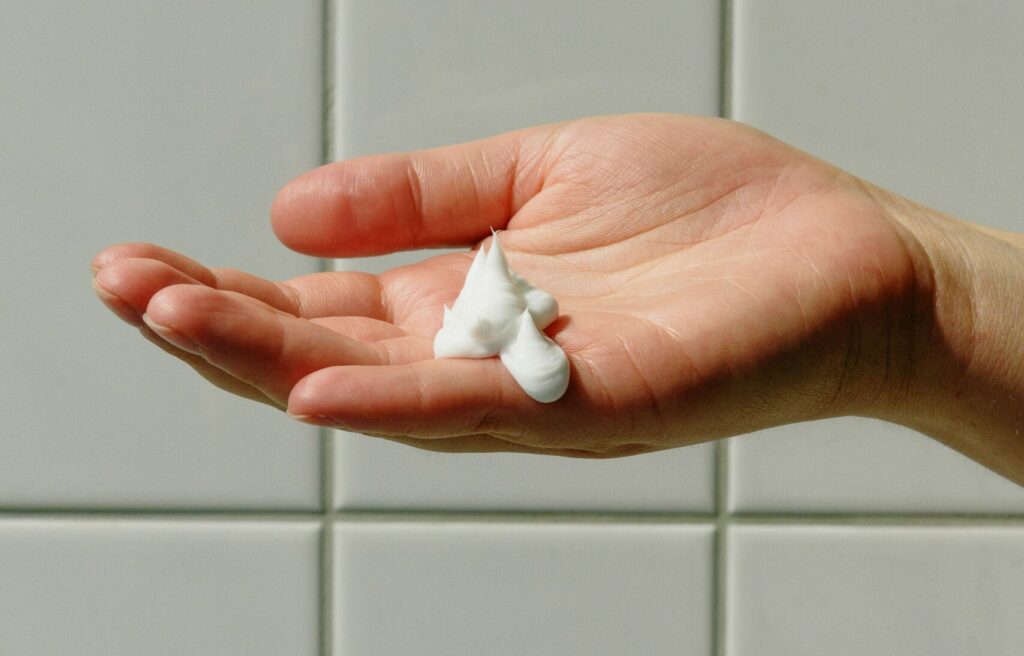
Soft, ambiguous, or even intelligent, there are many periphrases to describe this type of matter, almost as many as there are examples. From mayonnaise to foam, from mud to concrete, this state surrounds us, and it is often very useful. “Let’s take shaving foam,” continues David Quéré, “which is primarily made up of a mixture of water and gas: two elements that flow easily but which, suddenly, on my cheek, make a quasi-solid; and a solid that can be manipulated since I was able to shape this foam beforehand and spread it out. It’s a kind of miracle, isn’t it?”
Christophe Josserand adds: “To whisk the white of an egg, you have to beat it: the movement of the whisk incorporates air into a heterogeneous mixture made up of water, oil and, if we simplify things, molecules similar to soap,” he explains. “Again, the liquid takes on a frothy form that will solidify when I heat it in the oven: this is meringue!” He concludes: “Looking around, I see extraordinary problems that are often of immediate practical interest.”
The example of oil
There is thus an essential link between soft matter and applications. The emergence of modern soft matter can be dated back to 1973, the year of the first oil crisis. At that time, the oil company Exxon – the parent company of the Esso brand – decided to look at the 50% of oil left in a well after extraction. In this highly charged economic climate, the American industry could no longer afford to abandon half of its black gold resources.
“This is an exemplary soft matter problem on several levels,” insists David Quéré. “The precious liquid is a viscous oil, which is complicated in itself. But to extract it, we push it with water that is often soapy, which creates emulsions within a rock with tortuous pores: physical chemistry, fluid mechanics, confined spaces, the problem is extremely difficult and only a more fundamental approach will make it possible to prioritise and simplify it – inventing a number of new and exciting problems in the process.”
Bordering on several disciplines
Defining this field of research remains difficult, particularly because of its tendency not to focus on a single type of object. It is almost easier to identify it by the style of its research than by its subject. For Christophe Josserand, “the richness of this science comes from its ability to combine very different fields, from physics to biology, from applied mathematics to chemistry.” The research is therefore complementary. “The hydrodynamics laboratory at École Polytechnique (LadHyX) is a good example of these intersecting interactions, with a community that touches on both non-linear physics and fluid mechanics and which, moreover, creates strong links with the other sciences, particularly through the research carried out in bio-mechanics. We can therefore consider this to be a soft matter community in the broadest sense,” he adds.
David Quéré confirms this: “This discipline is at the border between many different scientific fields,” he says. “That’s another reason why we keep going round in circles: blurred boundaries lead to blurred definitions. But, for all that, its disciples recognise themselves in their way of proceeding, between fundamental and applied science, and through their necessary work on the simplification of a reality that is by nature complex.”