

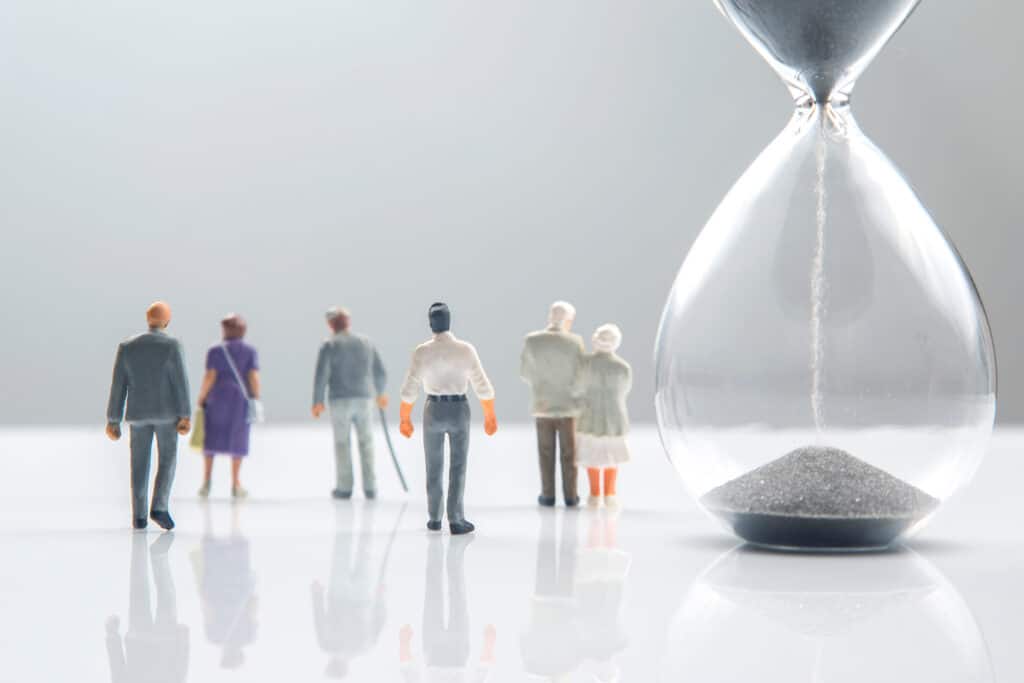
There have been two major revolutions in the slow history of research on ageing. First, was the revolution in life expectancy at birth. If our life expectancy has doubled in a century, it is essentially because we have eradicated infant mortality with vaccination, hygiene and, later, antibiotics. What has also increased since the 1950s, and this is the second revolution, is our longevity – we are living longer on average. Since the middle of the 20th Century, the age at which we die has been greatly increased and our life expectancy has continued to rise. This is mainly due to development of medication to treat diseases of old age (diabetes, cardiovascular disease, cancer, etc.).
On the other hand, we do not necessarily age in good health. Such is because we only treat pathologies that occur in succession in old age. However, for more than fifteen years, my work has led me to believe that it is rather old age that we should treat as a disease in its own right.
Reversing the ageing process
When our programme began in 2006, we started from scratch by taking as our research axis how we go from a “juvenile” embryo to an ageing individual. If we age, it is because our cells age. I focused on the two types of cells found in tissues with age: senescent cells and cells that age by deprogramming. And very quickly, I realised that these cells had to be reprogrammed to fight age-related illnesses. Coincidentally, when I started this project a Japanese researcher, Shinya Yamanaka, demonstrated that cells could be reprogrammed to become embryonic cells, which encouraged us to persevere.
In 2011, our work proved that ageing is reversible. A little later, researchers demonstrated that if you remove senescent cells from mice, you can increase their life expectancy. Then other laboratories, including our own, developed studies on the reprogramming of cells, which also made it possible to increase longevity. Within the scientific community working on ageing, a consensus has slowly emerged around nine rigorously defined markers of cellular ageing: the Hallmarks of ageing. They enable us to precisely monitor the senescence of our cells and our organism. This ageing process that can also be detected in the blood.
At the end of this research and testing process, a clear conclusion emerged: when we target two of the signs of ageing in our cells, senescence, and “epigenetic” deprogramming, we increase our longevity and age-related diseases disappear. The latter are in fact only the consequence of the ageing of our cells. Ageing is the mother of all diseases, and it is therefore the one that must be targeted.
“Ageing should be thought of as a disease”
This observation is now shared by many colleagues. We now know that we can use small molecules to suppress senescent cells that are harmful to tissues. If we suppress these senescent cells in animal models, we gain 30% of healthy life by delaying age-related illnesses. These developments are underway, and clinical trials are being carried out in some countries, notably the United States, which is leading the way on this subject.
American researchers are lobbying to set up clinical trials on healthy elderly people.
The problem with these studies is that, for the moment, they are only clinical trials on age-related pathologies: pulmonary fibrosis, diabetes, osteoarthritis, etc. But the disease is already there, the tissue is already damaged. The results would be greater if we could treat the patient before the disease is present before the tissue defect is noted. And here we are really entering into the field of prevention. To be able to treat ageing with drugs and small molecules, it must be considered as a disease, which is not yet the case and which poses problems for doctors. American researchers are lobbying the regulatory agencies to set up clinical trials on healthy – not sick – elderly people, to see if we can improve physiology while avoiding these illnesses.
Ageing and rejuvenation
There is another line of work: rejuvenation. We now know how to reprogram cells to rejuvenate them, and my team was the first, more than ten years ago, to demonstrate that cellular ageing was reversible. By reprogramming senescent cells and ageing cells of centenarians, we can convert them into cells with a rejuvenated physiology. Today, we can reprogram all the cells in a mouse to rejuvenate them, and a handful of laboratories around the world are working in this area. These tests allow the mouse to live 30% longer, in good health. Very ambitious international projects are also being set up, with budgets of several billion dollars, to go even further and transfer these technologies to humans.
Research on ageing and rejuvenation will lead to increased life expectancy in the near future.
These two areas of research will inevitably lead to an increase in life expectancy in the near future. This will probably be the case in the next ten years in the United States since researchers are already carrying out a clinical trial on drug repositioning [the reuse of drugs already on the market]. Once this research has been validated, in five or six years it will be possible to prescribe molecules such as metformin, which aims to delay all age-related illnesses, to healthy people.
I believe that France needs to make the prevention of ageing a priority without waiting for people to become ill as they age. If we reason mathematically, discovering a treatment that increases life expectancy by three to five years for a fatal disease increases the probability of having another age-related disease later. And so on. If we really consider old age as a disease, if we treat it as such, this will make it possible to avoid all age-related diseases at the same time. This work calls for a new medicine, a medicine based on longevity, a geriatrics 2.0 to increase life expectancy and make healthy longevity a major challenge for our society.