Covid-19: “16–25 year olds are the most psychologically fragile”


What do we currently know about the impact of the Covid-19 crisis on the mental health of young people?
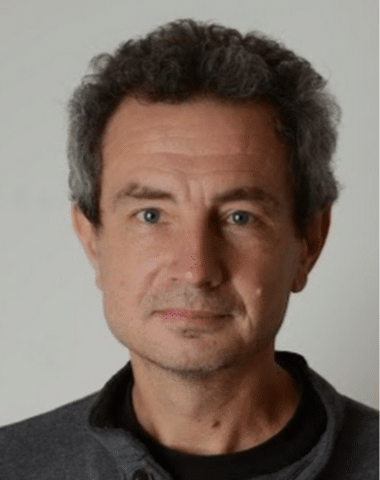
Bruno Falissard. Nothing too suprising, actually. The data regarding the “morale of the French” produced by Santé Publique France come to logical conclusions: in January 2021, nearly 23% of people suffered from anxiety and/or depression, against 13.5% and 10% respectively in 2017 1.
However, this global observation remains rather superficial, because not everyone has the same reaction to the pandemic. Young people, because less psychologically “crystallised” than older people, vary more in terms of mental health. For example, they were more distraught than average during the lockdown, but were better off than others during the Summer period.
In the case of children, it is even harder to produce scientific data. First of all, because epidemiological studies in psychiatry are almost never done on minors. But also because they tend to experience the epidemic through the eyes of their parents. A four-year-old child confined with parents who were not distressed by the situation could easily not notice anything particular differences.
So, it’s not all doom and gloom?
No. One of the numerical measures we have is the number of hospitalisations for suicide attempts [all ages included]. We see that between January and August 2020, the number of patients was ~8.5% lower than the same period in 2019 2. There is no unequivocal explanation for this decline, but it is a reoccurring trend: during crises or wars, there are fewer suicides. We call this an “external organiser”: our attention is fixed on this event so much so that we forget all the other, more personal, reasons for our anxiety. This is very human, and paradoxically, having a concrete object to project your feelings on can make you feel better about them.
For children, and if their family environment was healthy, the confinement was sometimes even positive. I noticed that autistic or hyperactive children in my care were better during this period, in particular because school is a big source of anxiety for them. We also noticed that the parents spent more time with their children: doing homework, playing board games, etc.
However, this observation is much more nuanced for young adults. We keep repeating that we must act to protect the most vulnerable, but we must recognise who they are. We don’t yet have any figures on the situation post-September 2020, but the clinical feedback is clear: the most psychologically fragile are 16 to 25-year-olds.
Students and young workers are confronted with a saturated labour market, which offers them no prospects.
Why, specifically, the 16 to 25-year-olds?
Because they are the most exposed. Children continue to go to school and receive support from their parents. On the contrary, students and young workers are confronted with a saturated job market, which offers them no prospects, and they are also deprived of the social and sexual life that is absolutely necessary for the construction of their identity at their age. And no one says that! The sexuality of young people is not a negligible parameter, it is a disruptive factor, sometimes at the origin of eating disorders and suicide attempts.
The main problem for this age group is the total lack of recognition of their sacrifices. The lockdown has been an extremely brutal situation psychologically, and it was intended to protect a very specific segment of the population: the very old. And no one admitted it. No one thanked young people for playing along when Covid-19 is not even really dangerous for them. In addition, living conditions of young adults tend to be far inferior than most retired people and the government has not made any gesture, such as additional social welfare to them.
On the contrary, they are constantly chastised in the media. They are reproached for partying and taking risks resulting in a flagrant double punishment. Contrary to what is often stated, I don’t think that there is a “bashing” of the elderly: they are protected much more than the young.
Do you fear that this situation will fuel an intergenerational conflict?
Generational tensions are anthropological invariants; they will always be there. But the current situation is particularly harmful. In my job as a psychiatrist, half of my work is to put a name to a problem: by refusing to recognise the efforts of young people as well as making them feel guilty, we are feeding a resentment that is worrying. And that comes on top of other issues like global warming, the weight of which is underestimated in the minds of young people. A survey by Le Monde 3 revealed that 56% of respondents fear a generation conflict, and that 81% believe that “young people and students are the most poorly taken into account in government decisions”. It might be time to make a gesture to thank them.
Interview by Juliette Parmentier
Contributors
Bruno Falissard
A graduate of the École Polytechnique, Bruno Falissard is director of the CESP (INSERM centre for research in epidemiology and population health). He has also been a member of the French National Academy of Medicine and was president of the IACAPAP (International association of child and adolescent psychiatry and allied professions).