



In the 20th century, the availability of petroleum led organic chemists to focus on a single source. The rise of bio-sourced materials has widened the scope of research impacting the industrial sector. Synthetic chemists Grégory Nocton (Institut polytechnique de Paris) and Grégory Danoun (CNRS) are turning their attention to waste.
You are working on new methods of chemical synthesis using raw materials such as waste. How do these differ from petroleum?
Grégory Nocton. Industry stakeholders would start by telling you about the availability of petroleum, its homogeneity, viscosity and that of its derivatives. But for us chemists, the real difference lies in the simplicity of petroleum products versus the complexity of raw materials such as food waste, wood chips and used plastic packaging. The molecules in these materials are radically different.
Grégory Danoun. In chemistry, we have a perfect understanding of how to manufacture polymers from petrochemicals, so basic research in this area presents few challenges. But with raw materials such as waste, we are using different chemical reactions and a different approach – so it is far more exciting!
You are looking for ways to produce polymers from waste. What is your approach?
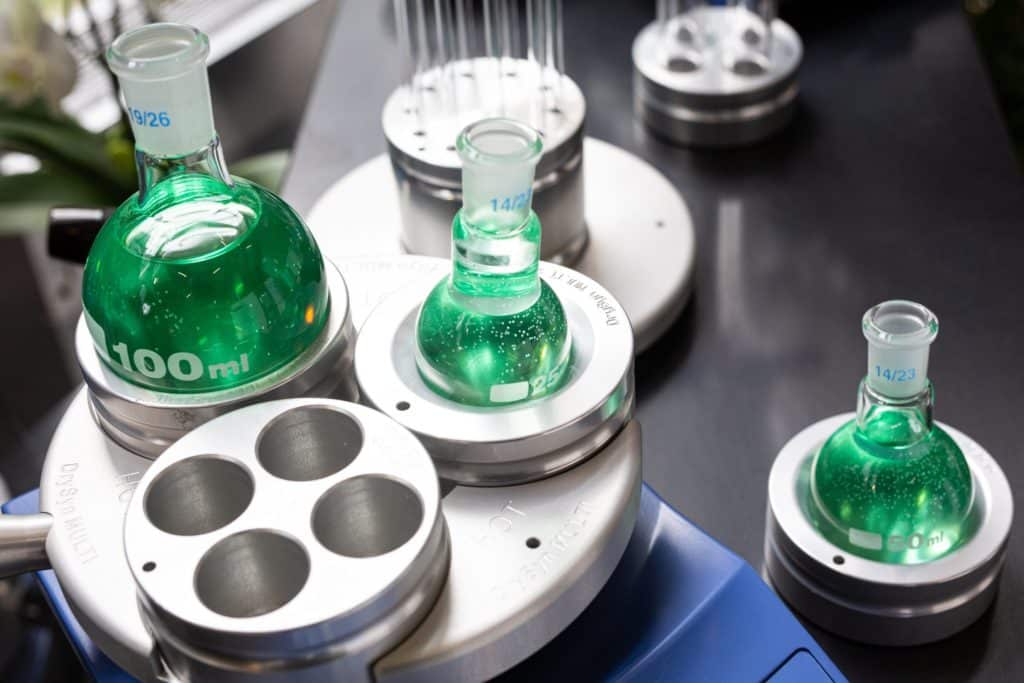
GN. In principle, chemists can break down any material into its basic building blocks, which can then be used as raw materials. Alternative resources such as waste help us isolate new building blocks, from which we can synthesize new polymers with new and useful properties.
GD. Biologists and microbiologists have already been exploring this using bacteria and enzymes in processes such as fermentation, opening up avenues of research. The role of chemists here is key. We need to understand how different molecules in waste generate chemical reactions. The fact that there are so many reactions just makes things more interesting!
Wood waste, for example, contains a natural polymer, lignin, which is also found in cereal and paper waste. Food waste also contains an incredible range of molecules, with acids or fatty acids and so on.
To extract useful molecules, we might break down carboxylic acids, leaving us with the basic building blocks, plus hydrogen. This means opportunities for hydrogen production (we recently obtained funding for a strategic hydrogen project). The building blocks themselves can also be used.
Why not replace petroleum with something like starch or sugar rather than waste?
GN. Two reasons. Firstly, there is already a lot of industrial R&D into starch and sugar, they are now very much mainstream. Hence, if we want to offer something new, we have to look into more complex problems.
Secondly, starch is mainly made from corn and requires a lot of water. If we made polyethylene terephthalate (PET) from corn, given global demand for plastic bottles, we would quickly run up against a resource problem – and we’re not even addressing competing demand from the food sector. It makes more sense to work with resources that will remain structurally available.
What can we expect in this area in the future?
GD. Finding new ways of obtaining basic building blocks is a fascinating and fast developing field. Some of the most interesting discoveries in the past ten years or so have been made in photochemistry, where numerous processes are combined using light. We are creating reactions, trying to find new multipurpose catalysers or, on the contrary, highly specific ones aimed at one molecule in a stack of waste (analogous to highly specific enzymes in biology).
GN. We’re now trying to develop a wide range of methods, and to break down scientific barriers. Diverse sources of raw materials mean more sustainable production. We want to explore and uncover all possibilities. If we narrow our focus, we could end up recreating the same problems we now have with petroleum. Had we done this a hundred years ago the world would look very different today!