



What is the climate footprint of livestock feed?
According to one recent study1, in 2010 the production of meat and dairy products contributed to the emission of 9.8 billion tonnes (Gt) of CO2 equivalent, i.e. 20% of anthropogenic greenhouse gas (GHG) emissions from all sectors combined. 58% (5.8 Gt CO2 equivalent) of these emissions are due to the production of animal feed. They are explained on the one hand by the emissions from the agricultural plots of land, notably due to the use of fertilisers (3.7 Gt CO2 equivalent); and on the other hand by changes in land use (2.1 Gt CO2 equivalent), for example when forests are cleared for soya production.
Different assessments for different models
Accounting for agriculture’s carbon footprint is still fraught with uncertainty, and figures vary depending on the parameters and models chosen. Using its Global Livestock Environmental Assessment model, the Food and Agriculture Organization of the United Nations2 estimates that livestock production is responsible for 8.1 Gt of CO2 equivalent, and that animal feed contributes 41% of global livestock emissions, totalling 3.3 Gt of CO2 equivalent.
These figures show us that when we import soya to feed livestock, it is not the transportation that weighs most heavily on the climate balance, but land use change. Deforestation of the Amazon rainforest to grow soybeans is reducing the carbon stock of these forests and contributing to the nitrogen surpluses in our soils from animal waste.
How can we successfully reduce greenhouse gas emissions from animal feed?
The most important tool is to reduce the amount of animal products in our diet. I would stress the notion of reduction, not elimination: livestock farming provides many services by making use of otherwise unusable land, by promoting nitrogen transfers between grasslands and crops, by producing organic fertilisers that limit the use of synthetic fertilisers, etc.
Land use changes account for more than a third of the GHG emissions from animal feed: reducing animal feed production reduces this share. The land freed up can then be reforested or used to produce plant proteins for human consumption. More land is used for the production of animal feed than for human food: on average 6 plant calories are needed to produce 1 animal calorie. Production for human consumption is therefore more interesting from a climatic point of view.
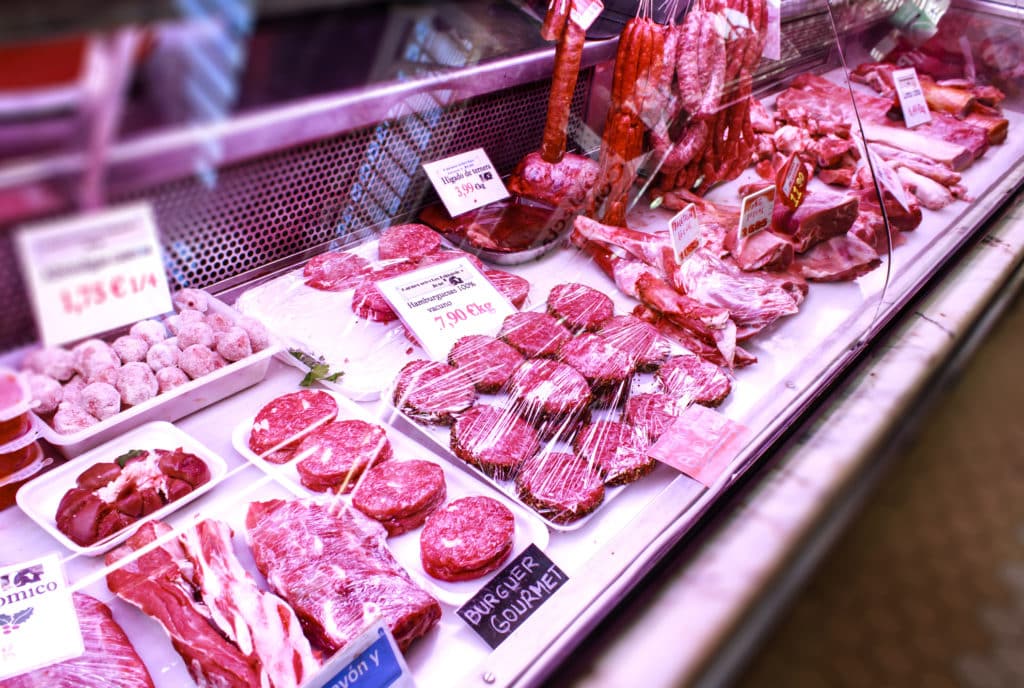
Can we still imagine other, more climate-friendly, livestock systems?
Another important measure is based on a more systemic level. It is a question of combining animal and plant production and encouraging synergies between these two sectors. Current crop production systems are highly specialised, and it is necessary to diversify crops to make the agro-ecological transition a success. For example, temporary grasslands and fodder legumes can be introduced into maize and wheat rotations, and animals can be raised nearby. This makes it possible to relocate the production of animal feed, but not only that: legumes bring nitrogen to the soil and reduce the need for synthetic fertilisers (the manufacture of which emits CO2 and the spreading of N2O).
However, the introduction of fodder legumes into rotations reduces the production of cereals for human consumption: these developments must go hand in hand with consumer food demand.
Are there technical means of reducing the carbon footprint of animal feed?
Yes, they are more at the farm level. They are based on the optimisation of animal rations. For example, there is precision animal feeding or genetic selection of individuals that make better use of feed. Grazing practices, such as rotational grazing, also make it possible to make better use of the grass available in the meadows.
One of the areas of progress highlighted is the optimisation of the animals’ protein ration. Most of the nitrogen ingested by a dairy cow, for example (via the protein ration), is found in the milk, but also in the urine and faeces, thus contributing to nitrogen discharges and N2O emissions into the atmosphere. Feed rations can therefore be optimised by adjusting the protein content as much as possible, or even using synthetic amino acids.
What potential do they offer?
In France, since the awareness of the problems linked to the concentration of nitrates in water, the optimisation of animal feed has already allowed for a lot of progress. In some animal sectors it is now difficult to do better. On a global scale, however, much progress can be made by optimising animal feed, in China for example, where intensive livestock farming has recently developed.
However, it has now been clearly demonstrated that these means of optimisation are not sufficient to achieve the objectives of the national low-carbon strategy (halving emissions from agriculture by 2050). Ration optimisation must be undertaken at the same time as reducing the amount of animal products in our diet. The scientific community agrees that this has a crucial role in mitigating climate change. There is already a downward trend in the consumption of animal products in Western countries, and sociologists believe that this trend will continue.
Are these solutions consistent with all the mitigation measures for livestock farming? For example, of the role of cereals and oilseeds in reducing enteric fermentation in ruminants.
It is clear that these measures, while beneficial at the animal level, should be considered on a larger scale to assess their climate footprint. Many of them come up against limits fairly quickly, which is why reducing the amount of animal products in human food is the most important measure. I insist on this necessary change in our eating habits. The worst thing would be to reduce livestock farming in France while continuing to eat as much meat as before so that we would need import it.
I think it is important to think on a regional scale, by promoting, for example, circular solutions that encourage synergies between cereal farms, livestock farms and methanisation units.