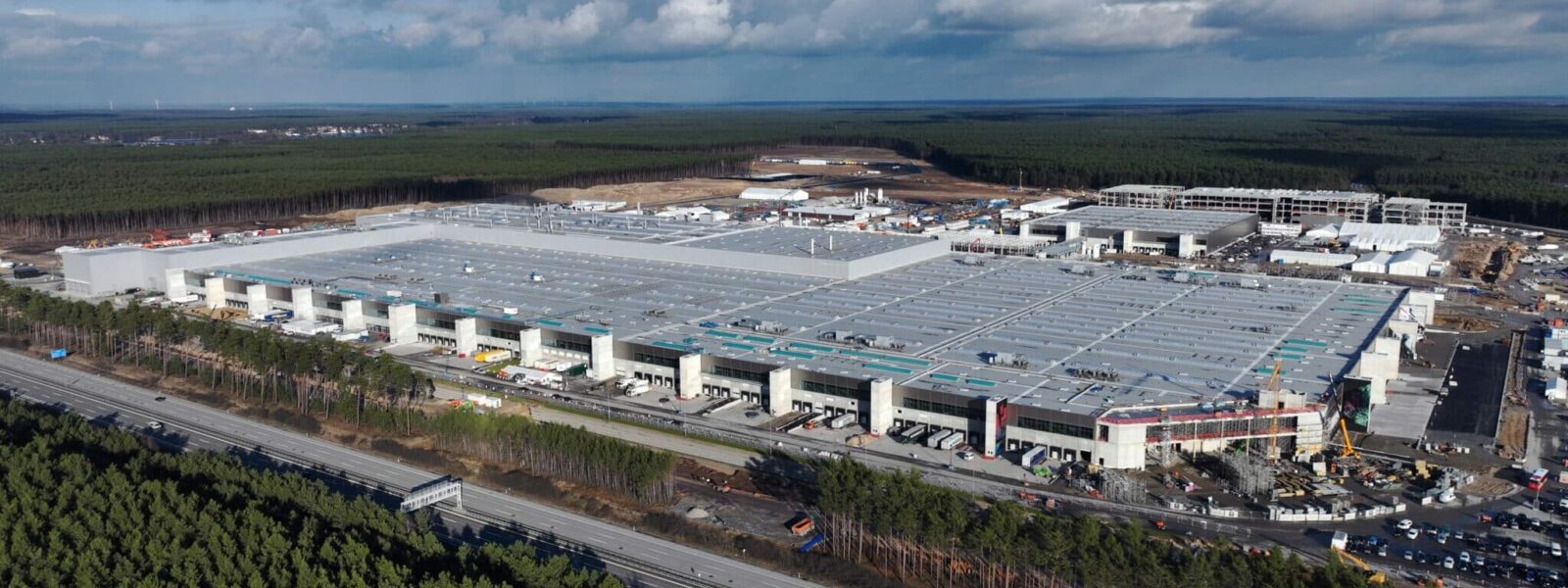
European AI gigafactories: the true, the false and the uncertain



- According to the Stanford AI Index, in 2024 the United States produced over 50% of all significant AI models, whilst Europe accounted for just 6%
- In February 2025, the European Commission committed to building four to five AI gigafactories within the EU, with an investment of €20 billion.
- However, one of the concerns regarding this infrastructure is the excessive consumption of resources and its adverse impact on the local environmental and social ecosystem.
- According to Goldman Sachs Research, global electricity demand from data centres will increase by 50% by 2027 and by 165% by the end of the decade, compared to 2023.
- In France, a new report by Ademe estimates that electricity consumption by data centres could increase 3.7-fold by 2035 (37 TWh).
In the race for generative artificial intelligence, we are seeing a rush to build data centres. These facilities, which are essential for training and running AI models, are driving an increasing number of construction projects around the world. Keen to break free from American dominance in data centres, countries are developing their own projects, as evidenced by the €20 billion investment by the European Commission, which, in February 2025, committed to establishing four to five AI gigafactories within the European Union (EU). They will be equipped with around 100,000 of the most advanced processors, roughly four times more than the current generation of data centres.
These “gigafactories” will complement the infrastructure already being installed in Europe and will aim to support industry, start-ups and the European research ecosystem. The initiative forms part of the AI Continent Action Plan, which sets out a roadmap to position Europe as a global leader in the field of AI through investment in infrastructure, as well as by improving access to data, supporting the adoption of AI across various sectors, and developing skills and regulations. The EU is set to launch the call for tenders for the gigafactories in early 2026, as part of the InvestAI initiative. At the same time, private players such as Nvidia and Microsoft, which plans to invest $10 billion in a data centre in Portugal, have also announced plans for gigafactories across Europe, fuelling competition with the EU-funded centres.
#1 When it comes to AI, Europe is playing catch-up with the US and China.
TRUE
Between 2023 and mid-2025, the share of private venture capital investment in AI start-ups was 66% in the United States, compared with just 12% in Europe, according to the AI World Index1, an index developed by the Centre for European Policy Studies (CEPS). The share of US patents in the field of AI technologies stands at 32%, compared to 18% for Europe (and 21% for China). Furthermore, in 2024, the United States produced more than 50% of all significant AI models, according to the Stanford AI Index. Europe, meanwhile, produced just 6% of them.
As for data centres, according to a recent report by a team from Oxford2, the United States and China alone operate over 90% of those specialising in AI. American tech giants, for their part, operate 87 computing “hubs” worldwide, whilst Chinese firms control 39 and European companies 6. So, it is fair to say that the EU is trailing behind the United States and China.
#2 European (giga) AI plants will be located in the most strategic locations.
UNCLEAR
The choice of location for a data centre involves technical, economic, environmental and regulatory factors. A balance must be struck between access to electricity and the grid, energy costs, cooling options, proximity to economic hubs, and the speed of authorisation procedures. Certain recognised tech hubs, such as Dublin, Frankfurt and Amsterdam, are reaching the limits of their electricity capacity, for example.
According to a CEPS report published in November 20253, the dynamism of the ecosystem is also a key criterion. However, the sites already selected for AI facilities do not correspond to the main European centres of excellence in AI, the authors note. The centres are being established where energy efficiency and existing infrastructure are favourable, rather than where scientific and entrepreneurial activity in the field of AI is strongest.
The report thus identifies few matches between the centres of excellence and the chosen sites, apart from Île-de-France, Stuttgart and Cologne, and a few other locations: in Bologna, Catalonia, Sweden and Poland, notably. This dispersion of resources may appear problematic. The report emphasises that the European Commission will need to clarify whether the AI hubs themselves are intended to host scientists and start-ups, or whether geographical criteria such as computing capacity and relatively low energy costs should take precedence.
#3 Data centres could harm local communities and the energy transition.
TRUE
Goldman Sachs Research forecasts that global electricity demand from data centres will rise by 50% by 2027 and by 165% by the end of the decade, compared with 2023. Each gigafactory will consume the equivalent amount of electricity as a medium-sized town. In France, a new report by Ademe estimates that electricity consumption by data centres could increase 3.7‑fold by 2035 (37 TWh)4.
To reconcile this with green transition targets, gigafactories must be located in regions that combine an abundance of low-carbon energy with cooling capacity. They must also rely on the addition of renewable sources rather than diverting existing capacity. One concern is that these facilities may still consume too many resources and have a negative impact on the local environmental and social ecosystem. They could conflict with other needs, such as electric vehicles, industrial electrification or the decarbonisation of buildings, or compete for water resources with agricultural activities, for example.
UNCLEAR
However, based on electricity prices and the share of renewable energy, the Scandinavian countries rank first, followed by Austria, Portugal and Spain. Only AI plants in Sweden and Finland can benefit from similar prices (€/MWh) to those of American and Chinese hubs, according to the CEPS report. During an initial call for tender for its gigafactories in June 2025, the European Commission received 76 proposals from 16 Member States, far more than it had anticipated. Discussions are underway to merge consortia and prioritise the best-positioned countries: those where battery factories already exist and where access to energy is cost-effective. The CEPS analysis highlights the importance of geographically concentrating gigafactories in areas with favourable energy efficiency and low-carbon infrastructure.
#4 These investments will be enough to ensure Europe’s digital sovereignty.
FALSE
Brussels claims that these massive investments will strengthen European technological sovereignty by providing Europe with the in-house capacity to train state-of-the-art models. The aim is to democratise access to this infrastructure to boost research and development among SMEs and start-ups. According to what has been announced so far, however, all gigafactories will use Nvidia chips. According to the report, this could undermine the EU’s technological sovereignty. Moreover, diversifying suppliers would not be enough to guarantee sovereignty. To train AI models on Nvidia GPUs, the CUDA programming and computing model is used – which is also owned by Nvidia. The company therefore also controls which chips are compatible with the software, thereby limiting alternatives. Furthermore, infrastructure alone is not enough to make the EU independent. Investment in training, open data, interoperability standards and ethical frameworks is also essential.
#5 Collaboration between the gigafactories will be sufficient.
UNCLEAR
The tender requirement stipulates that the AI factories must have plans to collaborate with each other. At present, public information on this subject is limited. The only exception is the announcement of a Franco-German collaboration, which will enable joint training on computing across both facilities. In terms of co-authoring and co-publishing scientific papers, there have been very few partnerships between the regions where the AI facilities are located, meaning it will be essential to build new bridges.
From a technical perspective, the facilities are not yet federated, meaning there is still no single point of access to computing resources and no fibre-optic connections between the facilities. Furthermore, it is unclear whether the AI facilities’ infrastructure supports interoperability. Overall, there is a clear intention to collaborate between the plants, both technically and organisationally, but significant effort will be required to make this work.