





Energy storage plays a pivotal role in strengthening grid resilience and enabling the shift to renewable energy sources. From established technologies like lithium-ion and sodium-sulfur batteries to cutting-edge solutions such as vanadium redox flow batteries (VRFBs), these systems are indispensable for stabilising power grids, capturing excess energy, and mitigating the intermittency inherent in renewable generation.
At COP29, global leaders underscored the urgency of expanding energy storage capacity and modernising grid infrastructure to create a robust, climate-resilient energy system. Initiatives promoting decentralised grids, the adoption of flow batteries, and the integration of hybrid storage systems further highlight the transformative potential of energy storage technologies in shaping a sustainable energy future.
Stocking energy
Energy storage spans diverse technologies designed to capture, retain, and release energy as needed, enabling greater flexibility and dependability in power flow management1. The electrical grid, defined as a comprehensive network of generation, transmission, and distribution systems, relies on these storage solutions to maintain stability and synchronise supply with real-time demand.
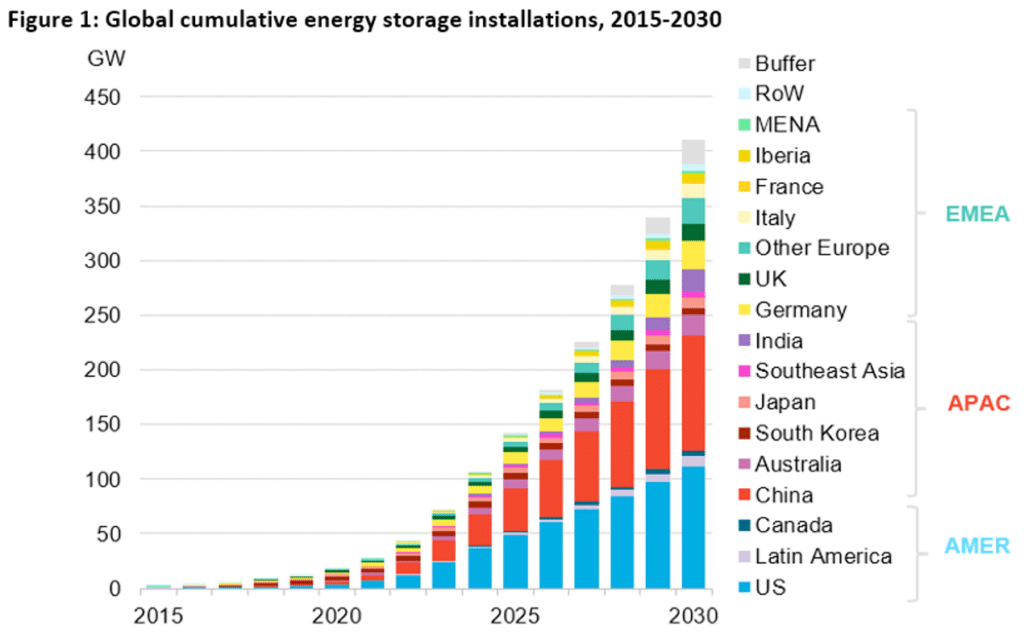
The chart illustrates the global cumulative energy storage installations from 2015 to 2030, showing a significant upward trend, which is driven by strong policy support and technological advancements, particularly in regions like the US, China, and Europe. However, it’s important to note that the data is based on forecasts as of 2021, and might not fully capture recent market developments or changes.
Energy storage methods include electrochemical systems such as lithium-ion and sodium-sulphur batteries, mechanical systems such as pumped hydro and compressed air storage, electromagnetic storage such as superconducting magnetic energy storage and supercapacitors, thermal storage such as molten salt and phase-change materials, and hydrogen storage2. Each approach plays a distinct role in enhancing the grid’s efficiency and resilience.
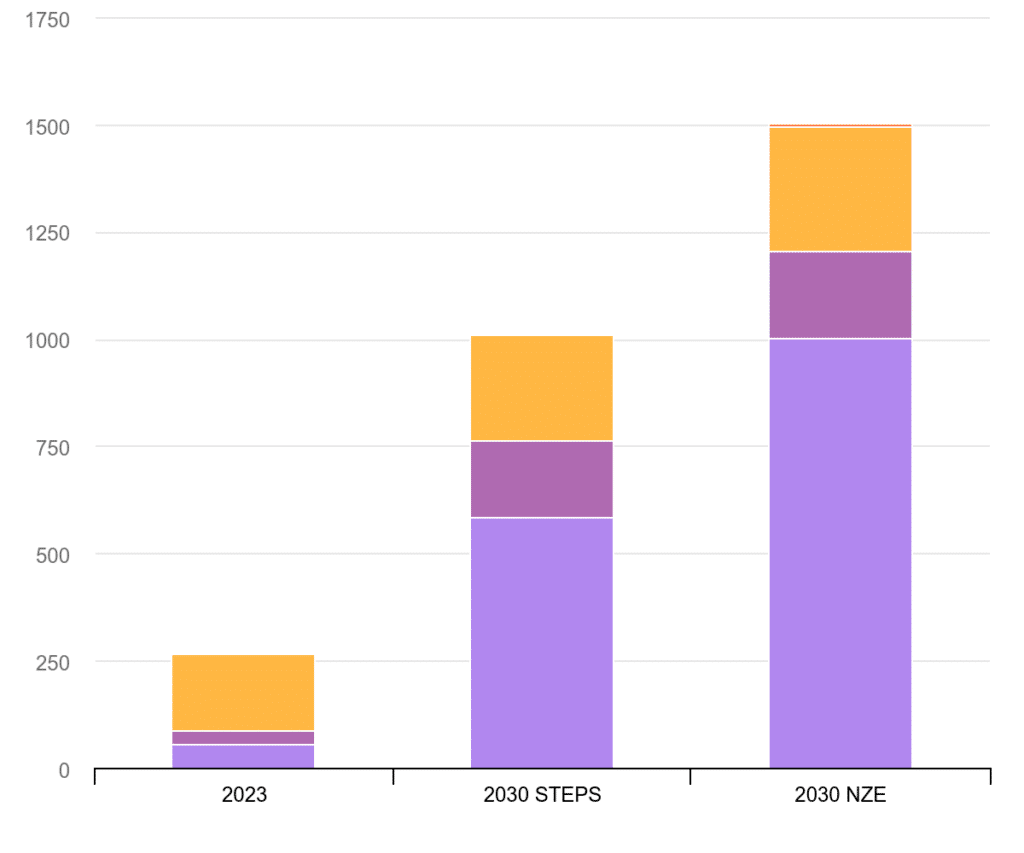
Eddie Rich, CEO of the International Hydropower Association says, “a lack of long-duration energy storage has, until now, been the ignored crisis within the current energy crisis. This is the first time world leaders have recognized the need for a mix of renewables, rather than just volume3.” COP29, held in Baku, Azerbaijan, from November 11th to 22nd 2024, places a strong emphasis on advancing grid infrastructure and energy storage as pivotal components of the transition to low-carbon energy. During COP29, the Global Energy Storage and Grids Pledge hasset an ambitious goal of achieving 1,500 GW by 2030, six times above 2022 levels, and to develop or modernise over 80 million kilometres of electricity grids by 20404.
Achieving global net-zero emissions hinges on the rapid expansion of energy storage, a priority highlighted by COP29 leaders who recognized its critical role in advancing a clean energy future. Many nations and corporations have pledged to deploy cutting-edge energy storage solutions. Notably, the Global Renewables Alliance has set an ambitious target of 8,000 GW of long-duration storage by 2040, advocating for investments in technologies like flow batteries to enhance grid stability and support renewable energy integration5.
Decentralisation of networks
Decentralised grids use Distributed Energy Resources (DERs) like solar panels and wind turbines, which can operate independently and link to the main grid. This flexibility boosts energy resilience, supporting local power generation and reducing dependency on central infrastructure6.
Energy storage is fundamental to managing the variability of renewable sources such as solar and wind, as well as advancing grid decentralisation, storing excess energy during peak production, and ensuring a consistent supply during periods of reduced output. By performing these functions, it stabilises power grids and facilitates seamless renewable energy integration thereby scaling up renewable energy adoption7.
At COP29, the Global Energy Storage and Grids Pledge set a goal to achieve 1,500 GW of global storage capacity by 2030—including 1,200 GW in battery storage—to support decentralised energy systems8. Complementing this effort, the Green Energy Zones and Corridors Pledge aims to develop renewable energy zones equipped with integrated storage solutions, further accelerating the transition to sustainable energy.
Technological advancements
Recent breakthroughs in energy storage have demonstrated their significant role in strengthening energy resilience. COP29 has mentioned many innovations in energy storage solutions, each with unique approaches to supporting renewable energy integration.
#1 Gravity Energy Storage Solutions (GESS): Developed by Energy Vault, GESS uses surplus renewable energy to lift heavy blocks, which are lowered to generate electricity during high demand. Operational in China since May 2024, GESS is scalable, adaptable, and can integrate into tall buildings, potentially reducing urban carbon footprints9.
#2 Geopressured Geothermal Storage: Dubbed an “earthen battery” by Sage Geosystems, this technology stores water underground, using pressure to drive turbines for electricity generation. Sustainable and efficient, it is set to connect to the grid by year-end10.
#3 Compressed CO₂ Storage: Energy Dome’s method compresses CO₂ into liquid for high-energy-density storage, later expanded to drive turbines. With a pilot plant in Sardinia and larger-scale deployments planned, this approach minimises environmental impact11.
#4 Flow Batteries: Scalable and practical, flow batteries like vanadium redox flow batteries (VRFB) store energy in liquid electrolytes within external tanks, enabling independent scaling of power and energy capacities. Durable, low-maintenance, and safe, they align with COP29’s energy storage goals.
#5 Redox Reactions: VRFBs store energy through vanadium ions shifting oxidation states in liquid electrolytes. During charging, V³⁺ oxidizes to V⁴⁺ on the anolyte side, and V⁵⁺ reduces to V²⁺ on the catholyte side, reversing during discharge to release energy12.
#6 Market Overview: The VRFB market, valued at $394.7 million in 2023, is projected to grow at a 19.7% CAGR from 2024 to 2030, driven by renewable energy expansion in North America, Europe, and Asia-Pacific13.
Integration into the smart grid
Andreas Schierenbeck, CEO of Hitachi Energy says, “the expansion and modernisation of power grids and deployment of energy storage, alongside other key technologies, are now critical for the global energy system14.” Smart grids represent advanced energy systems designed to optimise power distribution and enhance grid reliability15. Energy storage is a cornerstone of these systems, enabling the capture and retention of surplus energy from variable renewable sources such as wind and solar. This integration enhances grid stability, promotes efficient energy use, and balances supply and demand16.
By mitigating fluctuations in renewable energy production and ensuring a steady power supply during periods of high demand, energy storage significantly improves grid resilience. Additionally, it reduces reliance on long-distance electricity transmission, thereby minimising energy losses.

At COP29, the vital role of energy storage in accelerating renewable energy integration was prominently emphasized. The European Commission, as part of its Innovation Fund, awarded €4.8 billion in grants to 85 pioneering net-zero projects17. Among these is a hybrid energy storage system in France that combines lithium-ion and vanadium redox flow batteries (VRFB), integrated with a large-scale solar PV farm. This initiative aims to strengthen grid stability and advance the EU’s decarbonisation objectives.
Climate Resilience
Energy storage is pivotal in ensuring a resilient power supply, particularly during extreme weather events or unexpected disruptions. By addressing the inherent variability of renewable energy sources, these systems stabilise the grid, advance low-carbon objectives, and provide critical backup to prevent prolonged blackouts during crises.
Renewable sources like solar and wind, while abundant, pose challenges to grid stability. Energy storage mitigates these issues by capturing surplus energy generated during sunny or windy days and releasing it during periods of low production, such as overcast or windless conditions. This ensures a steady, reliable power supply without compromising system dependability.
Moreover, energy storage serves as a dual solution to climate challenges: it supports climate mitigation by facilitating renewable energy adoption and adaptation by strengthening grid resilience against climate-induced disruptions. Encouraging COP29 participants to prioritize investments in energy storage could foster global awareness, stimulate meaningful discussions, and establish a transformative precedent for future energy policies.
COP29 and beyond
Since COP28, significant strides have been made in energy storage, underscoring its critical role in the global transition to renewable energy and climate resilience. Breakthroughs in technologies such as China’s GESS and vanadium redox flow batteries (VRFB) have solidified energy storage as a cornerstone of future energy solutions. Building on earlier commitments, new initiatives are setting ambitious goals to further advance storage technologies, integrate them into renewable energy zones, and promote decentralised grids alongside next-generation battery systems.
Equally transformative are the policy shifts observed between COP28 and COP29. The ambitious target of achieving 1,500 GW of global energy storage capacity by 2030, coupled with plans to upgrade 80 million kilometres of electricity grids by 2040, reflects a growing confidence and collective resolve to realize a cleaner, more sustainable future.
Looking ahead, the continued integration of energy storage into renewable energy systems will be paramount for achieving sustainable development and addressing the global climate crisis. Success demands more than rhetoric — it requires decisive and collective action. A clean and resilient future will not come to us; it is something we must actively build together.