Industry 4.0: what can be expected?



- The introduction of new technologies in factories is leading to the emergence of the concept of Factory 4.0.
- This fourth industrial revolution is dematerialising production management and making it possible for almost anyone to become a manufacturer.
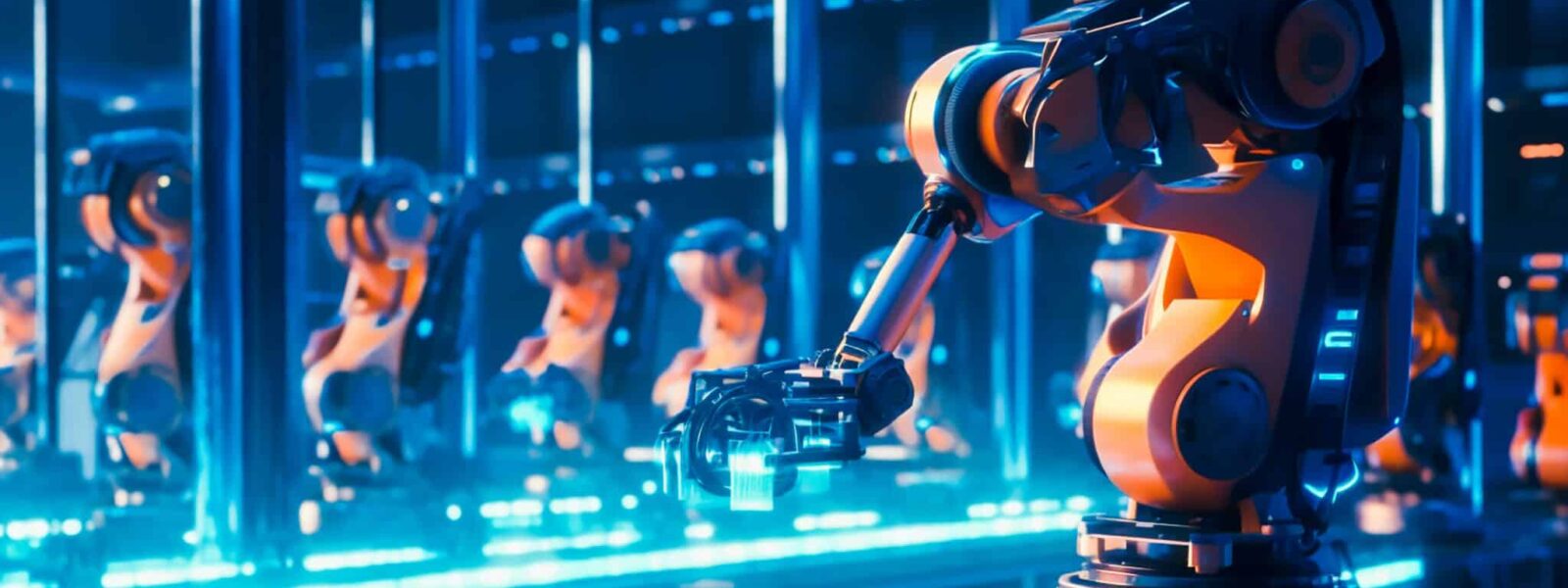
- In concrete terms, in factories, the transformation involves automation, robotisation and the widespread use of real-time data.
- Industry 4.0 frees up time to concentrate on less time-consuming tasks and design new industrial models.
- The challenge is how to ensure that operators retain their technical skills while delegating them to machines.
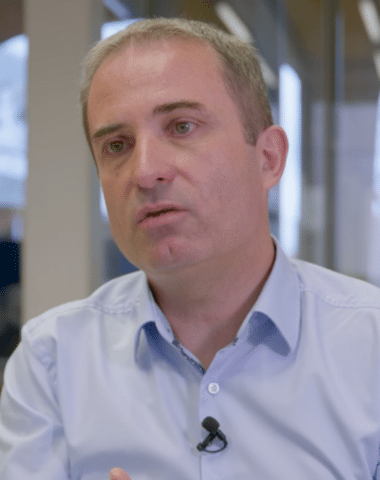
After the revolution in mechanical production driven by the steam engine in 1765, followed by mass production driven by electricity and oil a century later, and finally automated production supported by electronics and computer technologies in the 1970s, it is the introduction of new technologies into factories that is now driving the emergence of the “industry 4.0″ concept. A factory of the future, but one that didn’t emerge out of thin air,” points out Thierry Rayna, a professor at École Polytechnique (IP Paris), director of the Tech4Change chair. “Numerically controlled machines date back to the 1980s, and existing production structures have a force of inertia that should not be underestimated.”
Let’s face it, the factories of the future are not going to replace ‘ordinary’ factories with a wave of a magic wand. Nevertheless, by making digital transformation a reality, they are bringing about real upheaval…
Evolution or revolution?
Factory 4.0 can take several forms: a “classic” physical location or a more diffuse network of production and processing units based on digital technologies. These technologies enable machines, systems, products, and people to be permanently interconnected.
“This fourth industrial revolution is dematerialising the management of production, and in particular enabling individuals to become manufacturers,” emphasises Thierry Rayna. A person can imagine an object, identify a market, create a 3D printed prototype to test it, then find a service provider to manufacture it, and, with little or no investment, put the product on sale online.
“So, evolution or revolution? For every new digital technology, there are always two waves,” says Thierry Rayna. “The first is companies doing the same thing as before but using these new technologies. The second wave is driven by individuals, entrepreneurs, who seize on these technologies to invent radically different uses.” For example, the first version of the Web at the end of the 90s was nothing very original, just a way for manufacturers to offer their catalogues online rather than in printed form. “But when people took to the web to invent collaborative encyclopaedias and social networks, we could talk about a revolution.”
And what about in the factory?
“At Michelin, the implementation of Engineering 4.0 is already well advanced. Six years ago, we carried out an initial review of existing 4.0 technologies and met with manufacturers in Europe, the United States and Asia whose production units were already operating in 4.0 mode,” explains Nicolas Jaunet, head of engineering at the Michelin Group. “We found highly motivated people whose jobs and day-to-day work had really been transformed and had become more attractive. What’s more, these industries were doubling their annual performance compared with others in the same sector who hadn’t yet taken the plunge.”
To implement 4.0 technologies, it was first necessary to physically connect machines to data storage areas, before using this data to generate application cases to improve the company’s performance. The first stage of the transformation involves the automation of processes, the use of artificial intelligence and collaborative robots, and the use of autonomous vehicles to transport parts and materials within the factory. In concrete terms, this means that all the tyres that used to be checked manually by operators now come under the vision radar of an artificial intelligence system, freeing up the operator’s time to focus on more qualitative sorting.
The second aspect is the use of data. Operators now have real-time access to data and to the performance of machines, workshops, and plants. Based on this data, certain AI systems can be used, for example, to perform predictive maintenance on certain baking presses, to anticipate breakdowns or even guide people to identify the origin of a breakdown on a machine. At Group level, the production units of various plants have generated application cases, enabling new processes to be tested in real time at ‘digital leader’ plants before being rolled out to other Group sites. 70 application cases have already been deployed 8,000 times across all the Group’s plants.
Is this the end of (human) work?
“What effect will these developments have on human work? Industry 4.0 will take time to roll out, which gives us plenty of time to support our employees as they change their jobs, or even take on new functions,” says Nicolas Jaunet. “What’s more, if the hard work is done by the machine, the working conditions are more satisfactory for the employees.” The expertise of these operators is set to evolve. For example, with the new electric cars, we need to design high-tech materials (rubber) and tyres that can withstand much heavier vehicles. Factory 4.0 is thus becoming a real lever for transforming the tyre industry.
For his part, Thierry Rayna believes that the more we digitise, the more valuable human labour becomes, forcing staff to concentrate on important tasks. On the other hand, care must be taken not to lose expertise when work is entrusted to robots. “For example, in the field of welding, while the manufacture of the first parts requires real expertise, the production of the 1,000 or 10,000 others that follow can become truly tedious and boring. But how can we entrust this task to robots without the master welder losing his skills? That’s the challenge posed by these new technologies… “