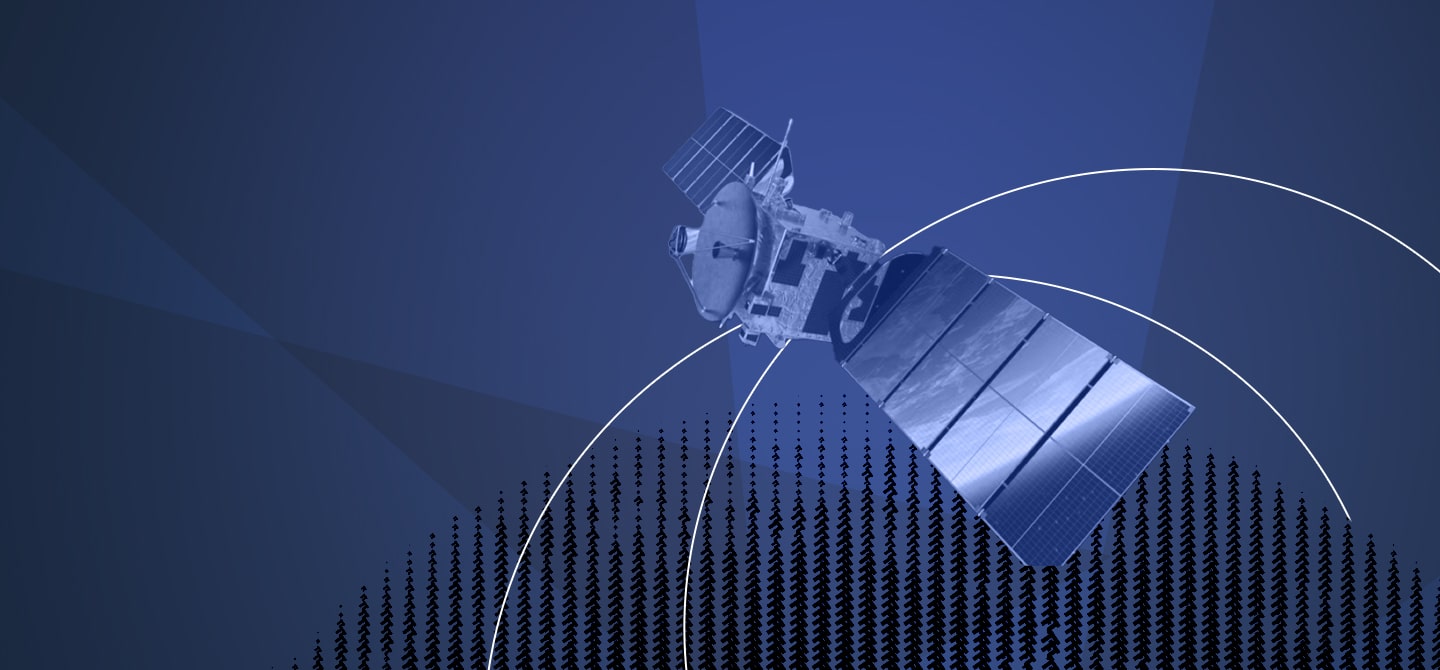



After Galileo and Copernicus, Europe will deploy the IRIS² (Infrastructure for Resilience, Interconnectivity and Security by Satellite) constellation of telecommunications satellites in 2030. Jean-Pierre Diris, interdepartmental coordinator for IRIS², explains the issues at stake in this new project supported by the European Commission and the underlying technological challenges.
Why does Europe believe it is necessary to deploy a constellation of telecoms satellites?
Jean-Pierre Diris. The digital transformation of our societies is leading to an explosion in demand for connectivity. Until recently, space-based connectivity was less efficient and more expensive than terrestrial technologies. But advances in electronic miniaturisation, the introduction of reusable launchers and the deployment of industrial capacity to mass-produce satellites have made possible the advent of ‘mega constellations’, which are set to revolutionise the market and usage patterns.
To avoid depending on non-European players for its strategic, military and governmental needs, Europe has decided to develop its own constellation. IRIS² will provide secure connectivity for our embassies, our armed forces in theatres of operation and our government services in the event of environmental crises, even when terrestrial technologies are absent or unavailable. At the same time, it will provide a competitive commercial service.
IRIS² will thus join the ever-shrinking circle of telecoms satellite constellations, currently dominated by Starlink, operated by SpaceX. How many satellites will there be?
IRIS² will have 264 satellites in low Earth orbit (LEO), at an altitude of 1,200 km, and 18 satellites in medium Earth orbit (MEO), at an altitude of 8,000 km. By way of comparison, Starlink already has 7,000 satellites and plans to deploy a total of 42,000 in low Earth orbit. Amazon is about to launch the first satellites of the Kuiper constellation, which is expected to have 3,200 satellites. The Chinese government has also begun deploying Guowang (‘national network’ in Chinese) at the end of 2024, which will comprise 13,000 satellites, and other projects of this scale, backed by private interests, are being developed in the country. So, IRIS² is not a mega-constellation, and unlike Starlink or Kuiper, its purpose is not purely commercial.
Negotiations on IRIS² were fierce within the Commission, particularly between France and Germany. Where does the project currently stand?
The European Commission launched IRIS² in 2022 and its regulation was validated at European level in March 2023. On 16th December last year, a decisive step was taken with the signing of a 12-year concession contract with the SpaceRISE industrial consortium formed by three operators: Eutelsat, SES and Spain’s Hispasat. Between 2023 and 2024, the discussions between the 27 Member States were indeed intense, and Germany expressed some misgivings. But I think I can say that we have turned the page on these difficulties.
Thalès and Airbus decided to leave the SpaceRISE industrial consortium in July 2024. What is the current funding structure for IRIS²?
The concession contract is worth €10.6bn, with 60% coming from European public funds and the remaining 40% from the three members of the consortium. This public-private partnership structure is a first in the European space sector for a project of this scale. Of course, this means that the commercial services delivered by IRIS² must be profitable, and therefore highly competitive, which Europe knows it can control. And while Thalès and Airbus are no longer part of SpaceRISE, they remain privileged partners.
What are the technological challenges facing IRIS²?
The central issue is security, which concerns both the command and control of the satellites and all the communications carried by the network. This will be based in particular on inter-satellite communication using high-speed laser transmission. Data will be sent to just five points of presence on the ground, all located in Europe. This configuration will avoid dependence on an uncontrolled terrestrial infrastructure.

IRIS² will also enable a technological leap forward in terms of electronic miniaturisation. Operators have opted to work to 5G standards in order to provide a seamless commercial offering between terrestrial and space systems. The satellites, which are highly digitised, will also be fully reprogrammable, particularly in the event of a switch to 6G. These features will be based on highly integrated digital technologies, with etchings typically reaching 7nm, something that has not yet been done in Europe.
IRIS² will come into service after several other constellations. Could this pose problems in terms of frequency allocation?
In fact, Europe is very well placed in this competition for frequency bands. IRIS² will extend two existing constellations: OneWeb, originally an American network, was acquired by France’s Eutelsat in September 2023, and O3b mPOWER, operated by Luxembourg’s SES. For its commercial applications, it will therefore benefit from their reserved frequency rights, which have an excellent level of priority (OneWeb, in particular, has priority over Starlink in low-Earth orbit). Government applications, on the other hand, rely on a specific frequency range, the military Ka-band: France and Europe registered frequency rights for this range very early on, and as a result have quite remarkable priority rights.
In March 2024, the French Academy of Sciences expressed concern about the amount of debris in orbit and the impact of mega constellations on astronomy1.How does the IRIS² project address these concerns?
The consortium plans to develop non-emissive satellites so as not to disrupt astronomical observations. The production of debris in orbit comes essentially from accidental collisions, which must be avoided at all costs because the presence of debris leads to exponential degradation of objects in orbit. This requires satellite command and control, and Europe has a great deal of experience in this area. On the other hand, there is some concern about the level of control exercised by the new players. We know, for example, that SpaceX very often manoeuvres its satellites to avoid collisions, and that more than 400 of them are currently out of order, which is quite worrying.
The atmospheric decay of satellites at the end of their life is not without its problems either, notably with the production of aluminium oxide particles, which could have an impact on the ozone layer2.How are the IRIS² sponsors tackling this issue?
Naturally, we are closely monitoring research on this subject, but we have to admit that there is still no consolidated view of the various risks caused by the disintegration of a large number of satellites in the atmosphere. In any case, it should be remembered that Europe, with IRIS², has opted for a very sustainable model: fewer than 300 objects, each with a lifespan of ten years. Here again, the proliferation of mega-constellations poses a completely different problem: with several tens of thousands of satellites with at least half the lifespan, the risks, whatever they may be, will increase considerably.
The entry into the new paradigm that you mentioned at the beginning of this interview is largely linked to the resources developed by SpaceX. Does the appointment of Elon Musk to the US government change the situation for Europe in space?
Space has never been so high on the American agenda and it’s happening in a very unexpected way… There is now a strong American desire to gain an economic foothold in Europe, as underlined by the partnerships that SpaceX is trying to forge with Italy and Germany. At the same time, the new American President has made it very clear that Europe will have to learn to stand on its own two feet when it comes to defence. This combination of wills reinforces our position: we cannot be subject to permanent changes of direction for our critical uses, or be dependent on economically aggressive players. Europe needs its strategic autonomy more than ever.