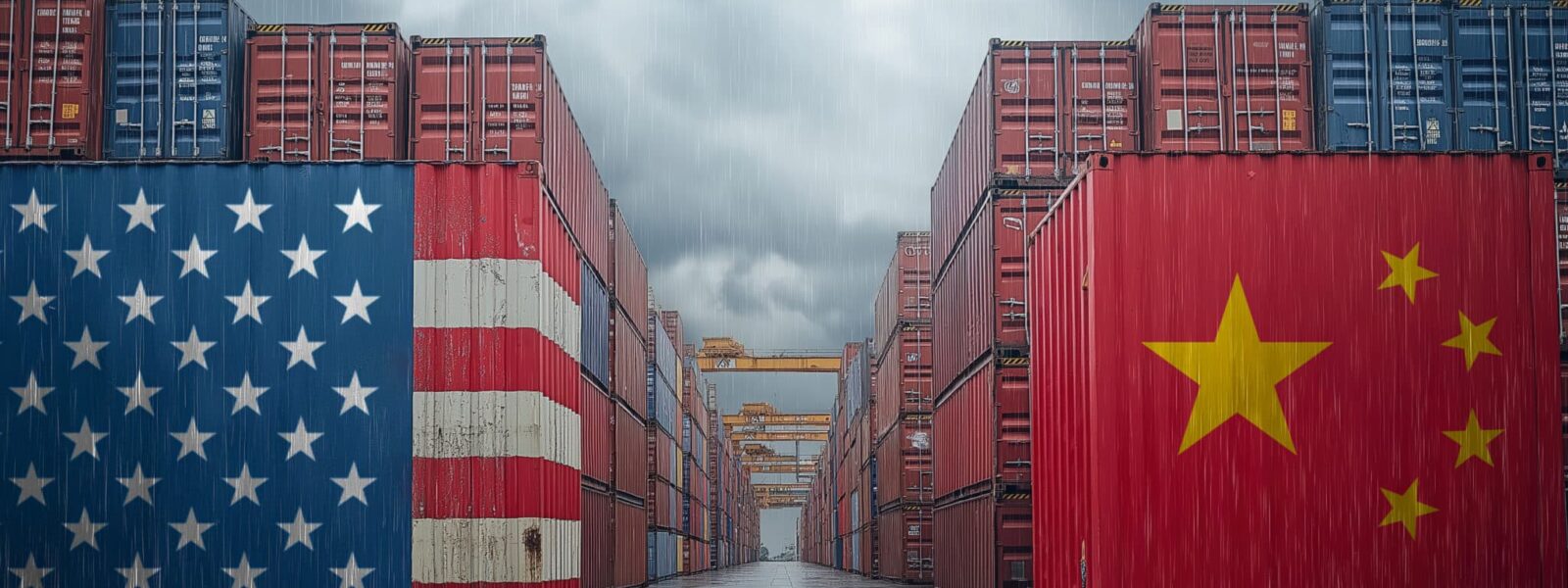
What can the international market do to address Chinese technological innovation?



- There are three strategies for countering China's technological rise: techno-nationalism, techno-localism, and protectionism.
- Techno-nationalism causes immediate disruption through bans and export controls.
- Techno-localism requires a local presence to access the market, which creates opportunities but also competitive risks.
- Protectionism aims to protect domestic industries through tariffs, subsidies, and supply preferences.
- Market-driven globalisation is coming to an end, replaced by trade influenced by geopolitics and competition rules.
Two decades ago, China was the world’s factory floor—a place where Western-designed products were assembled by low-cost labour and shipped back to affluent markets. Today, Chinese companies are setting the pace in artificial intelligence, dominating electric vehicle sales, and challenging Silicon Valley’s technological supremacy. This transformation has sent shockwaves through Washington, Brussels, and other Western capitals, forcing policymakers to craft increasingly sophisticated responses to what they see as an existential threat to their economic leadership.
The result is a complex web of policies that many executives mistakenly view as simple “decoupling” from China. But the reality is far more nuanced. Western governments are deploying three distinct yet overlapping strategies—each with different implications for businesses trying to navigate this new landscape. Understanding these approaches is crucial for companies seeking to identify both risks and opportunities in an increasingly fragmented global economy.
The stakes couldn’t be higher. China’s rapid technological ascent has created dependencies that are difficult and expensive to unwind, while its 1.4 billion consumers represent a market too large for most companies to abandon. Yet national security concerns are driving policies that could fundamentally reshape how global business operates, from supply chains to research partnerships to market access strategies.
Techno-nationalism: drawing hard lines in critical sectors
The most aggressive Western response has been techno-nationalism—the deliberate exclusion of Chinese companies from critical technology ecosystems based on national security grounds. This approach represents a fundamental shift from the economic logic that has driven globalisation for decades, prioritising security concerns over commercial interests. The clearest example remains the comprehensive campaign against Huawei, once the world’s largest smartphone manufacturer and a leader in 5G telecommunications equipment. The Trump administration’s restrictions, which have been maintained and expanded under President Biden, effectively cut Huawei off from Google services, advanced semiconductors, and critical software updates. The impact was devastating: Huawei’s global smartphone market share collapsed from 20% to barely 2% within two years.
The US Bureau of Industry and Security now maintains entity lists with over 600 Chinese companies banned from receiving American technology.
But Huawei was just the beginning. The U.S. Bureau of Industry and Security now maintains entity lists with over 600 Chinese companies banned from receiving American technology. These restrictions span from obvious targets like telecommunications giant ZTE to lesser-known firms in artificial intelligence, biotechnology, and advanced manufacturing. The Chinese AI company DeepSeek, despite its open-source approach, has seen its generative AI tools banned from U.S. government systems, with lawmakers proposing even broader restrictions. Europe has followed suit, though often with less sweeping measures. The UK banned Huawei from its 5G networks by 2027, while the European Union has given member states tools to exclude “high-risk vendors” from critical infrastructure projects. The Netherlands, home to critical semiconductor equipment manufacturer ASML, has restricted exports of advanced lithography machines that are essential for producing cutting-edge computer chips.
The semiconductor sector has become a particular flashpoint. Export controls now prevent Chinese companies from accessing not just advanced chips, but also the equipment needed to manufacture them. These restrictions have forced China to invest billions in domestic semiconductor capabilities, though experts debate whether these efforts can overcome the technological gaps anytime soon. For Western businesses, techno-nationalist policies create immediate and often painful disruptions. Companies with Chinese partners, suppliers, or customers in restricted sectors face forced separations with little time to adjust. The lesson for executives is clear: waiting for restrictions to be announced is often too late. Smart companies are conducting regular risk assessments, developing contingency supply chains, and lobbying for reasonable implementation timelines through industry associations.
Techno-localism: keeping the door open with conditions
Where techno-nationalism shuts the door entirely, techno-localism keeps it open but demands a price: Chinese companies can participate in Western markets, but they must establish substantial local presence and often transfer technology as the cost of admission. This approach recognises that complete exclusion of Chinese technology may be economically damaging or even counterproductive. Instead, it seeks to capture the benefits of Chinese innovation while maintaining domestic control over critical technologies and production capabilities. Ironically, this mirrors China’s own playbook from the past two decades, when foreign companies faced similar requirements to access the Chinese market. The most prominent example has been the ongoing battle over TikTok. Rather than banning the app outright, U.S. lawmakers have demanded that ByteDance sell its American operations to domestic owners. The underlying logic is that TikTok’s algorithm and user data represent valuable assets that should benefit American rather than Chinese interests. Similar pressures have been applied to other Chinese apps and services that handle sensitive user information.

In the electric vehicle sector, the European Union has embraced techno-localism as a way to benefit from Chinese battery technology while building domestic industrial capacity. Chinese battery giants like CATL and BYD have established European manufacturing facilities to access substantial development grants and subsidies. These arrangements give European governments some control over critical supply chains while allowing Chinese companies to participate in the lucrative transition to electric mobility. The approach extends to data localisation requirements, where Chinese tech companies must store European user data within EU borders, and joint venture mandates that effectively force technology sharing as a condition of market entry. Some arrangements go further, requiring licensing deals that ensure Western companies gain access to Chinese innovations.
For businesses, techno-localist policies present both opportunities and risks. In the short term, Western companies can gain access to cutting-edge Chinese technology, expanded market share, and cost advantages through these arrangements. However, forced technology transfer can reduce Chinese companies’ incentives to innovate in open partnerships, potentially leaving Western partners with access to outdated technology as Chinese companies focus their latest developments on unrestricted markets. The key for executives is to carefully balance immediate gains against long-term competitive risks. Companies that become too dependent on forced technology transfers may find themselves at a disadvantage as Chinese partners develop alternative strategies or focus innovation elsewhere.
Protectionism: geographic preference over ownership
The third strategy, protectionism, takes a different approach entirely. Rather than focusing on company ownership or security concerns, it seeks to protect domestic industries through tariffs, subsidies, and procurement preferences—regardless of where a company’s headquarters happens to be located. The Biden administration’s 100% tariff on Chinese-built electric vehicles represents perhaps the starkest example of this approach. The tariff effectively doubles the price of Chinese EVs, making them uncompetitive with domestic alternatives regardless of their technological merits. Similar duties have been imposed on Chinese solar panels, semiconductors, steel, and aluminium, creating substantial cost disadvantages for Chinese exporters.
But modern protectionism goes beyond tariffs. The Inflation Reduction Act provides up to $369bn in clean energy incentives, with domestic content requirements that favour American manufacturers. The CHIPS Act allocates $52bn for semiconductor manufacturing, with restrictions preventing recipients from expanding advanced chip production in China. Europe has responded with its own Green Deal Industrial Plan, including substantial subsidies for clean technology manufacturing within the EU.
Protectionist policies often prove less effective than intended because they address geography rather than ownership or control.
These policies aim to rebuild domestic industrial capacity that has been hollowed out by decades of globalization. “Buy American” provisions in federal procurement give domestic companies significant bidding advantages, while state-level preferences extend protectionist policies to regional government purchasing. However, protectionist policies often prove less effective than intended because they address geography rather than ownership or control. Chinese companies have demonstrated remarkable adaptability in circumventing trade barriers through direct investment, third-country strategies, and complex partnership arrangements.
BYD, despite facing high tariffs on Chinese-built vehicles, has maintained lucrative contracts with American transit authorities through its California manufacturing facility. The company technically produces « American-made » vehicles while retaining Chinese ownership and control. Similarly, Chinese solar manufacturers have established significant U.S. production capacity, enabling them to qualify for the very subsidies designed to support American industry. Chinese manufacturers are also increasingly routing products through Mexico, Vietnam, and other countries to avoid tariffs, while maintaining control over key technologies and processes. These strategies highlight a fundamental challenge with protectionist approaches: in a globally integrated economy, nationality of production and ownership can be decoupled in ways that undermine policy effectiveness.
Navigating the new landscape
The three-strategy framework reveals why simple “decoupling” narratives miss the mark. Western governments are not uniformly shutting out Chinese technology but are instead deploying sophisticated tools to reshape competitive dynamics in their favour. The challenge for business leaders is understanding which approach applies to their specific industry and adjusting strategies accordingly. Companies operating in sectors deemed critical to national security—telecommunications, semiconductors, artificial intelligence—should expect techno-nationalist restrictions and plan accordingly. Those in industries where technology transfer is valuable may find opportunities in techno-localist arrangements, though they must carefully manage long-term competitive risks. In sectors facing protectionist measures, the key is recognizing that these policies often create windows rather than walls—opportunities for strategic repositioning rather than permanent exclusion.
The broader trend is clear: the era of purely market-driven globalization is ending, replaced by a more complex system where geopolitical considerations increasingly shape commercial relationships. Companies that adapt quickly to these new rules of engagement will find opportunities even in a more fragmented world. Those that cling to old assumptions about frictionless global markets may find themselves increasingly disadvantaged. As China’s most capable companies continue adapting to each policy shift, Western firms face a stark choice: evolve their strategies to match this new reality or risk being left behind in a rapidly changing competitive landscape. The companies that thrive will be those that view these policy frameworks not as obstacles to overcome but as new rules of the game to master.