Neither alive nor dead: disembodied human brains put to use in medicine


- The company Bexorg has made a name for itself with its suite of machines, known as BrainEx, which are capable of sustaining a brain outside the body.
- This system promises conditions that are incomparably closer to reality for drug testing.
- This venture stems from two observations: the shortcomings of animal models for drug testing and government pressure to move away from animal experimentation.
- This “isolated” brain model is already establishing itself as a credible alternative to brain organoids grown from human stem cells.
- In the long term, Bexorg aims to keep brains in BrainEx for up to two weeks, compared to the current 24 hours.
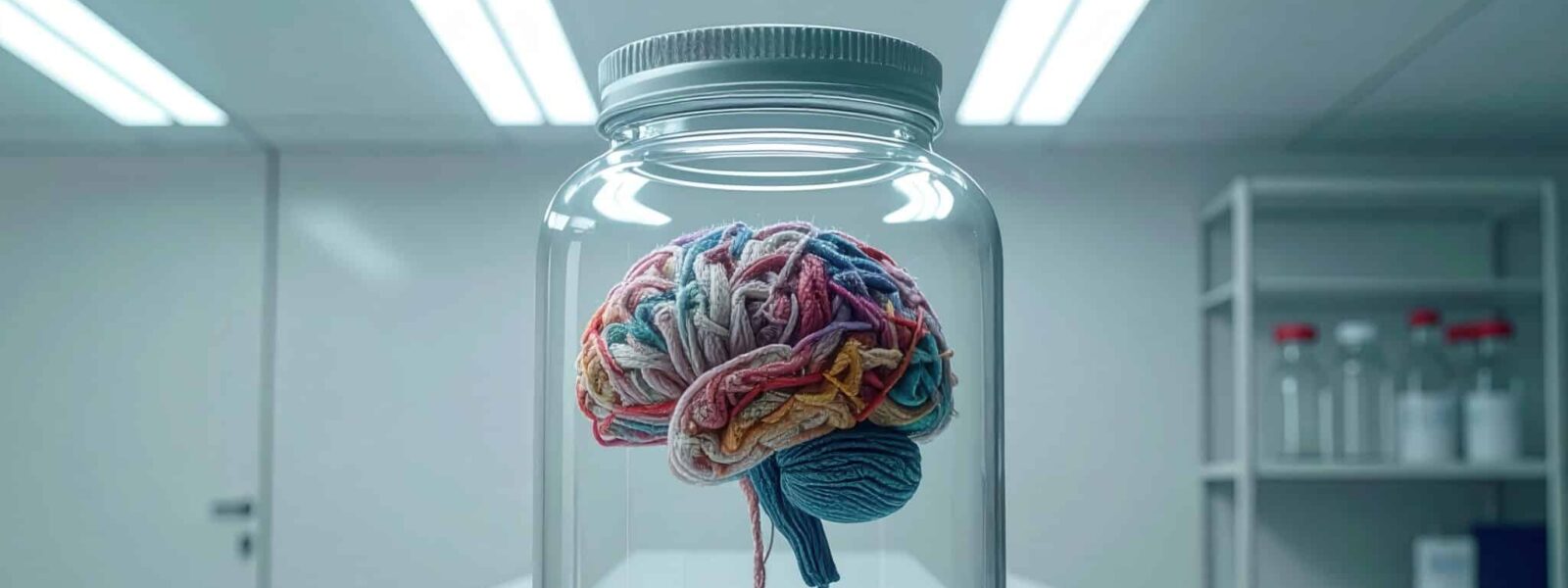
By restoring certain functions of intact brains taken from deceased donors, the start-up Bexorg hopes to create a more accurate experimental environment for the development of drugs to treat neurodegenerative diseases. Only yesterday, this brain was part of a living being. Barely a few hours after its owner’s death, it now sits in an airtight jar, kept alive by a network of tubes infusing it with litres of blood substitute, rich in oxygen and vital minerals, whilst ensuring the removal of its metabolic waste.
Almost all the essential functions of this “isolated” brain without a body remain intact, even though its electrical activity is reduced under the influence of a powerful anaesthetic. As such, the organ hovers between two worlds, on the uncertain borderline between life and death. Whilst it is subjected to the action of chemicals carefully measured out by neuroscientists, sensors record its reactions with meticulous precision, gathering hundreds of data points on the state of its cells, its proteins and its physiology as a whole. After 24 hours spent in this state of organic limbo, it will finally be sliced into countless fragments for further study.
This brain is one of hundreds of specimens studied by the emerging biotechnology startup Bexorg, founded just five years ago, which has gained fame for its suite of machines known as BrainEx, capable of sustaining a brain removed from any living organism. This technological platform offers researchers an unprecedented tool for designing new therapies targeting brains ravaged by neurodegenerative diseases – Parkinson’s disease, Alzheimer’s disease, amyotrophic lateral sclerosis. The disembodied organs allow Bexorg to perform biopsies, measure how long a drug remains within the cells, verify whether it reaches its molecular target, and detect the early signs of any potential side effects.
A unique testing ground
This system promises conditions for drug testing that are infinitely closer to reality than those provided by animal models or cells grown in Petri dishes. This is because these whole brains bear the indelible imprints of decades of environmental exposure, a personal history of drug treatments and a genetic uniqueness that is likely to profoundly influence the response to the molecules being tested.
The initial results are encouraging, showing that the preserved brains faithfully replicate the response of living brains to certain therapies. Yet Bexorg has long operated behind the scenes, aware that it needed to reassure the public: that the use of these disembodied brains does not cross any ethical boundaries and carries no risk of recovering even the slightest fragment of consciousness.
Beyond drug trials, these brains could reveal new markers of pathological processes, such as the neurodegeneration specific to Alzheimer’s disease.
Before each brain is entrusted to the BrainEx machine, surgeons examine it meticulously, then suture plastic stubs into the vessels that once supplied it with blood, thereby preparing the organ to respond to the molecules being tested and to generate data. Once connected to the machines, an artificial lung and kidney take over the oxygenation and filtration of the fluids flowing through it.
Neuroscientists had initially put this approach to the test by restoring the functions of pig brains several hours after their death at a local abattoir. Their results, published in 2019 in the journal Nature1, immediately sparked a wave of concern: did these brains retain traces of consciousness, did they feel pain, did they retain fragments of their previous lives in their memory? However, under the influence of a powerful anaesthetic, their electrical discharges, which are a sine qua non of any form of consciousness, are completely eliminated. Building on this initial demonstration, Bexorg now sources human brains in partnership with organisations responsible for collecting organs for transplantation.
Ex vivo cerebral perfusion, or the art of pushing the boundaries of life
The Bexorg journey began with a strikingly simple observation: the obvious shortcomings of animal models for testing drugs intended for the human brain. There is no guarantee that a molecule which easily crosses the blood-brain barrier in a mouse will make the same journey in humans; and a toxic overdose or an ineffective underdose is enough to doom a promising therapy before it has even had a chance to prove itself.
Another argument in favour of this approach is the growing pressure from many governments, particularly in Europe, to encourage researchers and industry to move away from animal testing in favour of alternative models. This is a fundamental shift that shows no signs of abating; quite the contrary.
To date, the company has raised $42 million, in addition to several grants and partnerships with biotechnology firms and universities. Beyond drug trials, these brains could reveal new markers of pathological processes, such as the neurodegeneration specific to Alzheimer’s disease, whose diagnostic and prognostic value would be invaluable to clinicians. This approach is particularly well-suited to the study of neurodegenerative diseases: on the one hand, because these generally do not involve electrical brain activity; on the other hand, because donor brains are often affected by several of these conditions simultaneously, a clinical picture that has proved exceptionally difficult to replicate in the laboratory.
This “isolated” brain model is already establishing itself as a credible alternative to brain organoids cultured from human stem cells, or to chips mimicking the blood-brain barrier for the study of neurodegeneration. Some point out, however, that BrainEx brains may not be perfect replicas of living brains: cerebrospinal fluid drainage systems may behave differently within an intact organism, whilst the inhibition of neuronal firing through anaesthesia is likely to alter cerebral blood flow. Furthermore, by depriving the brain of its electrical activity, researchers lose the ability to predict whether a tested molecule is likely to trigger epileptic seizures.
Towards an eternal brain
As Bexorg expands its scope, the company could turn its attention to other pathological conditions, such as psychiatric disorders and certain forms of brain cancer. In the longer term, the team aims to keep brains in BrainEx for up to two weeks, hoping to gather much richer data on long-term processes, such as brain plasticity in response to treatments.
The company is also developing a machine learning model called NeuroLens, a ‘virtual brain’ trained on physiological readings, donors’ medical records, and protein and microscopic data from brain tissue. This digital avatar could one day enable researchers to test new molecules before even using a physical brain. In this immaterial and, in a sense, immortal form, the brains that Bexorg has so carefully preserved following the death of their owners will continue to live long after life support has been withdrawn.