Why the Anthropocene has divided the scientific community





- The concept of the Anthropocene refers to a new geological era, characterised by the significant and worldwide impact of human activity on the planet.
- In 2023, a working group dedicated to the Anthropocene set its “golden spike” (the landmark that marks the boundary between two geological periods) in 1952, in the sediment of Crawford Lake, Canada, notably because of nuclear markers.
- Although this term is widely used by the scientific community, it is the subject of debate in geology and has been rejected by the International Commission on Stratigraphy.
- Among the reasons for this rejection are the difficulty of rigorously defining the beginning of the Anthropocene and the fact that the proposed golden spike does not meet the standards of the geological time scale.
- However, the concept is still widely used, not least because it underlines the urgent need to act in the face of climate change and highlights a society in which the global transformations of the planet are caused by humans.
The term is everywhere: from the École de l’Anthropocène in Lyon to a dedicated IGN atlas1 and even two dedicated scientific journals2, everyone – scientists included – is using the concept of the Anthropocene. This new geological era is characterised by a significant global human footprint on the planet. But the term is not officially recognised. In March 2024, the International Commission on Stratigraphy – the organisation responsible for defining the geological time scale – rejected the official addition of a new geological era3. We are therefore still officially in the Holocene era, as we have been for the past 11,700 years. Nonetheless, this decision has not put an end to the debate within the scientific community.
#1 THE ANTHROPOCENE EXISTS.
True: Part of the scientific community recognises its existence.
Erle Ellis. The Anthropocene, as defined in dictionaries, exists and is widely used in science to define a time when humans are transforming the planet. However, there is no official era in the geological timeline.
Michel Magny. A large part of the international scientific community recognises the term. When it was first proposed in our team, which works on the reconstruction of past environments in relation to societies, we had the impression that all our work incorporated the concept of the Anthropocene! We have seen the major impact of humankind on ecosystems since the first agricultural societies. Many geologists also recognise the existence of the Anthropocene.
Without disputing the fact that rapid and far-reaching climate changes may have occurred in the past, the Anthropocene marks a sudden change in the climate pattern. Whereas for a million years, climatic oscillations were mainly driven by the Earth’s orbital factors, now it is the rate of human greenhouse gas emissions that is causing the climate to warm up by a similar amount.
False: The International Committee for Stratigraphy has rejected the adoption of the Anthropocene as a geological epoch.
Jan Piotrowski. There is no justification for ending the Holocene. The end of the last Ice Age – roughly coinciding with the beginning of the Holocene – was marked by environmental changes that were significantly greater than those that would have marked the beginning of the Anthropocene. For example, the temperature rose by 1°C per decade in Wales 15,000 years ago; 11,700 years ago in Greenland, a warming of 7°C occurred in just 50 years; and 14,000 years ago, the documented rise in sea level in Barbados was 40 mm/year. These rates of change are greater than those our planet has experienced since 1950.
Unclear: There are other alternatives for characterising humanity’s footprint on the planet.
JP. The only valid alternative to the Anthropocene is to describe it not as an epoch but as an event. Events are elements that are well established in stratigraphy: we find, for example, the Great Oxidation 2.4 billion years ago, or the Ordovician biological explosion 500 million years ago. An event can be diachronic, as is the case with the Anthropocene. [Editor’s note: The Anthropocene working group says it has considered this possibility in detail, and concludes that it is incompatible with the stratigraphic data4.]
#2: IT IS POSSIBLE TO DEFINE THE ANTHROPOCENE PRECISELY.
True: Scientists have defined a marker for the start of the Anthropocene.
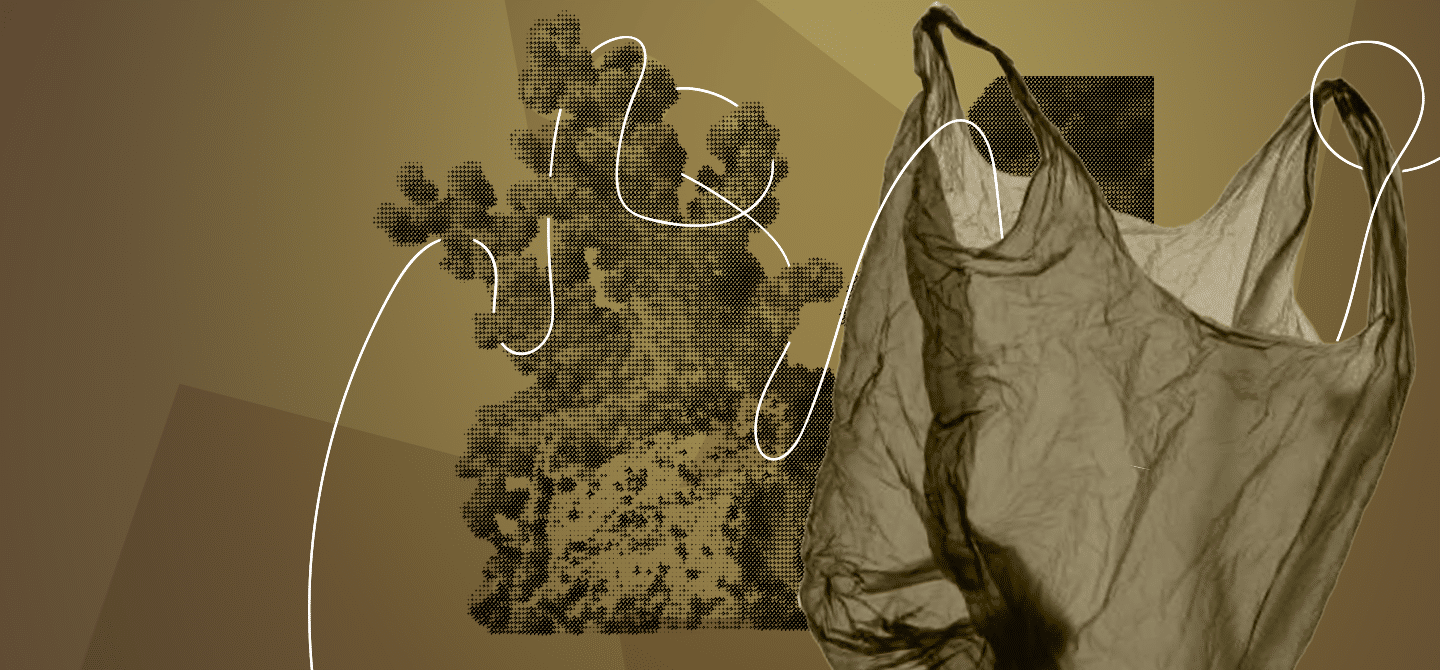
MM. A working group dedicated to the Anthropocene was set up in 2009 at the request of the International Union of Geological Sciences. In 2019, this group proposed adopting the term Anthropocene. In 2023, it even defined a golden spike in the sediments of Lake Crawford, in Canada. Here, and across the globe, there has been a rapid increase in the concentrations of two isotopes of plutonium, corresponding to the first nuclear tests on land. The beginning of the Anthropocene would thus be defined in 1952. Apart from the nuclear marker, many other indicators show an abrupt change at this time: greenhouse gas levels rising, biodiversity falling, pollution piling up, man-made waste (such as plastic) accumulating.
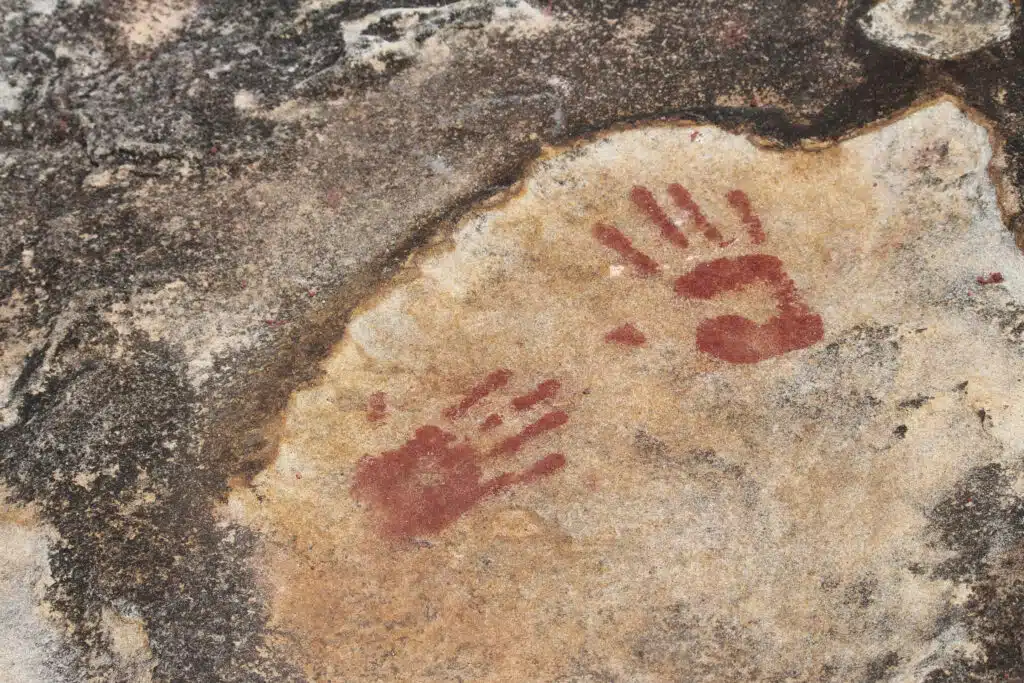
Some have criticised the choice of Lake Crawford to define the golden spike marking the beginning of the Anthropocene, mainly because of its lack of accessibility. But what about the site officially chosen for the Golden Spike at the start of the Holocene? It’s a borehole in the Greenland ice cap, which is in danger of disappearing because of global warming…
False: It is not possible to precisely define the beginning of the Anthropocene.
JP. There are geological traces of human presence well before the proposed start of the Anthropocene (beginning of agriculture, settlement of the Americas, industrial revolution, etc.). Among the arguments against recognising the Anthropocene as a geological epoch, several concern the beginning of the Anthropocene. It cannot be precisely defined because it began at different times and in different places on Earth. What’s more, the proposed date (1952) makes no sense, as humanity’s impact on the Earth goes back much further than that. This would make the Second World War pre-Anthropocene! Finally, the proposed golden spike – Lake Crawford – does not meet the standards of the geological timeline: it is not very accessible and geologically unstable.
EE. It’s potentially possible to precisely define a date and marker for the Anthropocene, but there’s no obvious scientific point to it, especially if it’s recent. There are better ways of understanding the Anthropocene as an ongoing process and event, rather than an abrupt global change that occurred in 1952.
Uncertain: Conflicting positions remain, not always based on scientific evidence.
MM. The decision by the International Commission on Stratigraphy to refuse to recognise the Anthropocene may seem surprising. In fact, in 2023, the dedicated working group had recommended the adoption of the Anthropocene and proposed a golden spike.
But I understand the geologists’ misgivings. First, it should be remembered that the Anthropocene epoch was proposed in 2000 by Paul Josef Crutzen. This chemist, who works on stratospheric ozone, is recognised by the international scientific community and has been awarded the Nobel Prize for Chemistry. But he is not a geologist. The fact that a chemist is proposing to revisit the geological timeline can be a source of difficulty. Finally, geological timelines are very long, often millions of years. The change of scale here is radical, with the Anthropocene starting in 1952, i.e. only 72 years ago!
#3: WE CAN STILL TALK ABOUT THE ANTHROPOCENE.
True: The term unites many scientists.
MM. The international scientific community seized on the term as soon as it was proposed. There are dedicated journals, and major scientific journals such as Nature and The Holocene have devoted special issues to the Anthropocene. The term brings together scientists from the natural and human sciences, and it is a banner that carries weight with the authorities that govern us, and we will continue to use it. In my view, refusing official recognition sends out a negative signal to scientists, but above all to political and economic leaders and to public opinion. I fear that it will serve as an alibi for inaction in the face of climate change. It’s a real source of confusion, which is to be deplored.
EE. I think that scientists will continue to discuss the meaning of the “human era” using the term Anthropocene, and probably others. Human societies are not the first or only global change to the planet caused by organisms, but it is the most recent and is different from previous ones in many ways. There is no need to formally define the Anthropocene epoch for the discussion to continue.
Uncertain: Debate is part of the scientific method, and this decision is not final.
MM. Despite the decision of the International Commission on Stratigraphy, the debate continues. As scientists, we are used to seeing narratives and interpretations evolve as the data progresses, and I think that as the ecological crisis intensifies, the break marked by the Anthropocene will become more and more obvious.
JP. There’s nothing wrong with using the Anthropocene as a scientific term, but it should be called an event rather than an epoch. If the Anthropocene started only 70 years ago, then its future impact is based on predictions and not on available geological data. Consequently, its status should be confirmed by future generations of geologists.