


Is climate change having an impact on landslides?
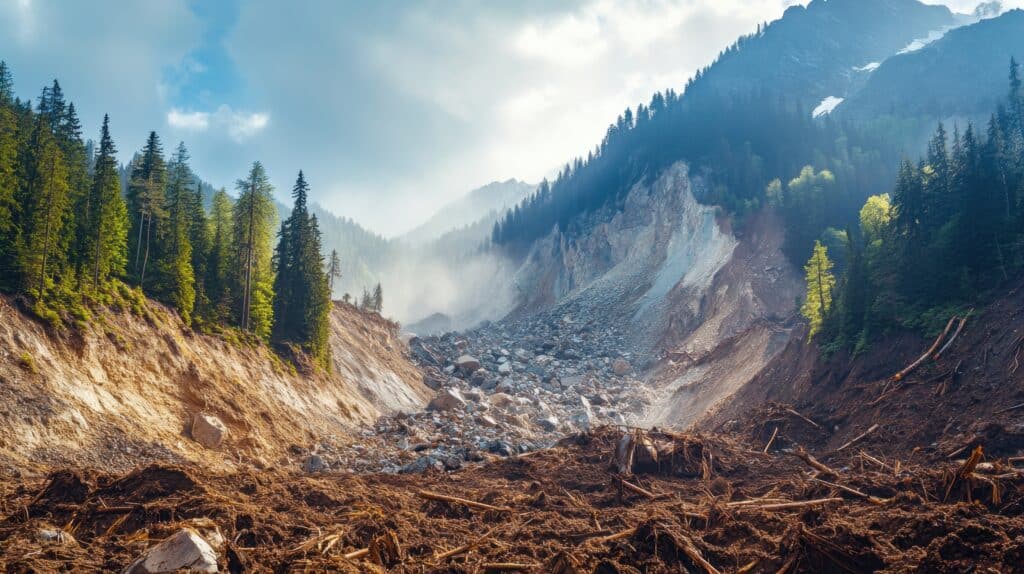
Gilles Grandjean. Landslides are multi-factorial processes: they occur when the slope is steep enough and the geology favourable. Other factors can also play a part: rainfall, for example, saturates slopes and encourages their destabilisation. So, as rainfall increases, so does the number of landslides, according to a correlation that can vary spatially1. As climate change affects precipitation (by increasing the frequency of extreme events), it also has an impact on the risk of landslides. However, it remains very difficult to establish the direct role of climate change in the occurrence of landslides.
Why is this?
Firstly, because we don’t have comprehensive monitoring of landslides. On the very large landslides that move regularly, such as Super-Sauze or La Clapière in the French Alps, a large number of sensors are installed: lasers, telemeters, radar, weather sensors and so on. However, many other mountain slopes are not equipped. Moreover, landslides are extremely complex processes. We use digital models to understand them better. During a landslide, the physics of materials can be difficult to analyse: the same event can be subject to the physical laws of brittle, viscous or even fluid materials, which adds complexity to our models.
Are we already seeing the effects of climate change on landslide risks?
Here again, it is difficult to give a precise answer because of the lack of data. There are no global databases that exhaustively record all landslides. In France, the Landslide Database (BDMvt) suffers from this problem, particularly in uninhabited areas where these events are rarely recorded. Teams are working on the use of satellite imagery to systematically detect landslides, but further developments are still needed.
On the other hand, in small areas where sensors have been installed, we are seeing the effects of climate change. We are seeing an increase in the frequency of gravity instabilities, which are very closely linked to precipitation. We are also seeing the base of glaciers melting as a result of rising temperatures, releasing a lot of sediment – a collection of materials such as gravel and sand – which accumulate in the surrounding torrents. When it rains heavily, the sediment-laden water rushes down the slopes, causing much more damaging floods downstream and increasing the risk of creating logjams.
Do some of the impacts of climate change actually help to limit landslides? For example, of the migration of plants to higher altitudes, which could stabilise slopes.
The scientific community is currently looking into this subject. Mountain areas are gradually adapting to changes in climate: slopes are being modified by erosion, plant species are changing, and so on. But it is changing so rapidly that we fear that the slopes will not have time to adapt. This could lead to catastrophic events, including landslides. On the other hand, the direct impact of human activities may limit the natural adaptation of mountain regions.
What other impacts do human activities have?
The risk of landslides is also affected by human activity. Slopes can be weakened by the construction of infrastructure (for example, if they are cut into to build a road) or by land clearance. Another effect that can be amplified by human activity is bank erosion. When erosion is severe, riverbanks can become unstable and small landslides can occur. Through a regressive effect, they can generate a larger landslide across the entire slope.
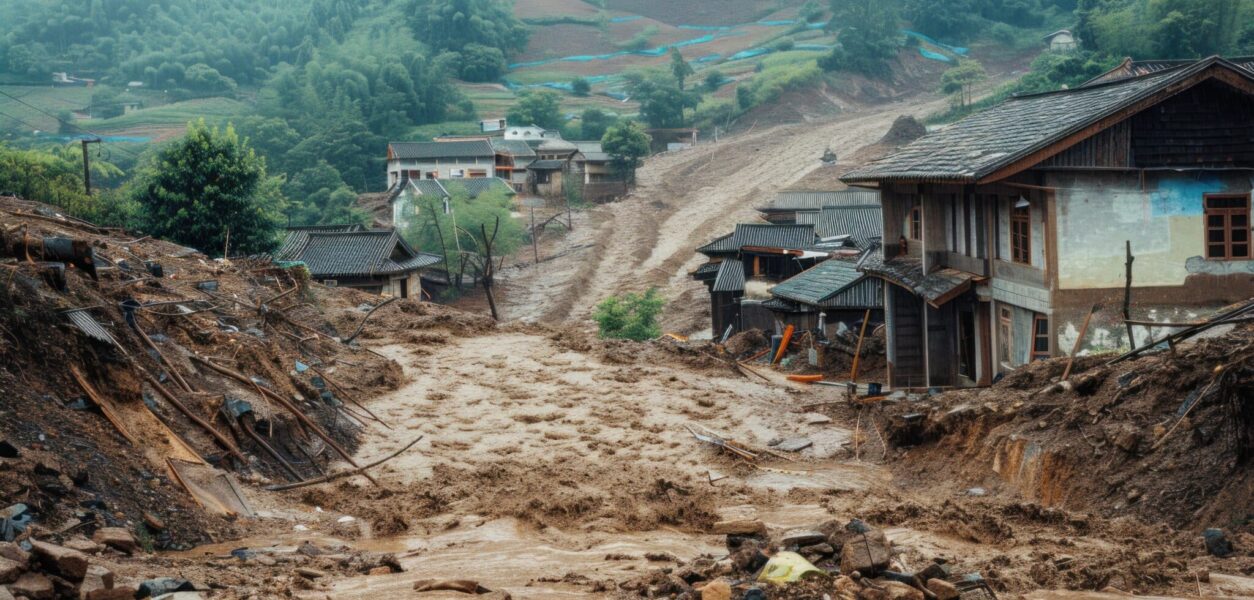
Finally, risk is defined as the combination of a natural phenomenon and the vulnerability of inhabited areas: even if a landslide occurs, without infrastructure or people, the risk is zero. By building more infrastructure in mountainous areas, vulnerability is multiplied, and the risk is increased.
What impact will climate change have on the risk of landslides in the future?
Generally speaking, the risk of landslides is not going to decrease, due to the increase in the number of infrastructures in mountain areas. But it is impossible to draw any general conclusions. In a study published in 2018, we assessed future risks in Pyrenean and Alpine valleys on the basis of IPCC scenarios and socio-economic scenarios developed with local stakeholders2.The results are very varied: the risk increases in some areas, but not everywhere. It all depends on the orientation of the valley, its latitude, its vulnerability, etc. Assessing the impact of climate change requires studies specific to each valley.
Is it possible to prevent and limit the impact of climate change?
The scientific community is heavily involved in these issues, particularly within the priority research programme and equipment (PEPR) Risques coordinated by BRGM with CNRS and Grenoble Alpes University. We are also working on mountain risk projects, such as IRIMONT and VIGIMONT, with the ANR, developing early warning systems in particular.
There are solutions to reduce the risk, but there are also problems. For example, some nature-based solutions involve leaving natural areas around rivers to absorb floods, or replanting slopes, which can limit the development of economic activities. The other problem concerns the vulnerability of infrastructure. When works are carried out to reduce the likelihood of landslides, this can encourage more to be built. But these structures – fences, retaining walls, etc.- require maintenance. In the absence of maintenance, and if the infrastructure fails, the risk of landslides is even greater than before because of new construction. What’s more, these structures are sometimes adapted to a past climate and the standards no longer correspond to current or future climatic hazards.